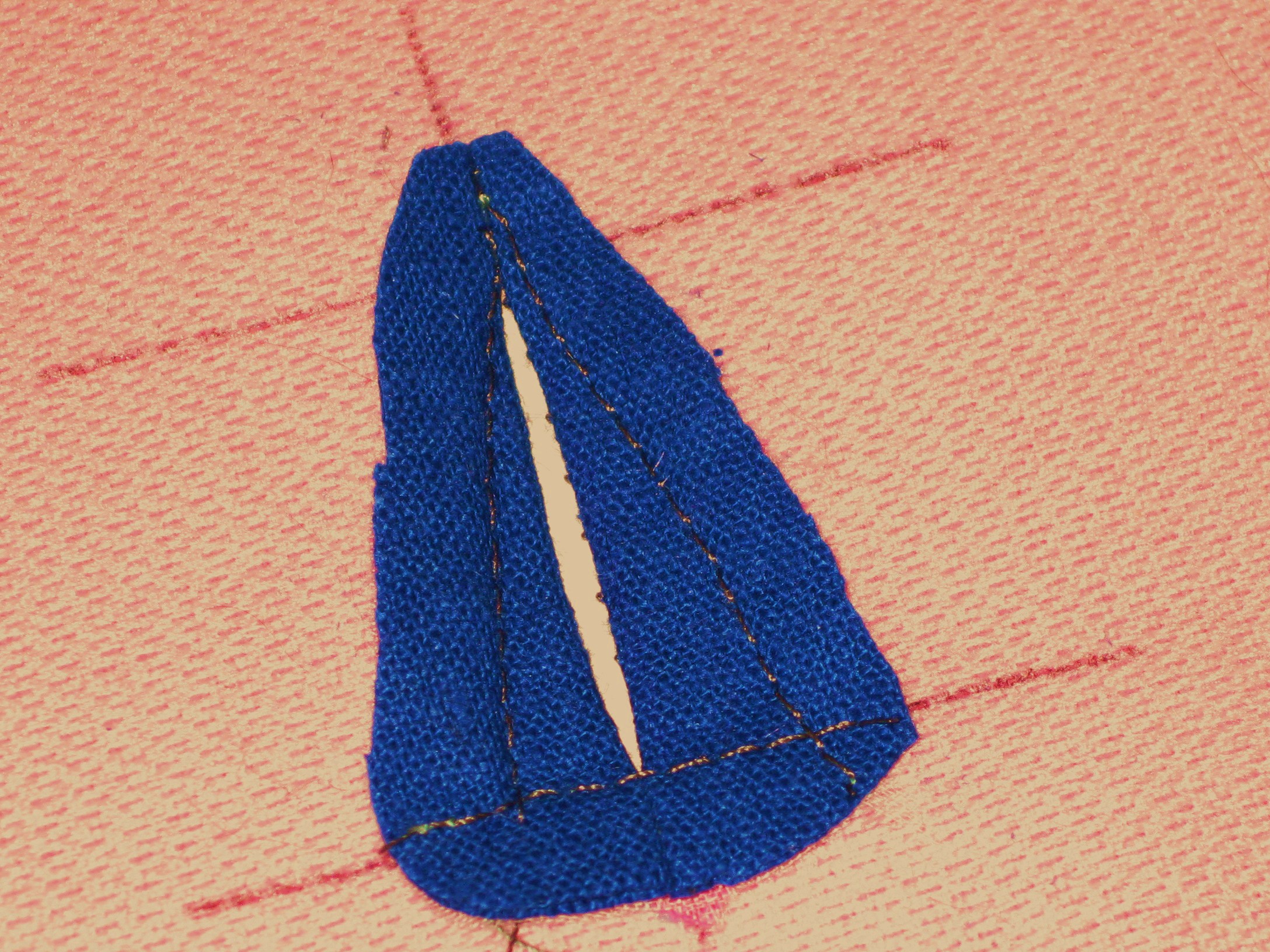
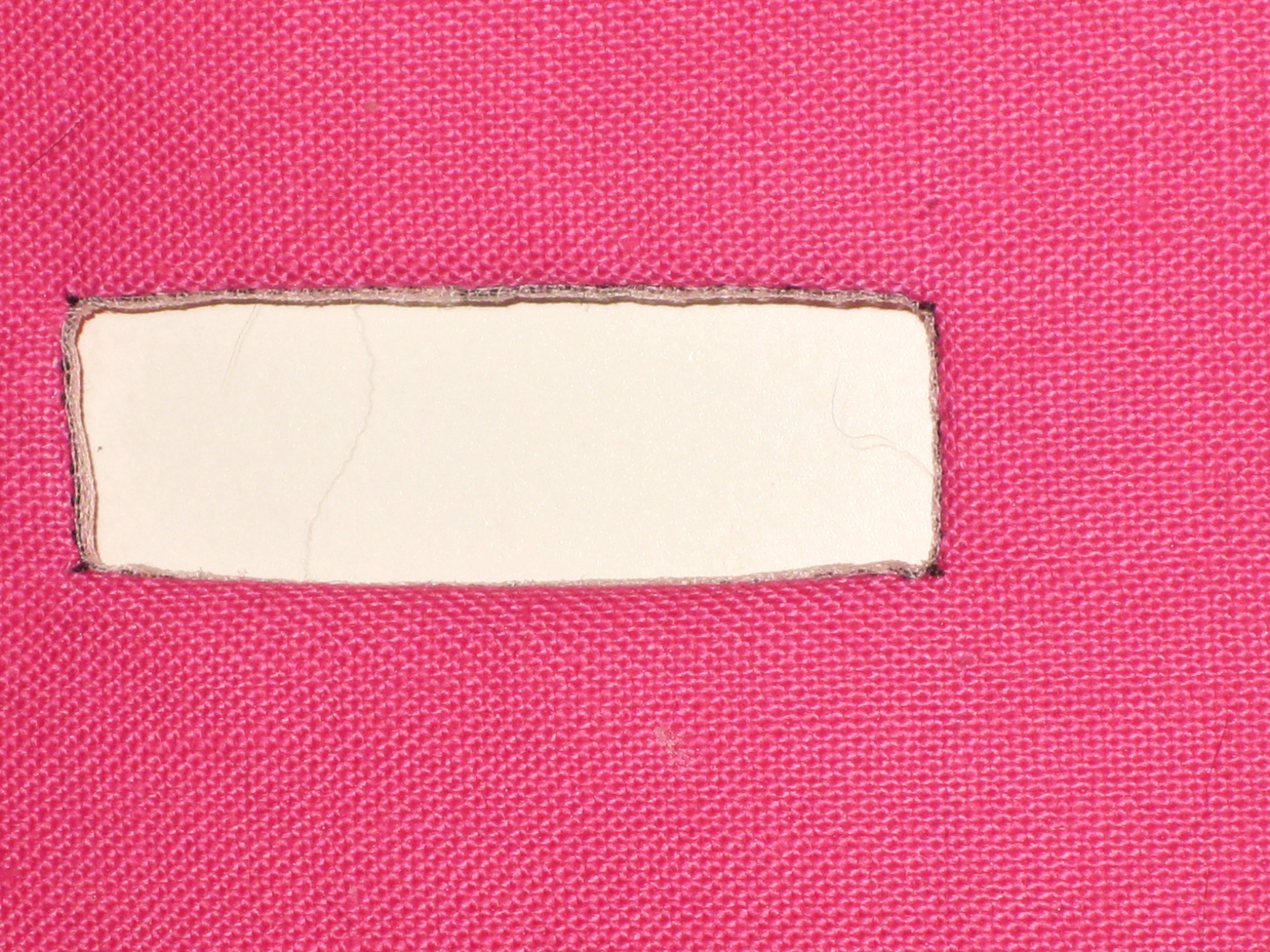
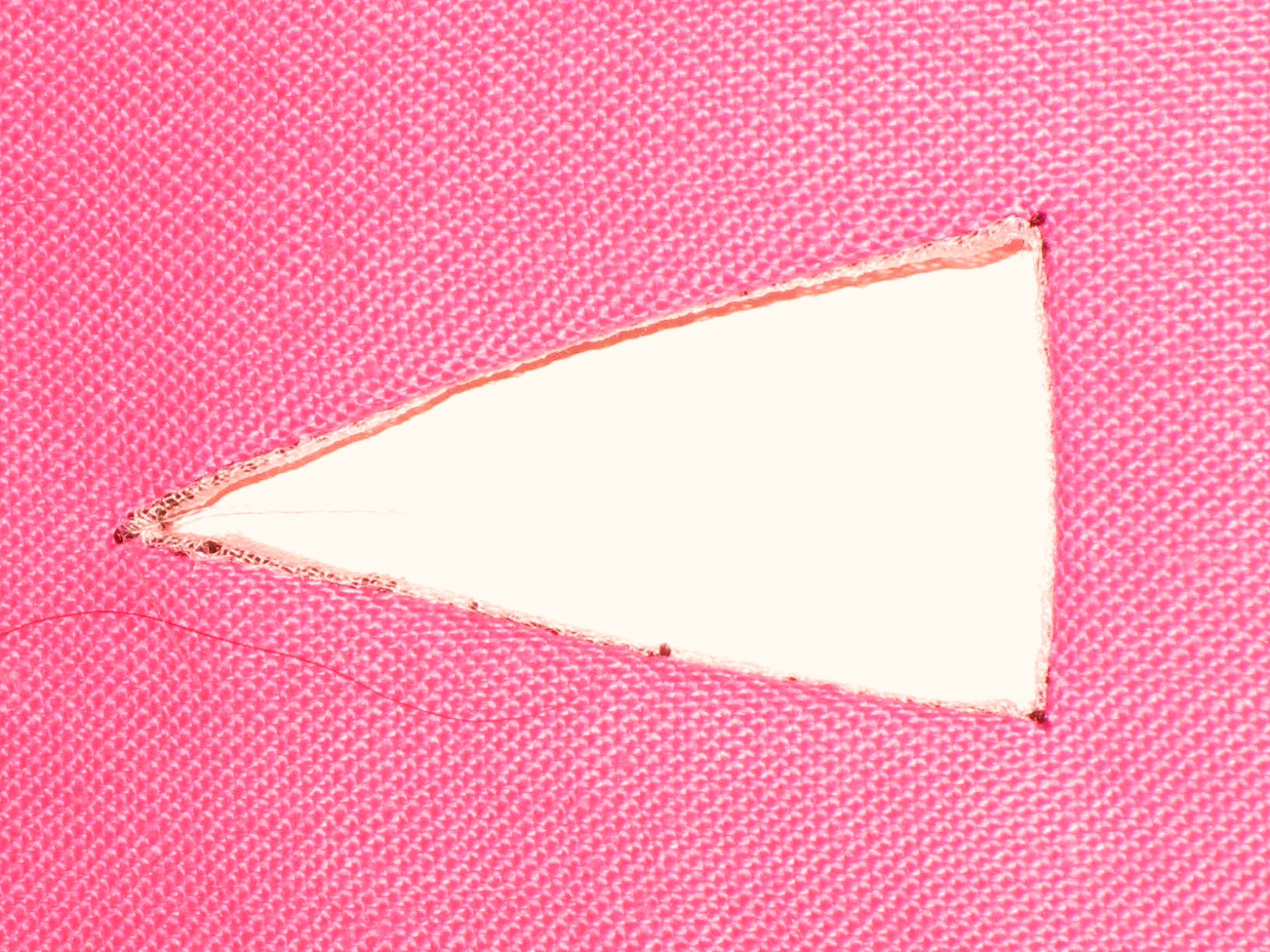
Taming Inset Corners

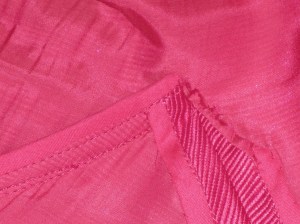
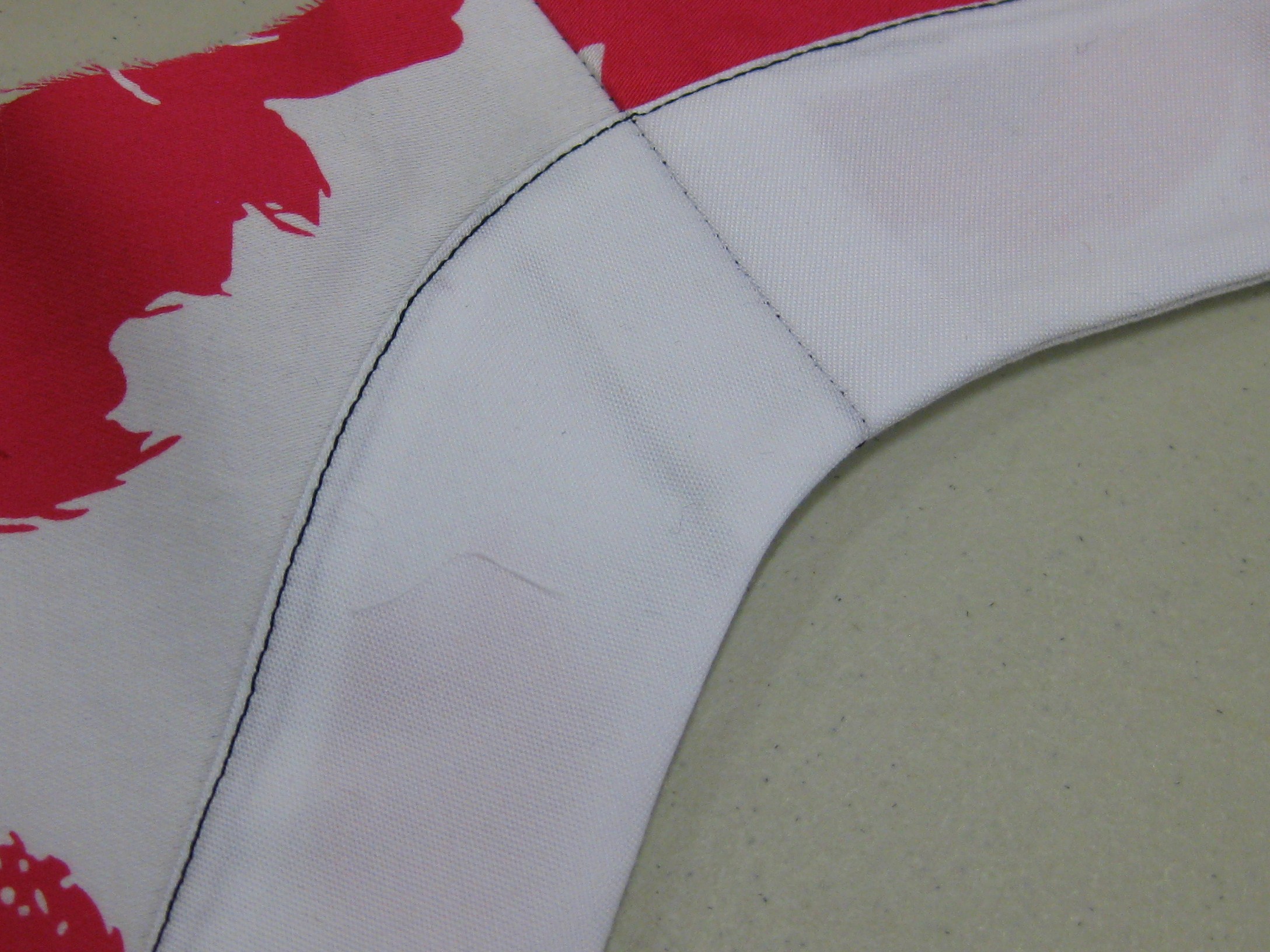
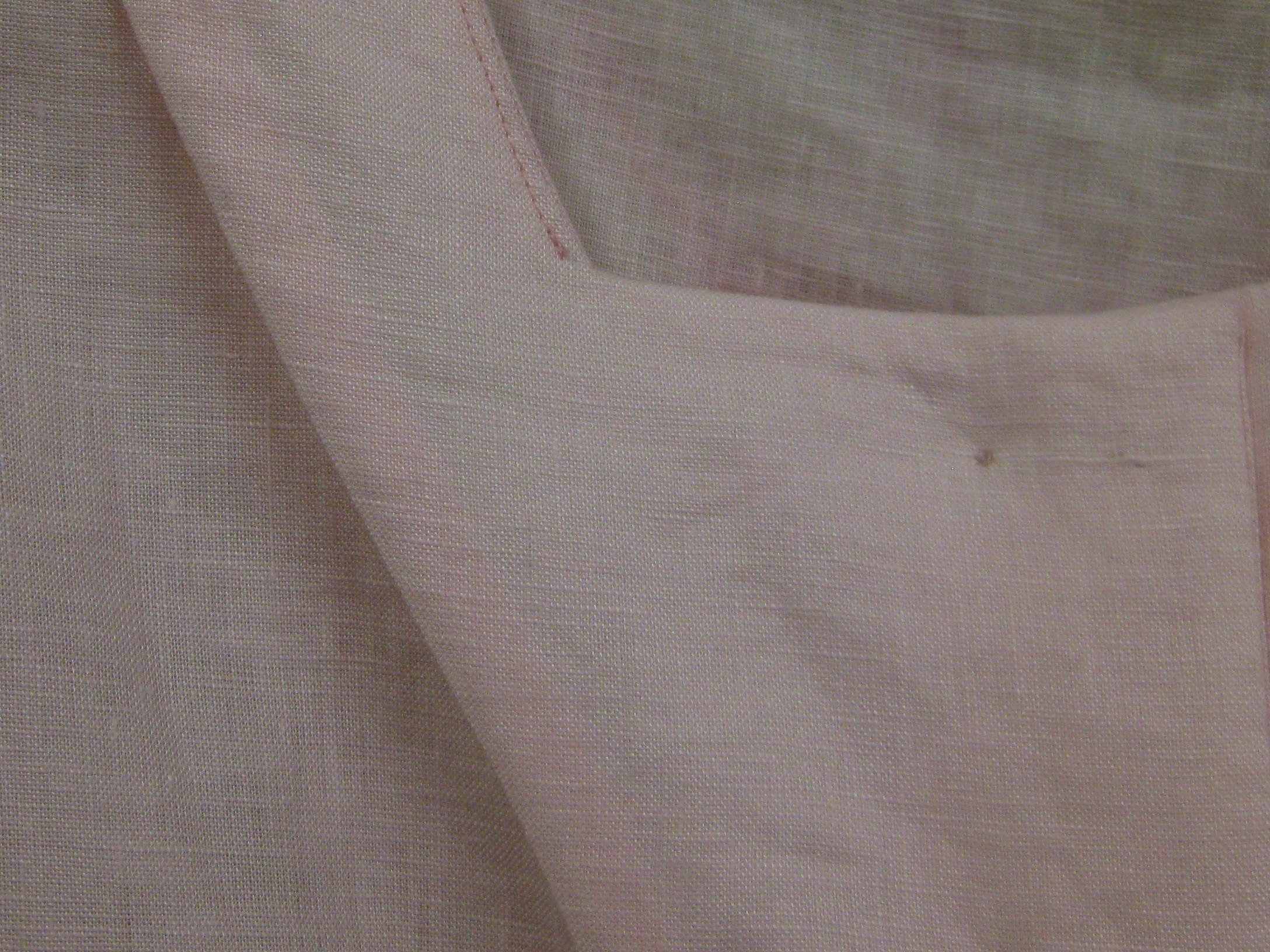
Inset corners are used in garments withcut on collars, forexample stand up or shawl collars, as well as those with panel insertions, godets and gussets.

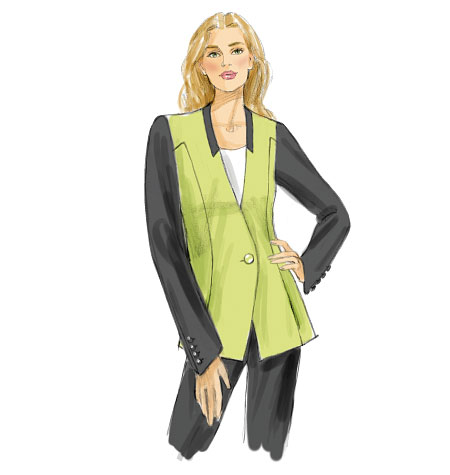
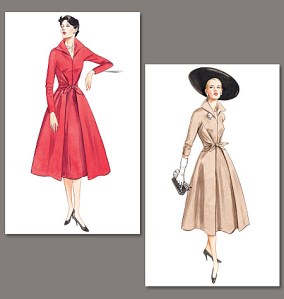
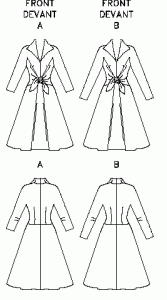
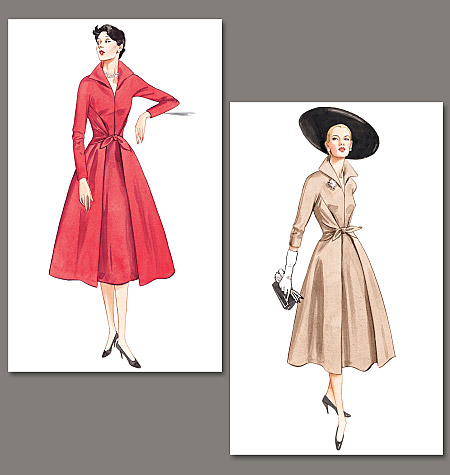
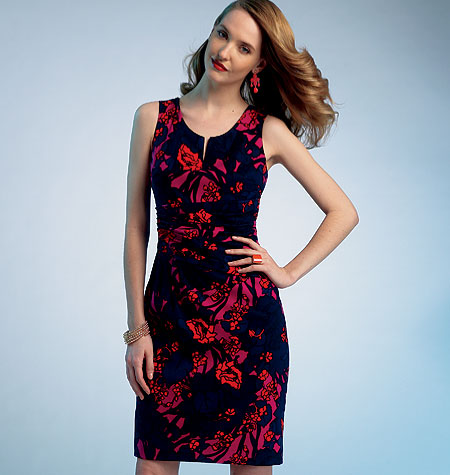
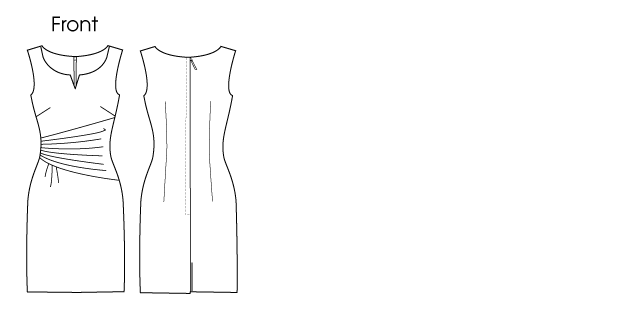
Vogue 8931

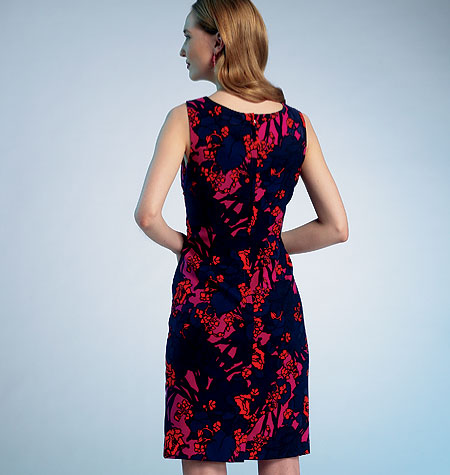
Vogue 8931

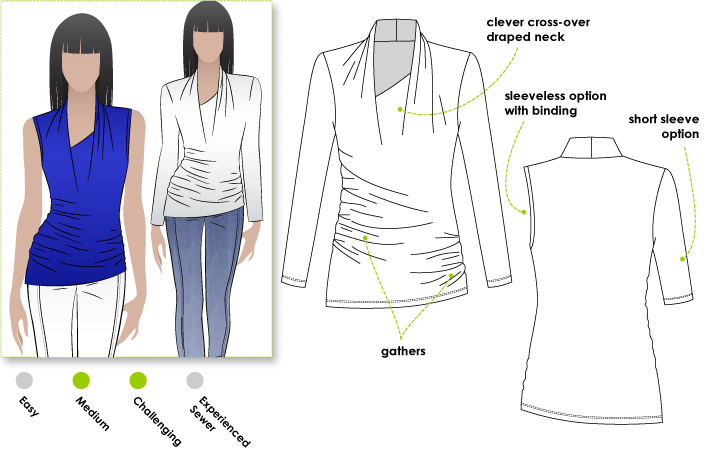
Style Arc Issy Top with back collar stand and inset corner where shoulder seam joins the neck.

Style Arc Issy Top with back collar stand and inset corner where shoulder seam joins the neck. Designed for thin and very stretchy knits.

Style Arc Issy Top with back collar stand and inset corner where shoulder seam joins the neck.

Style Arc Issy Top with back collar stand and inset corner where shoulder seam joins the neck.

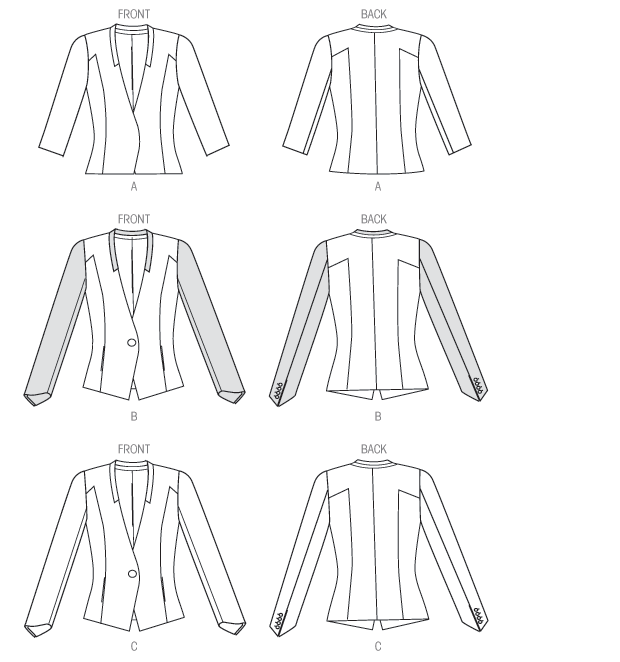
Vogue 9039 Jacket with lots of inset panels and inset collar.

Vogue 9039 Jacket with lots of inset panels and inset collar.

Vogue 9039 Jacket with lots of inset panels and inset collar.

Vogue 9039 Jacket with lots of inset panels and inset collar.

V9039

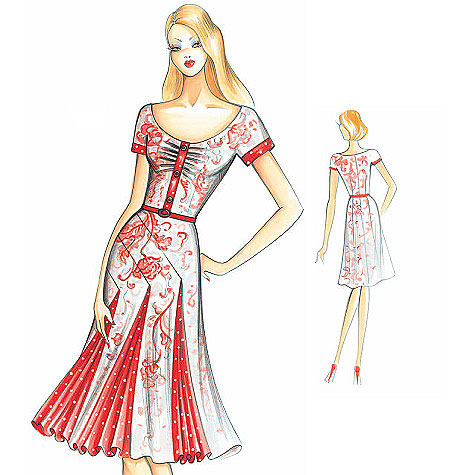
This Marfy pattern has godet inserts.

This Marfy pattern has godet inserts.

This Marfy pattern has godet inserts.

This Marfy pattern has godet inserts.

Typically this feature is used with stable, medium weight woven fabrics.  However, these garment features are also included in patterns for knit garments and often in blouses made in softer fabrics.  The pattern guide sheet method requires stay stitching and clipping the inset corner before joining the pieces right sides together which, when stretchy or loose weave fabrics are used, makes it almost impossible to achieve a clean, sharp corner.

The key to achieving a sharp corner is stabilising the corner.

In this method fusible interfacing will stop the seam stretching and a silk organza patch placed at right angles to the pivot point will help achieve and maintain a sharp pivot point.  The addition of the fusible interfacing strips will depend on the garment fabric.  It is particularly useful when using knits and unstable fabrics.

When using stable woven fabrics:

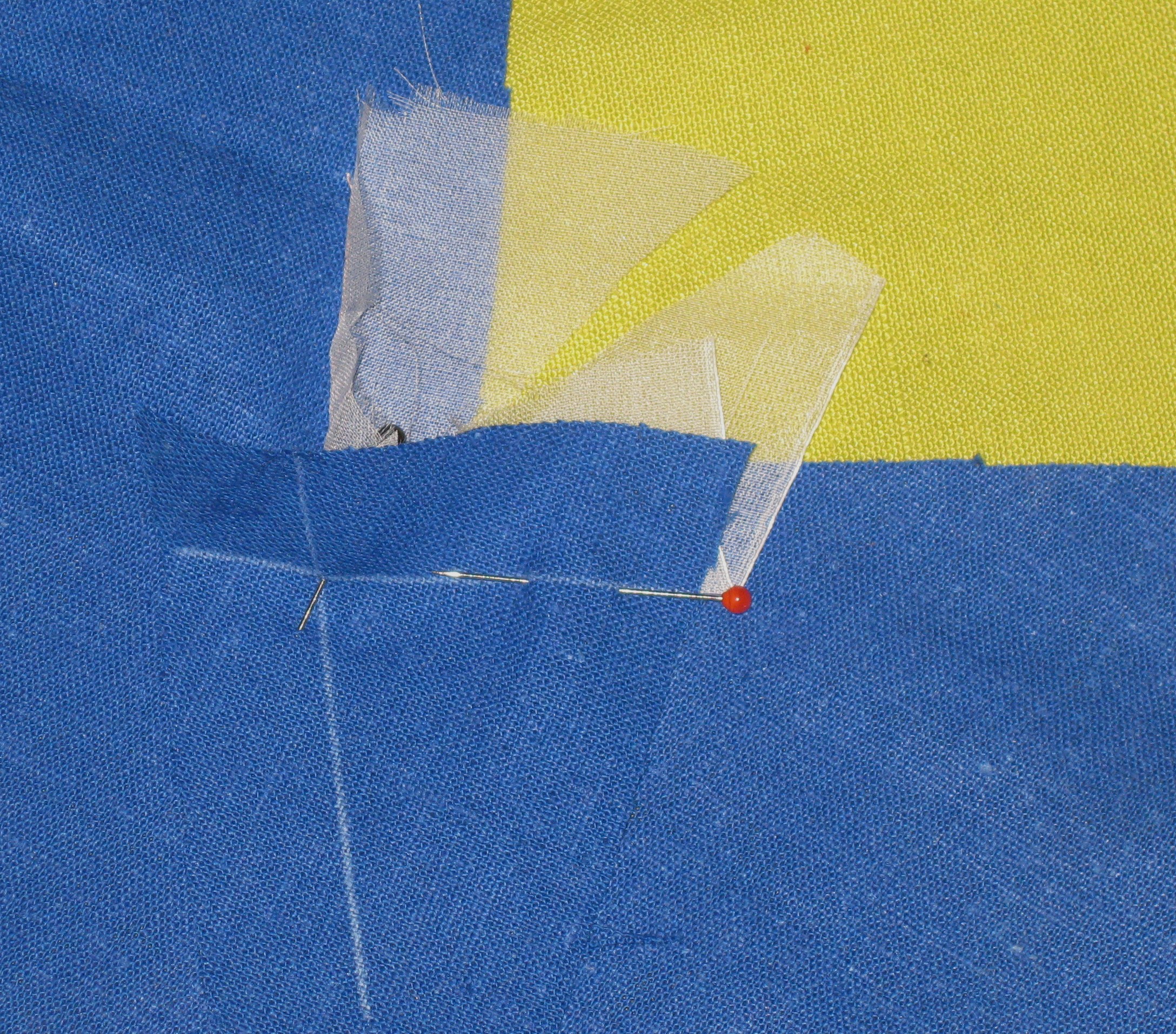
  • Cut an on grain 5cm/2” square of silk organza
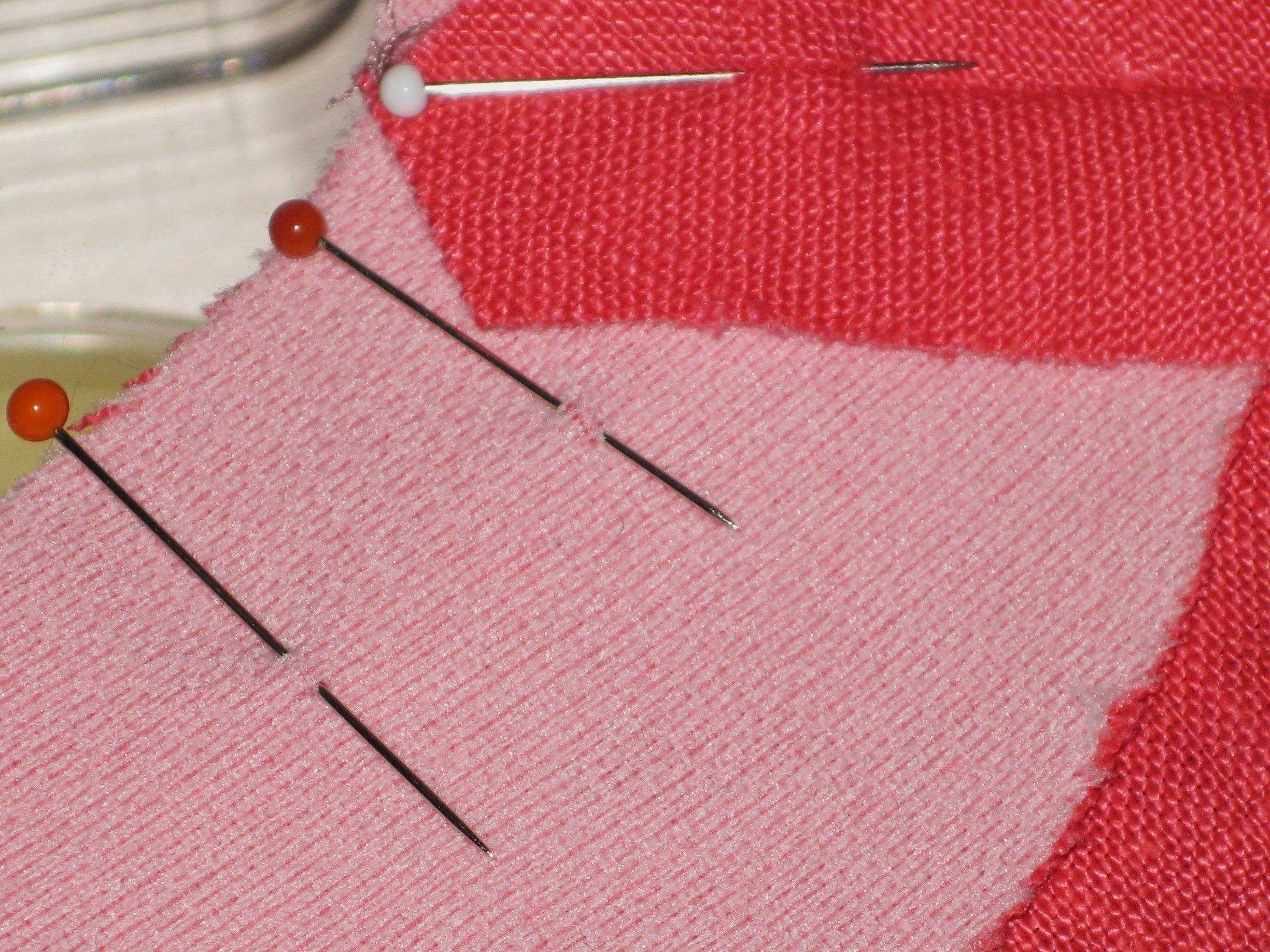
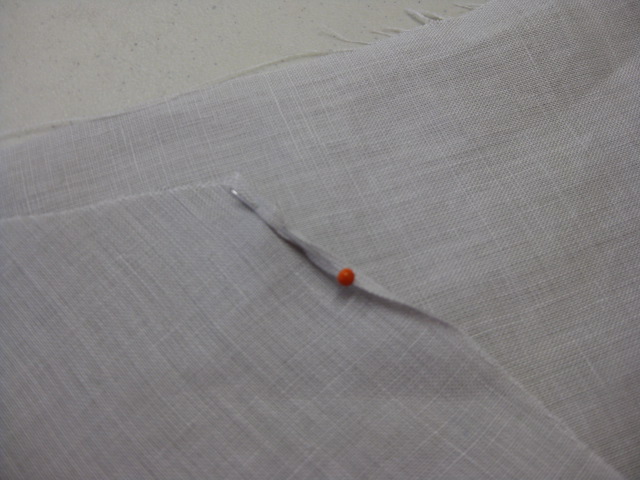
  • Pin the organza in place (again centred over the exact pivot point) against the right side of the fabric

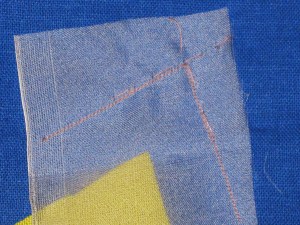
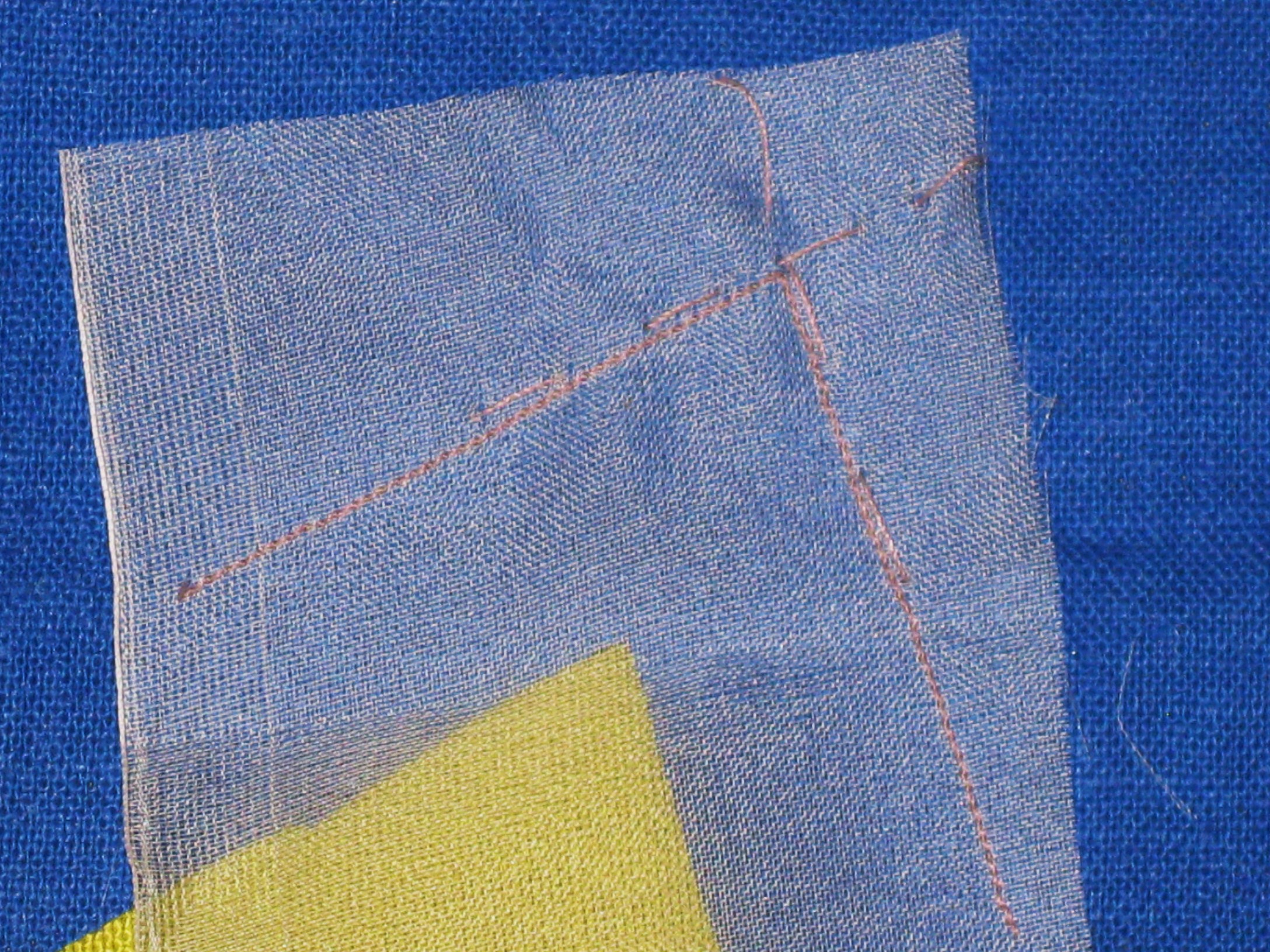
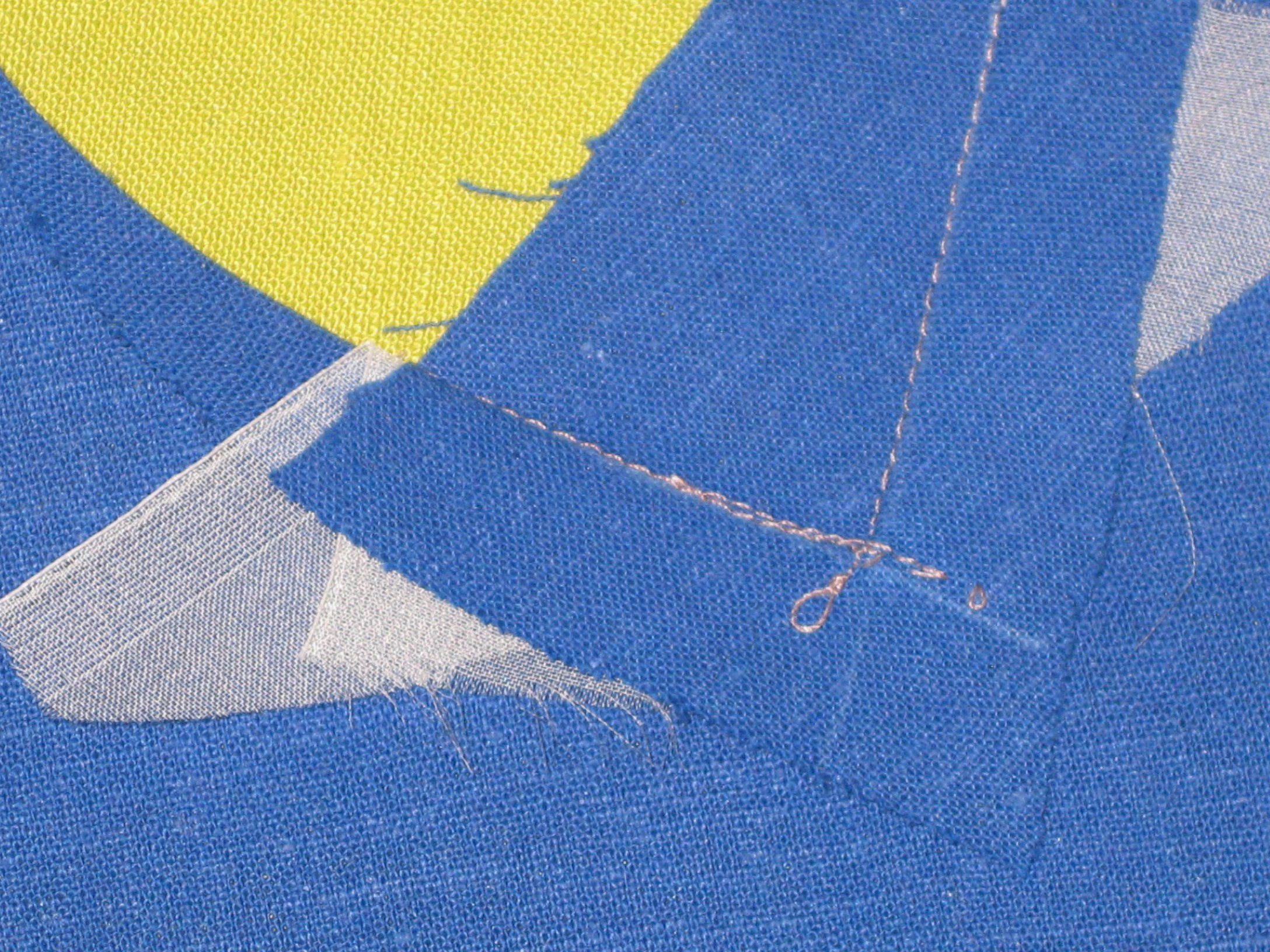
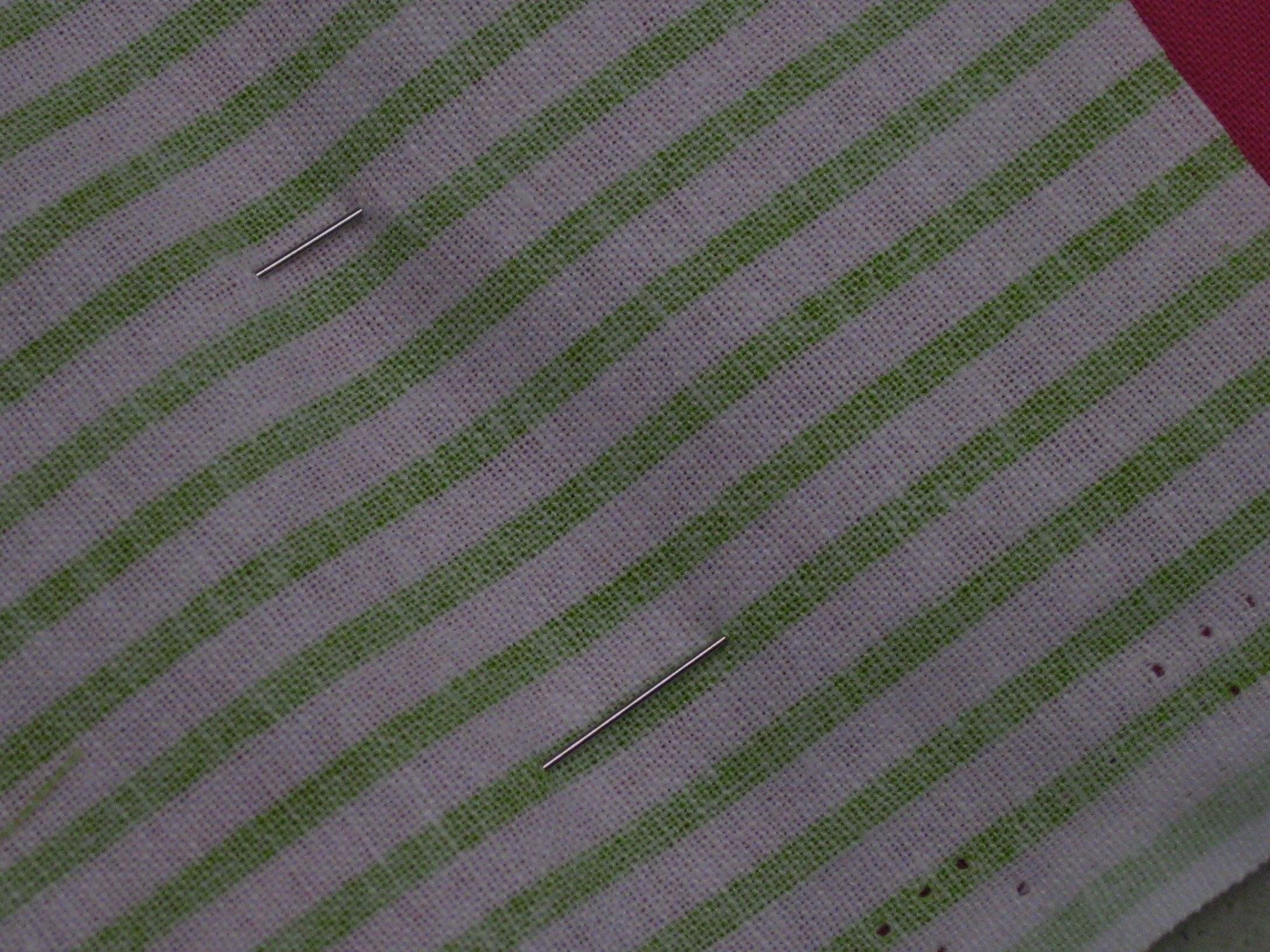
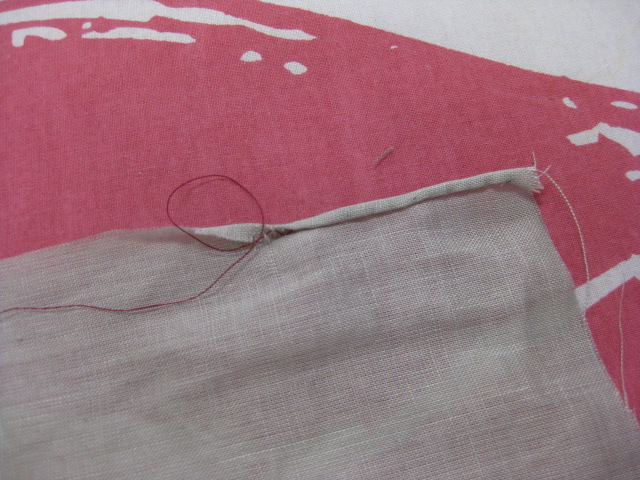
    Place silk organza centred over pivot point keeping the straight grain of theorganza at a 90 degree angle to the pivot point.

    Place silk organza centred over pivot point keeping the straight grain of theorganza at a 90 degree angle to the pivot point.

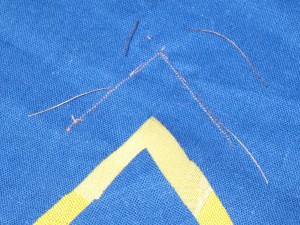
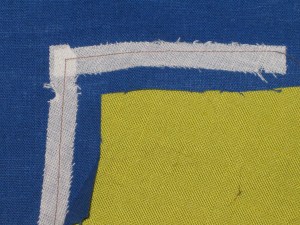
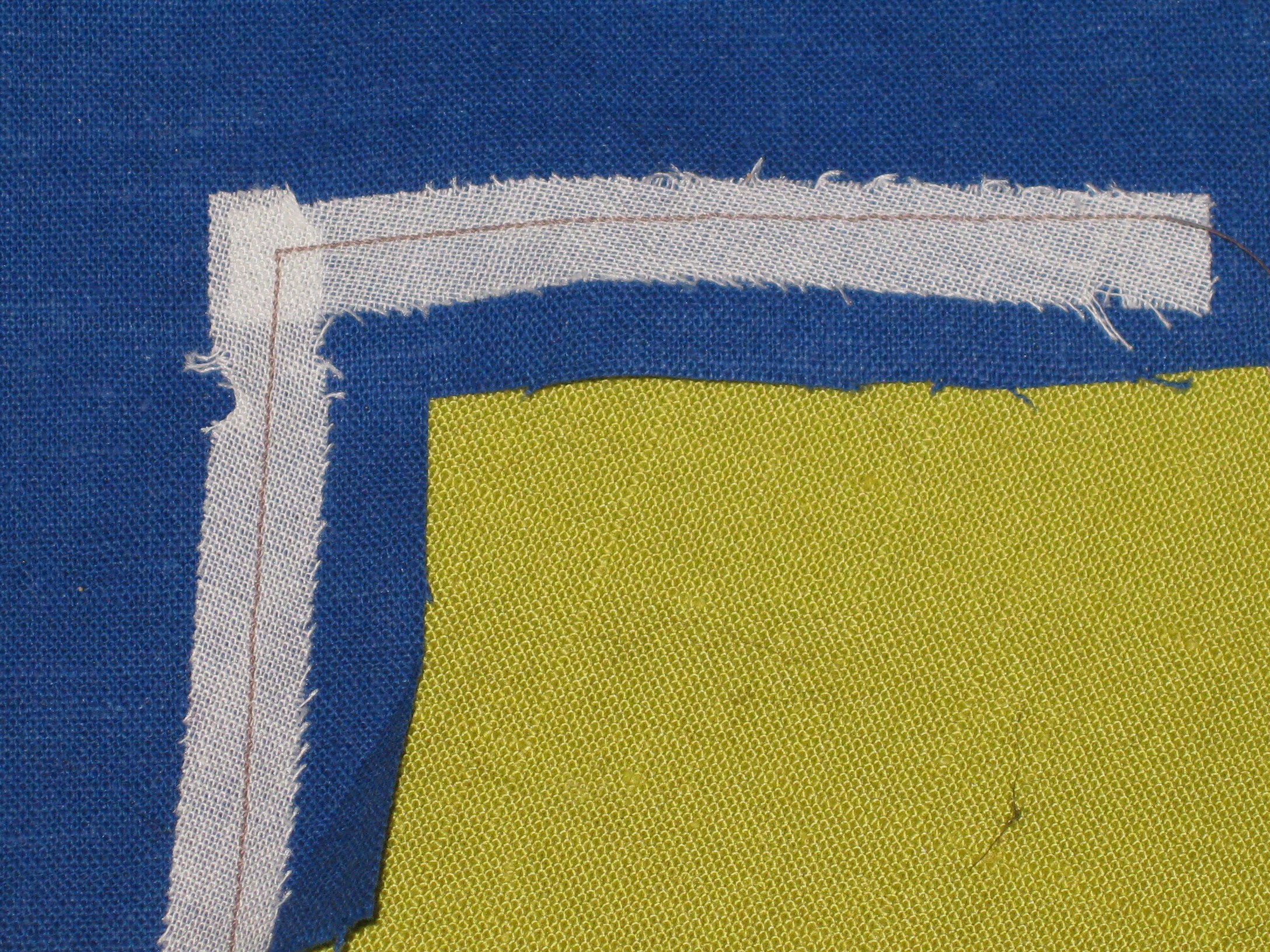
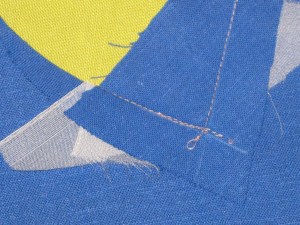
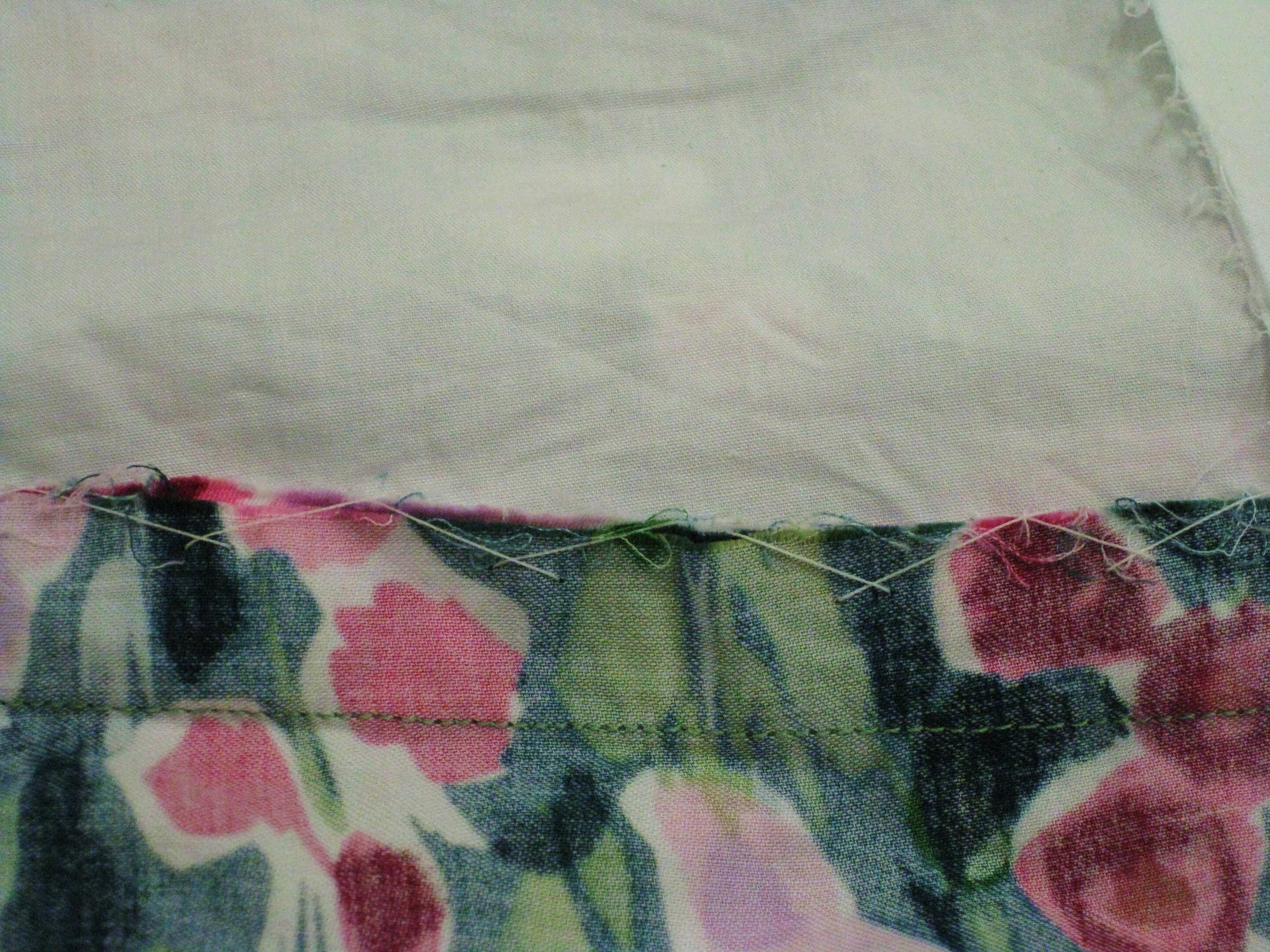
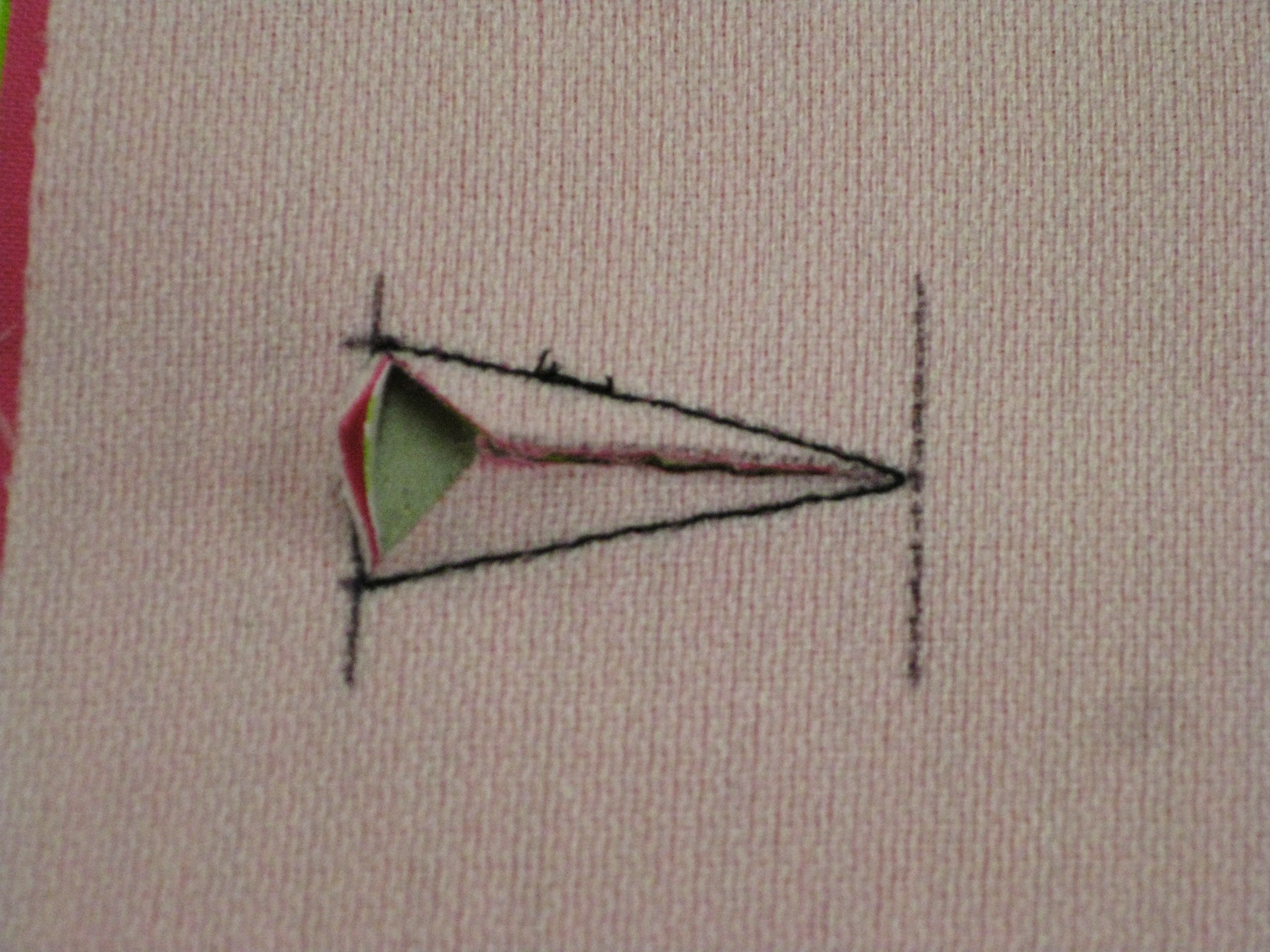
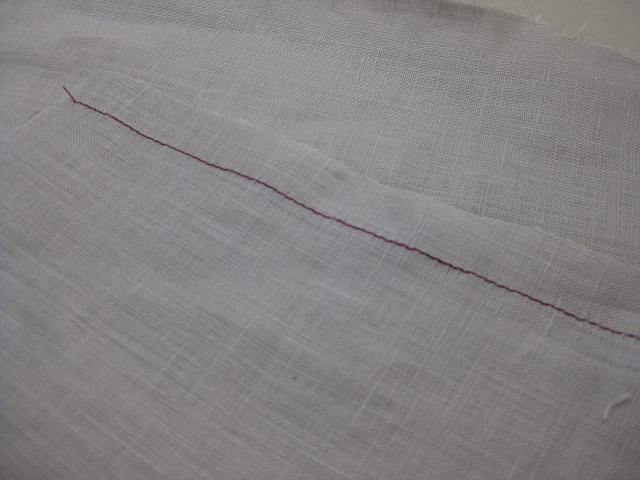
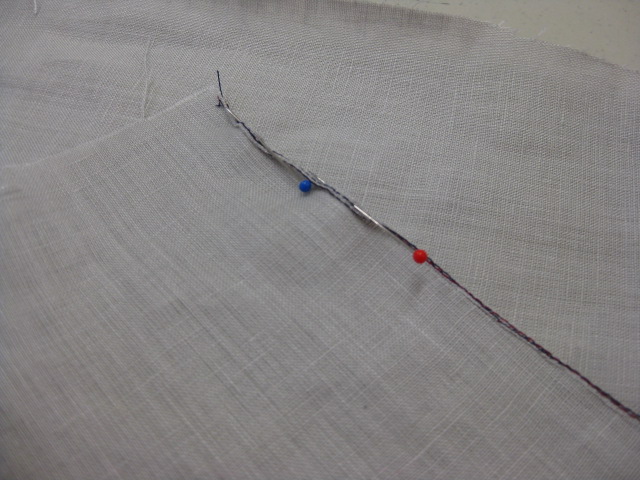
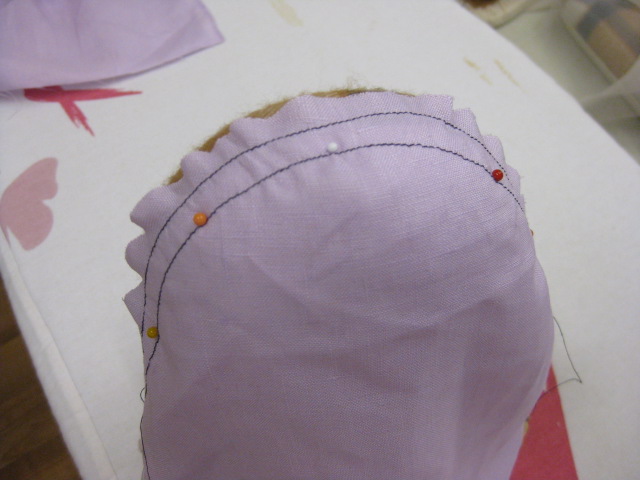
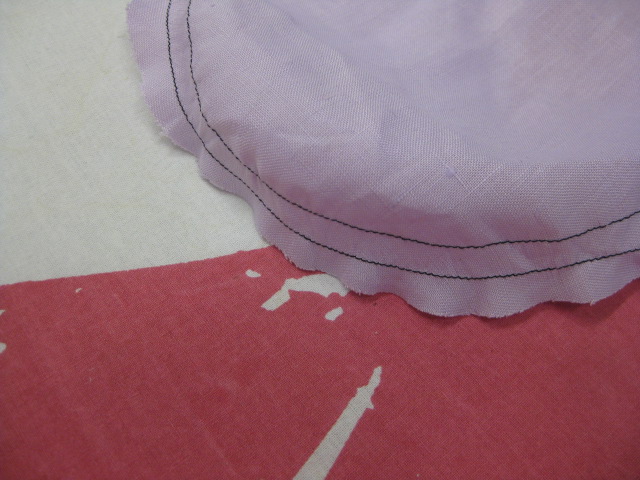
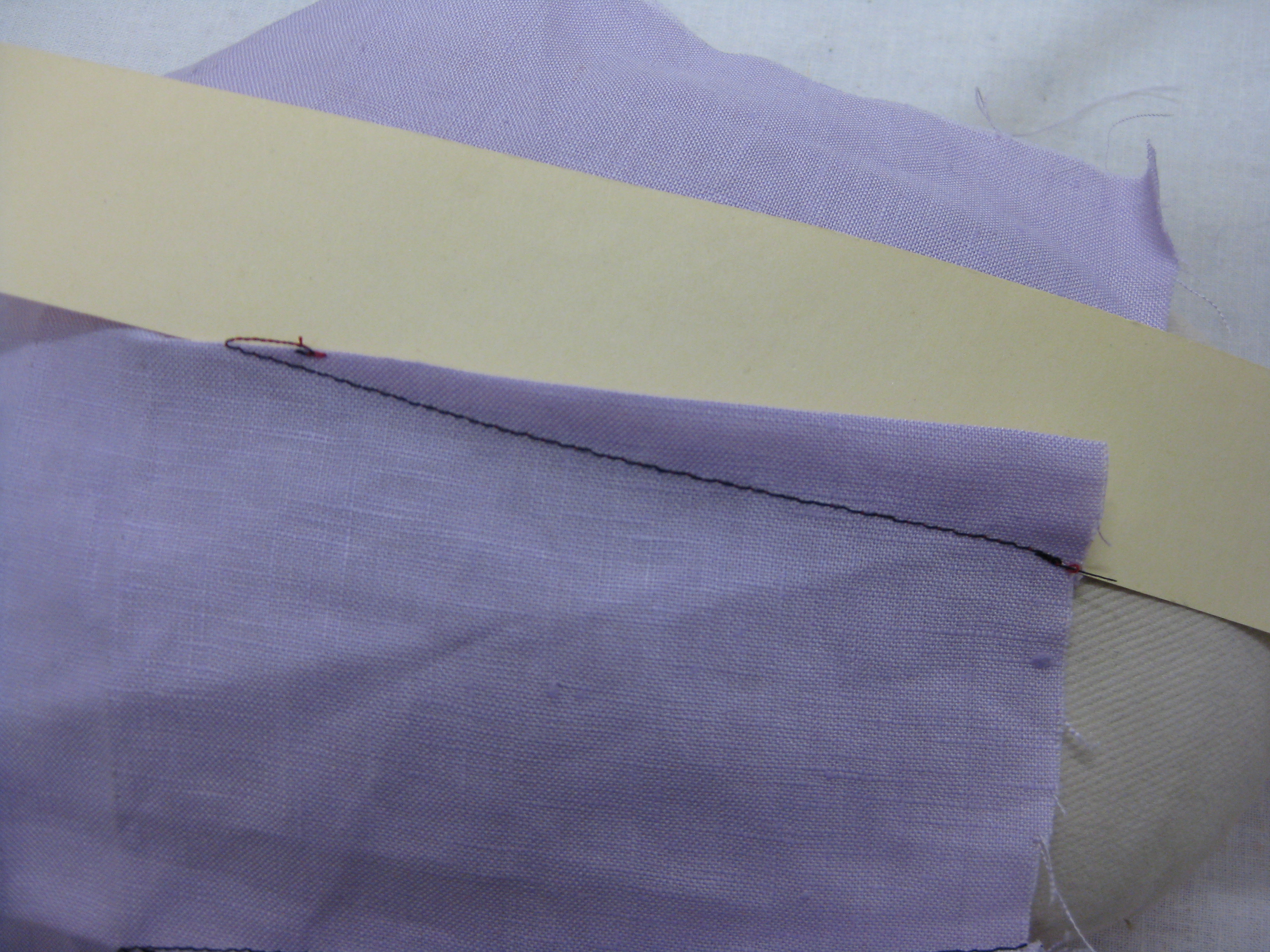
  • Stay stitch using a stitch length of 1.0-1.5 on the seam line of the corner

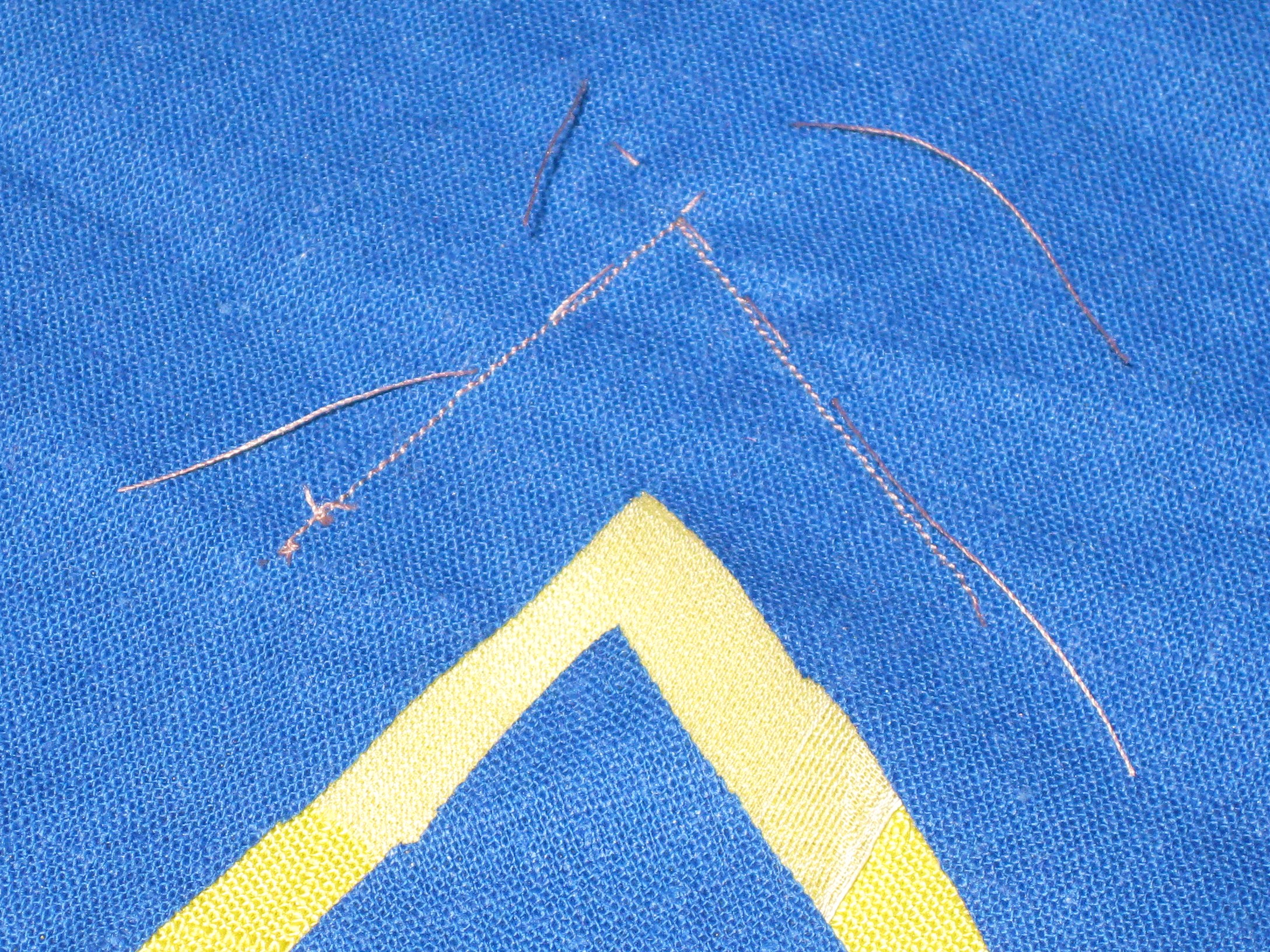
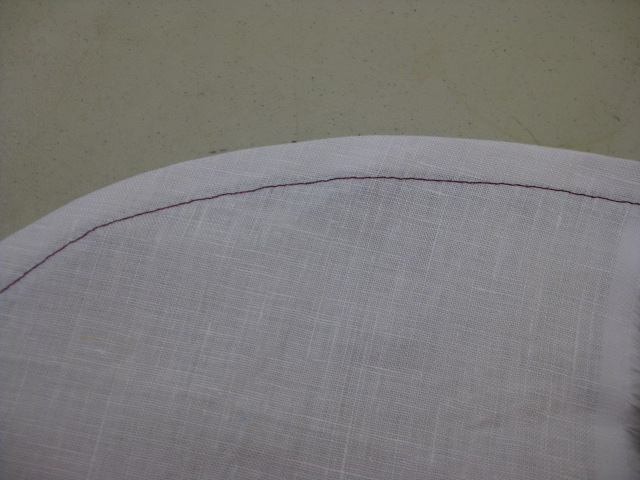
    Staystitch corner from point out on each side

    Staystitch corner from point out on each side

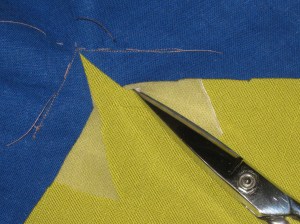
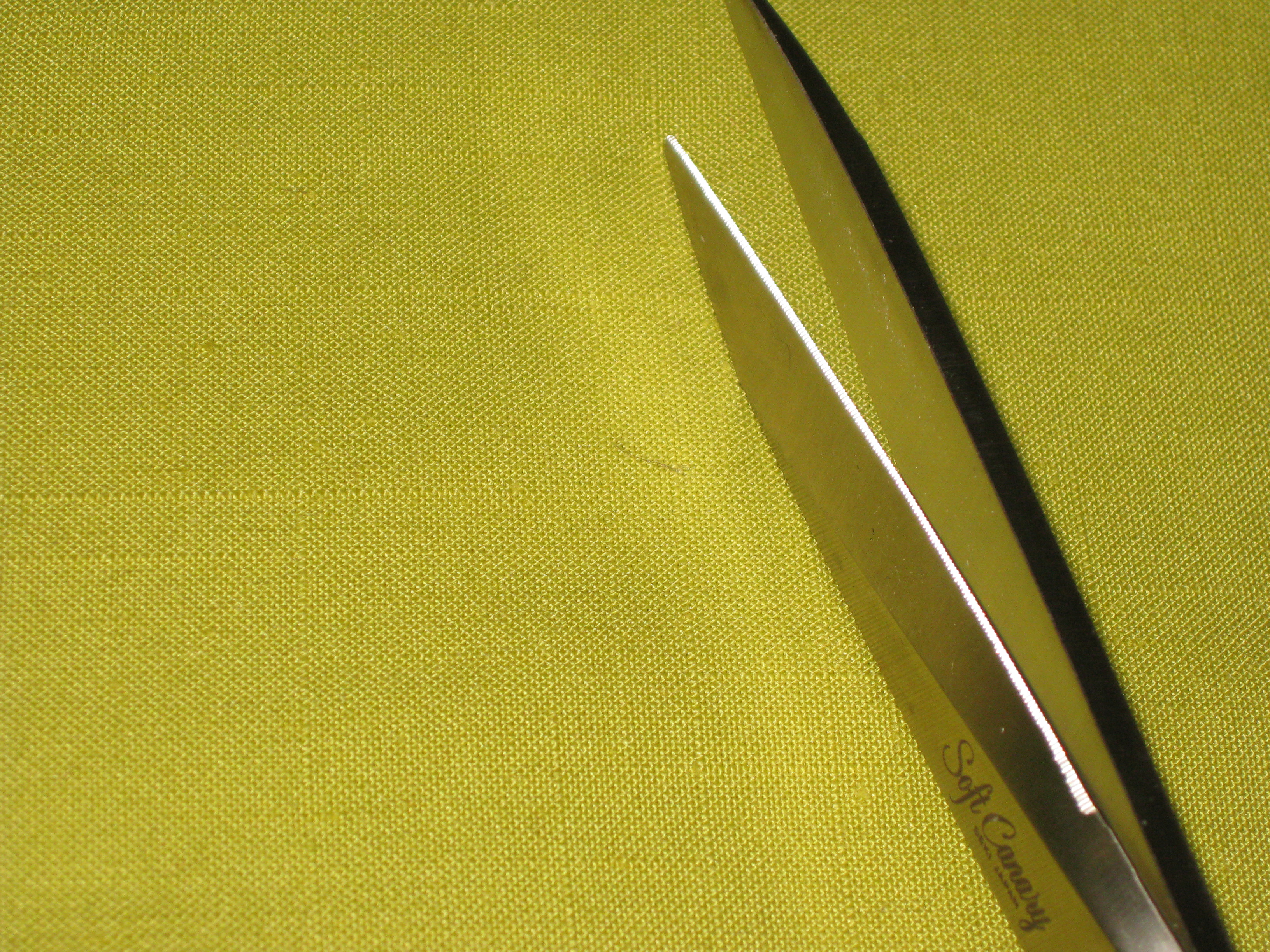
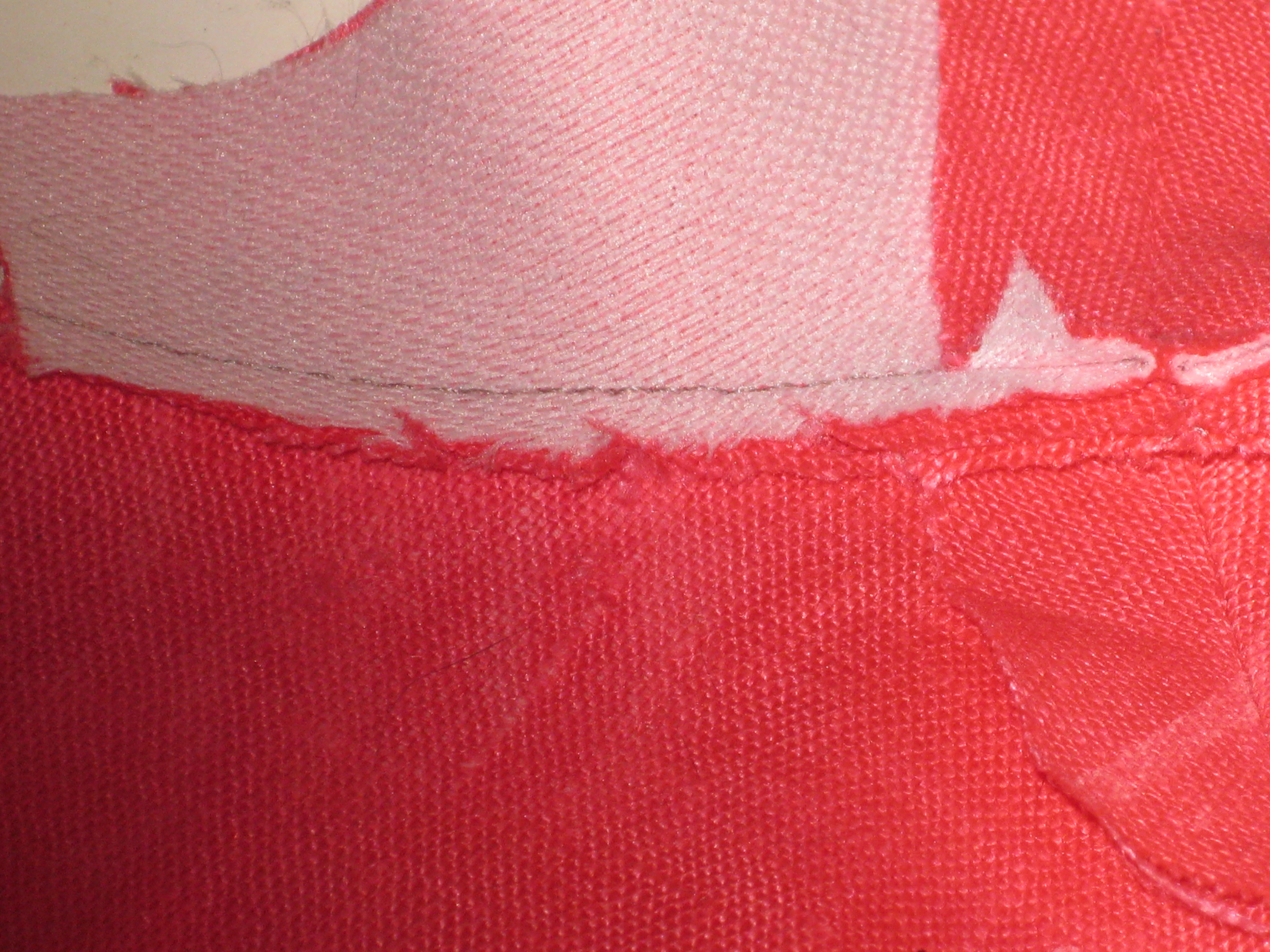
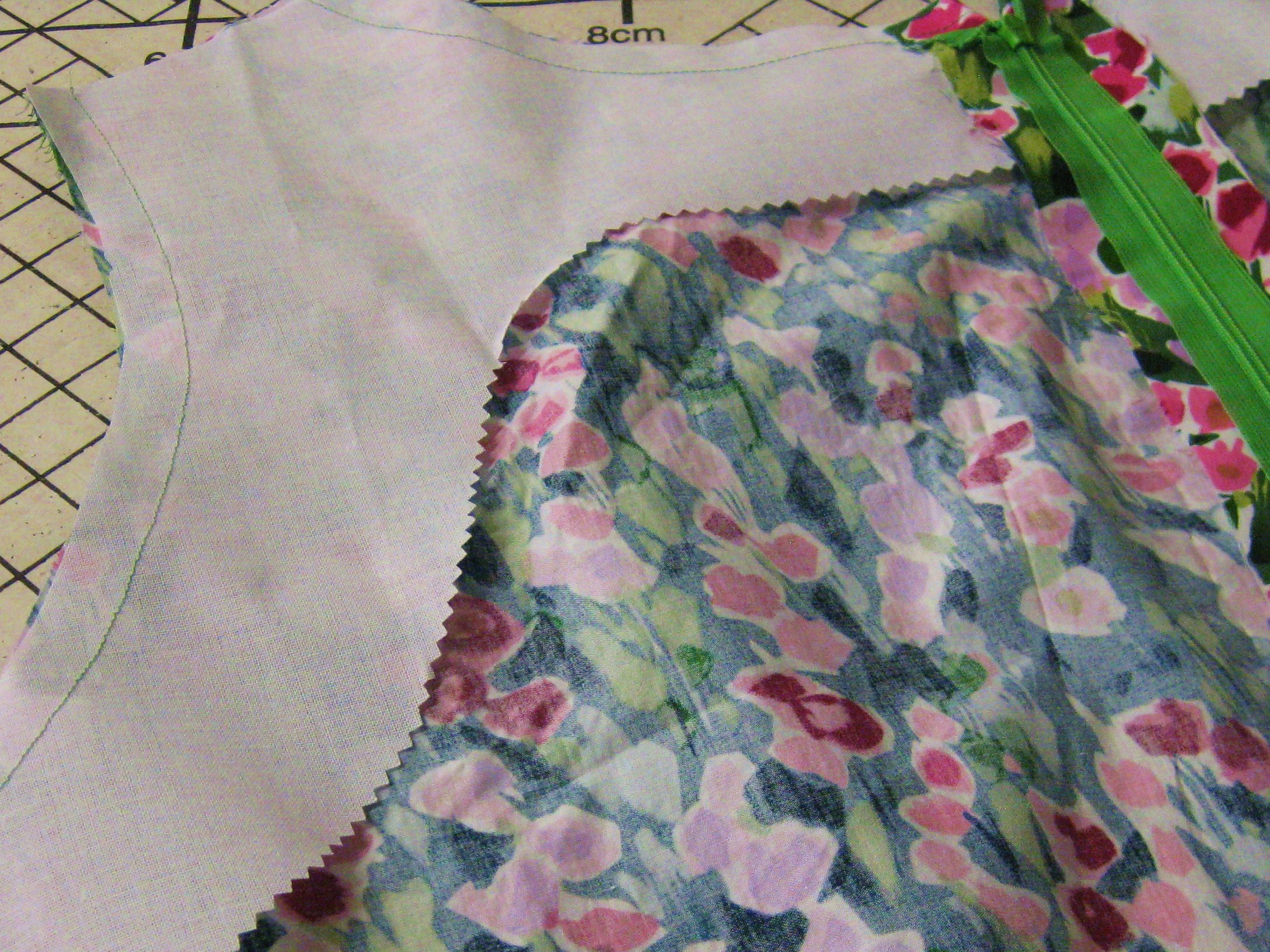
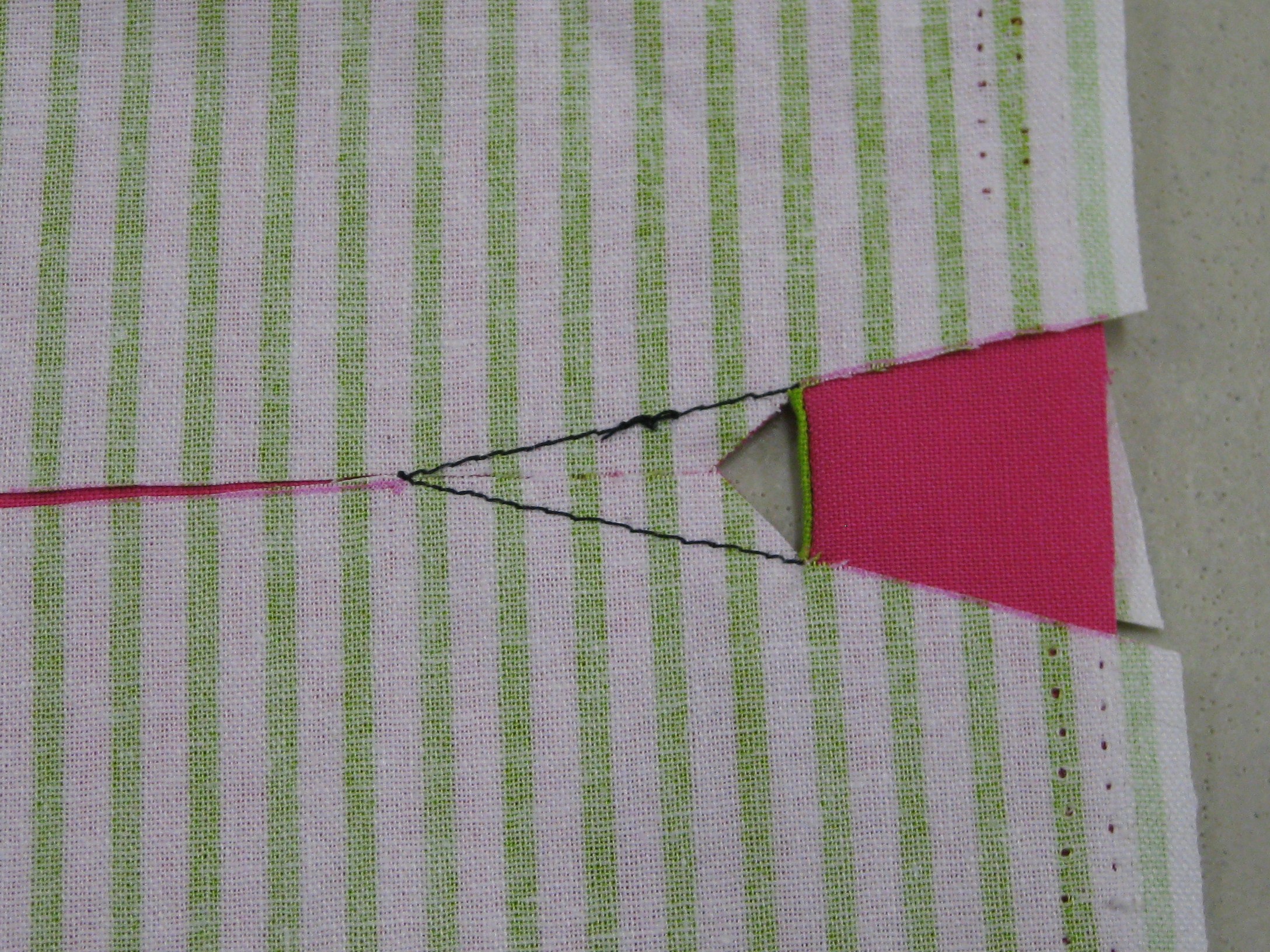
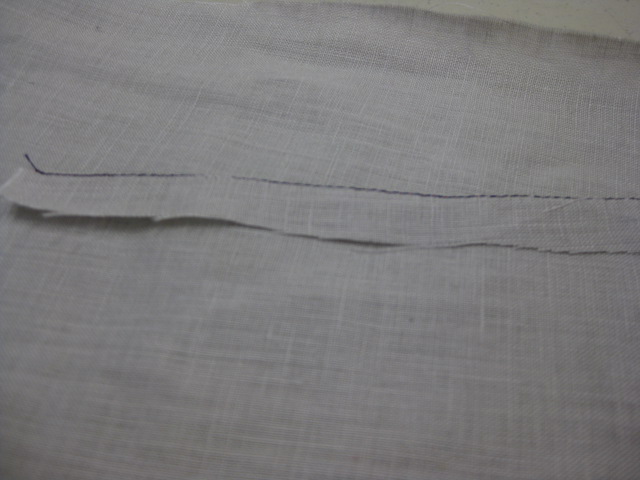
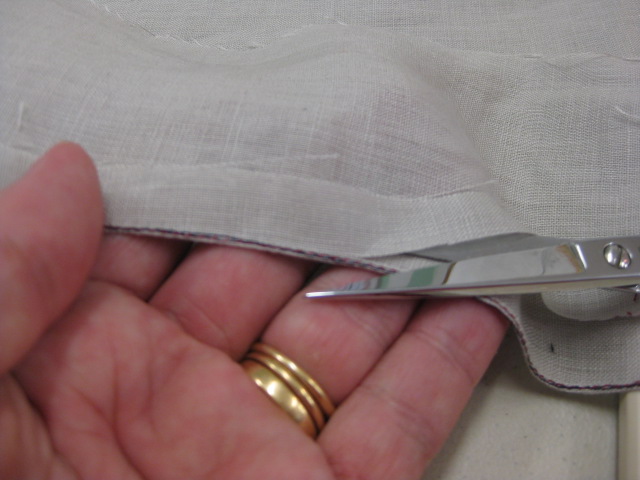
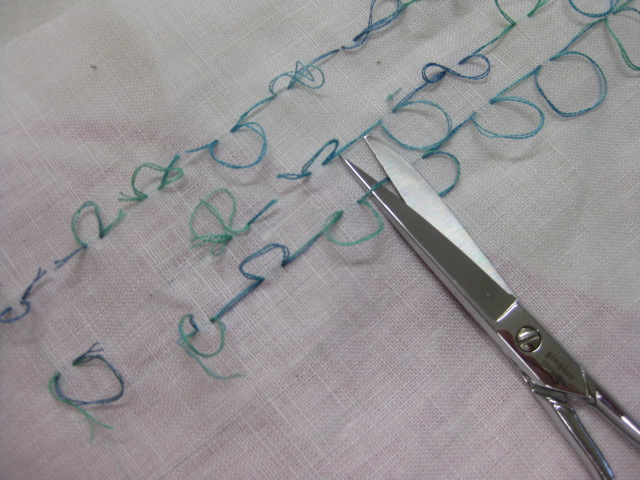
  • Using very sharp scissors, clip through the organza and fabric right to the pivot point

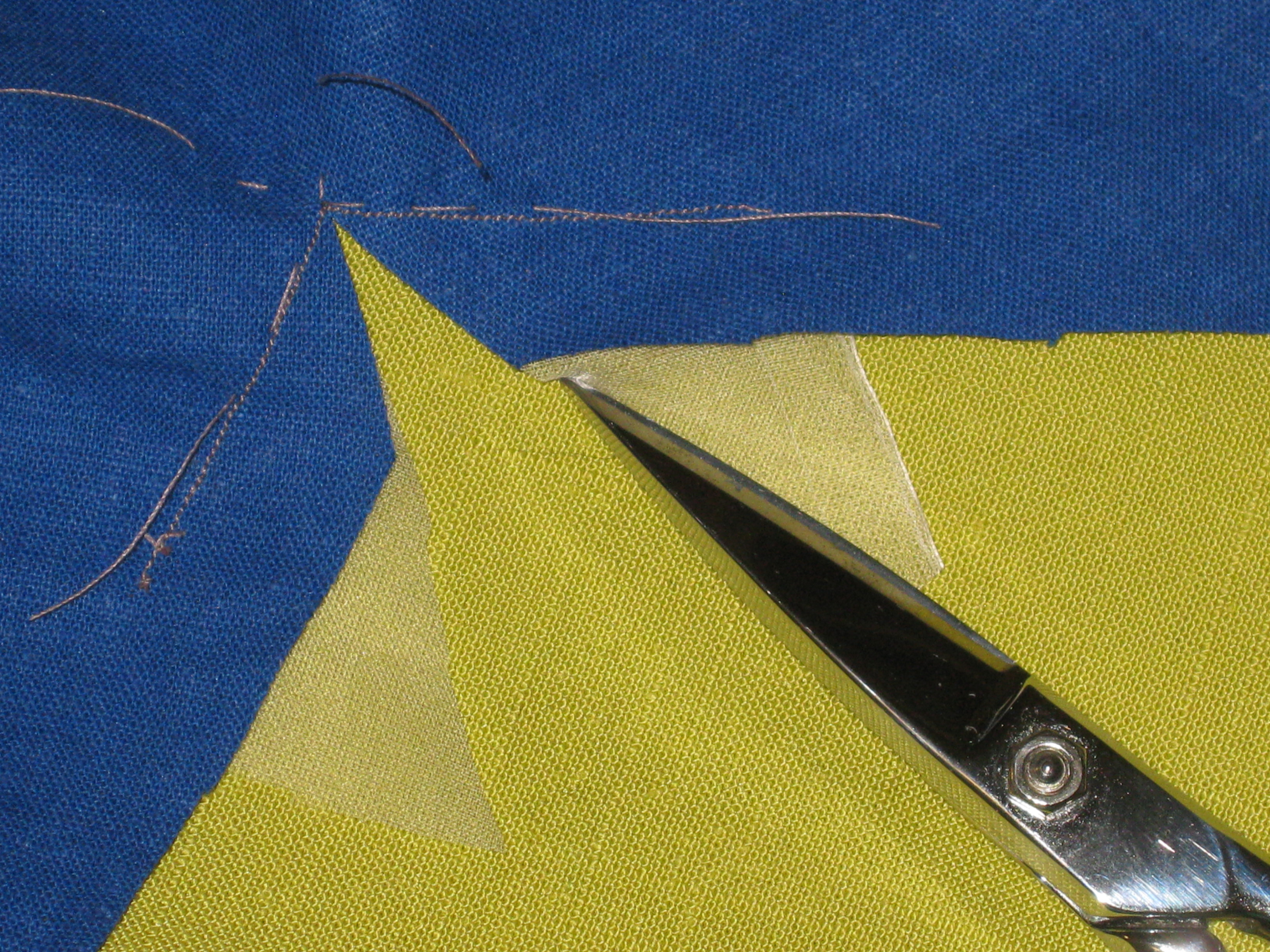
    Use small very sharp scissors to clip through both fabric layers to the pivot point.

    Use small very sharp scissors to clip through both fabric layers to the pivot point.

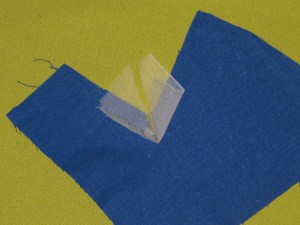
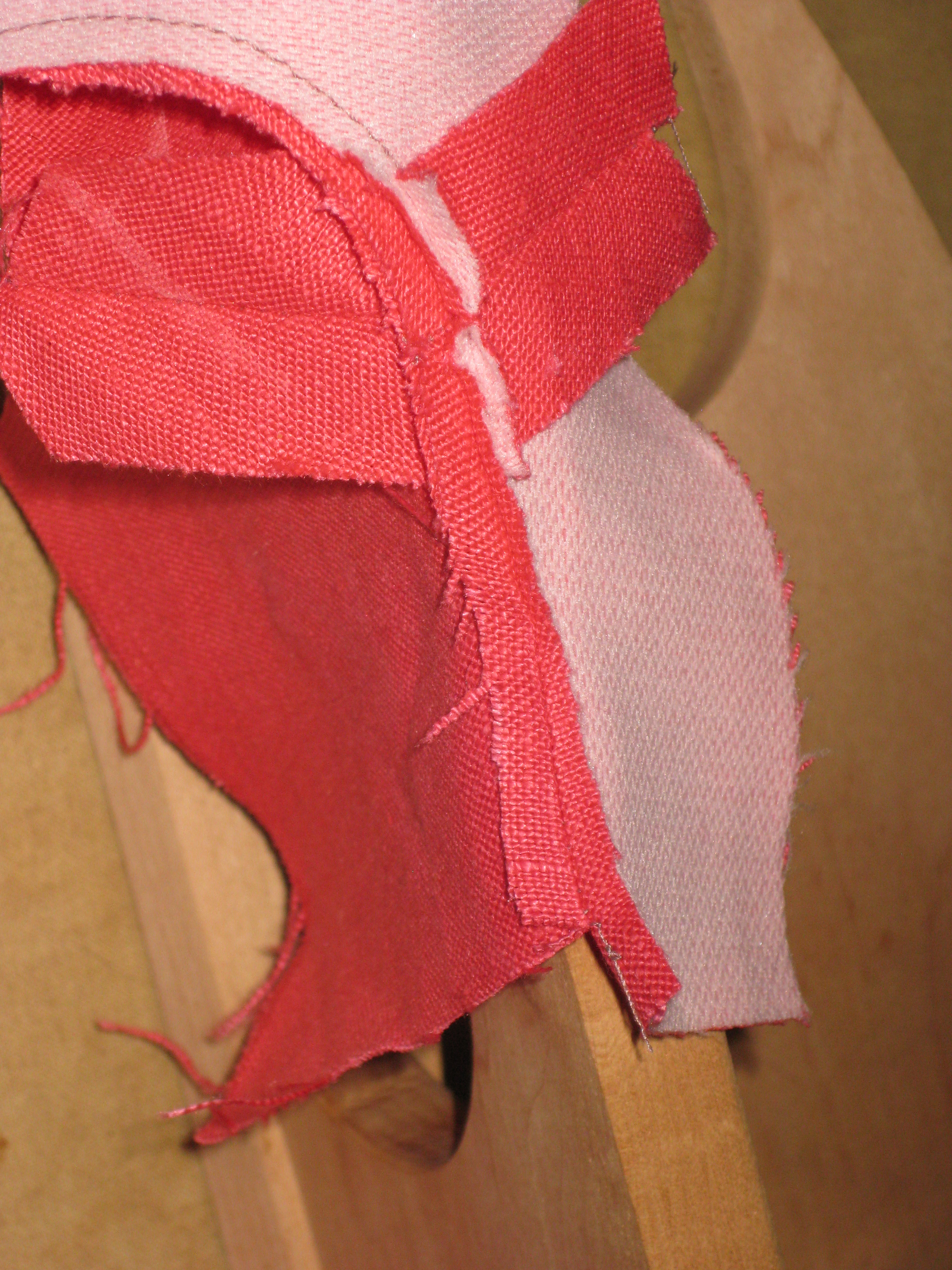
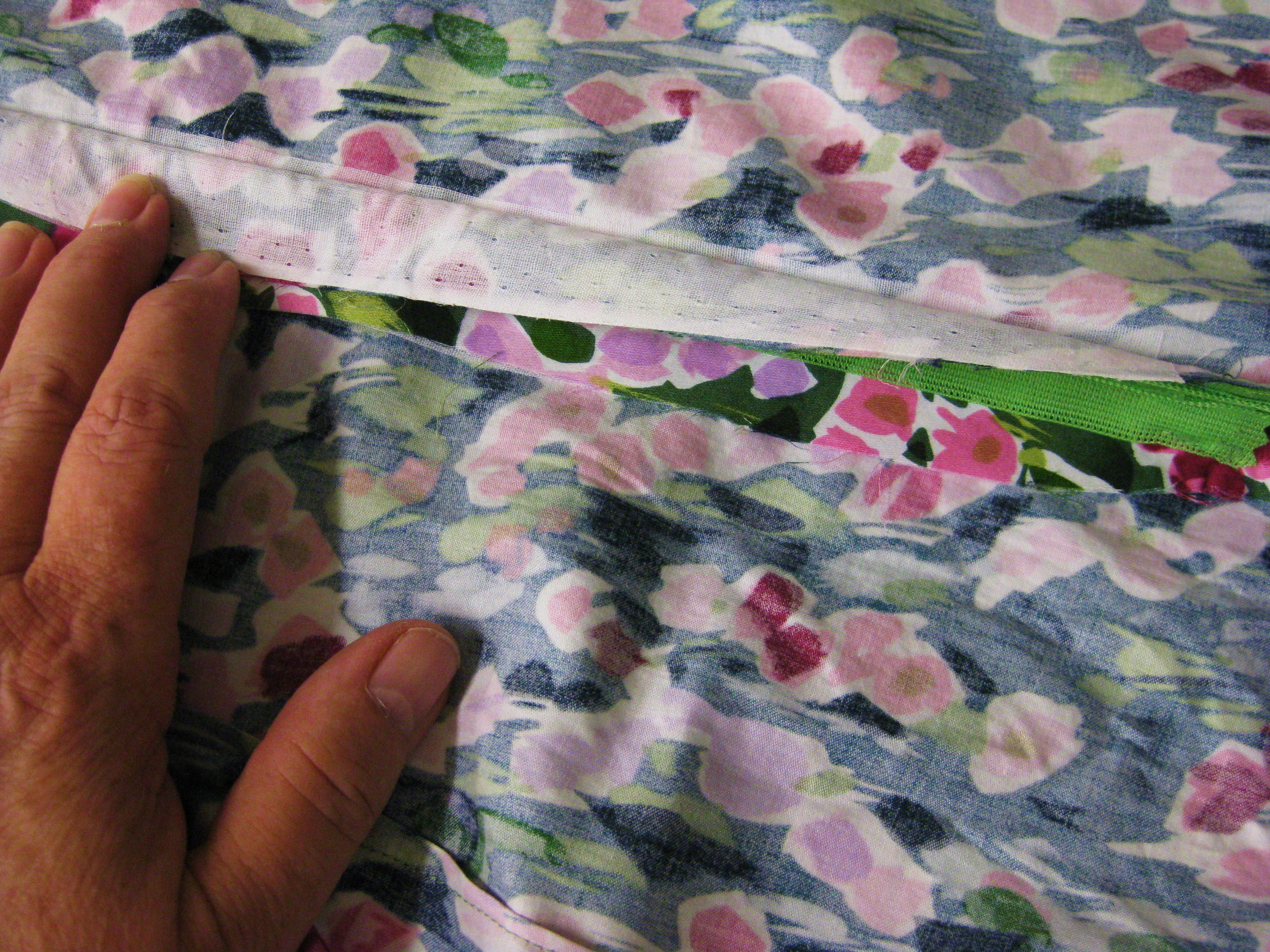
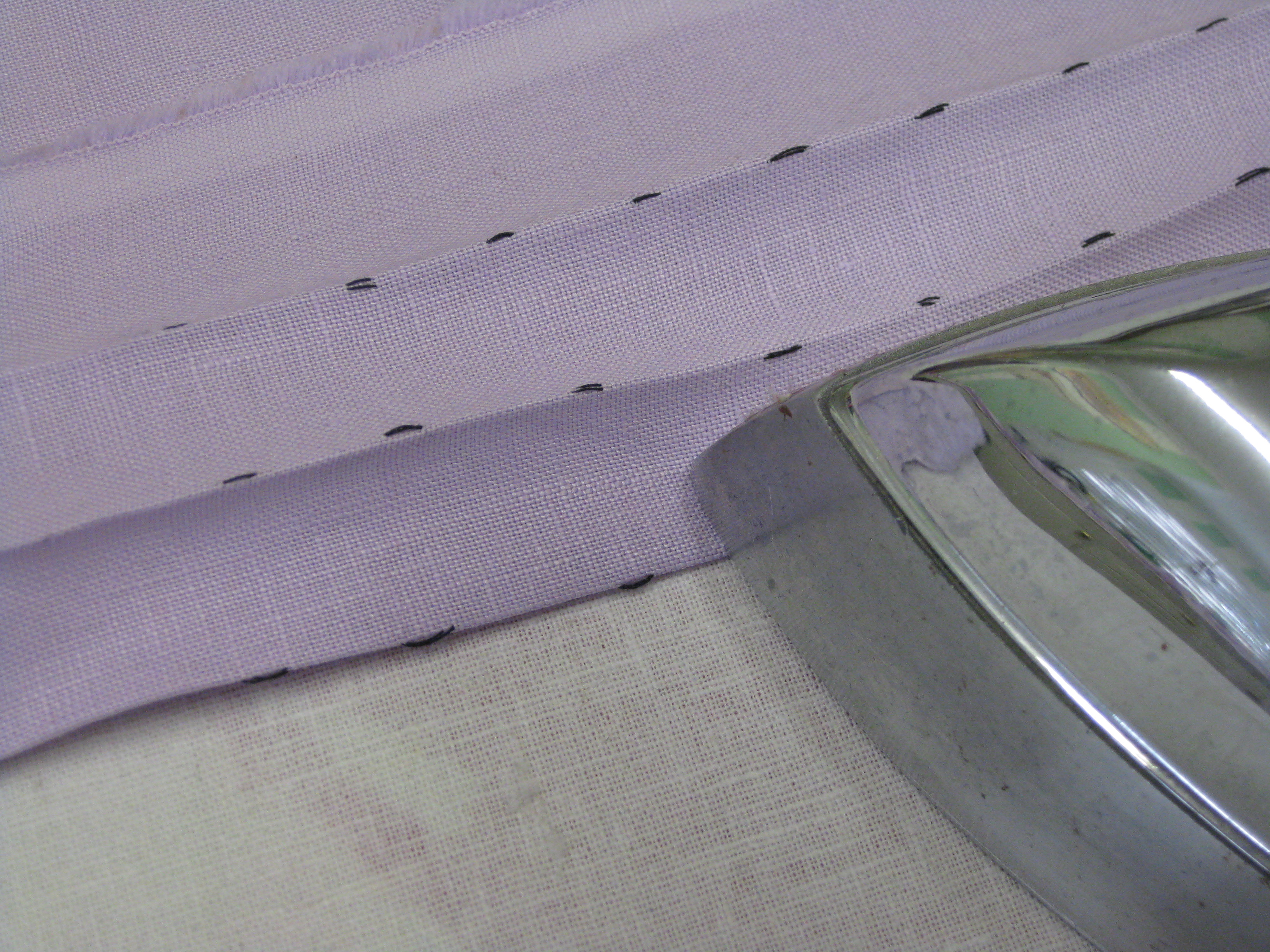
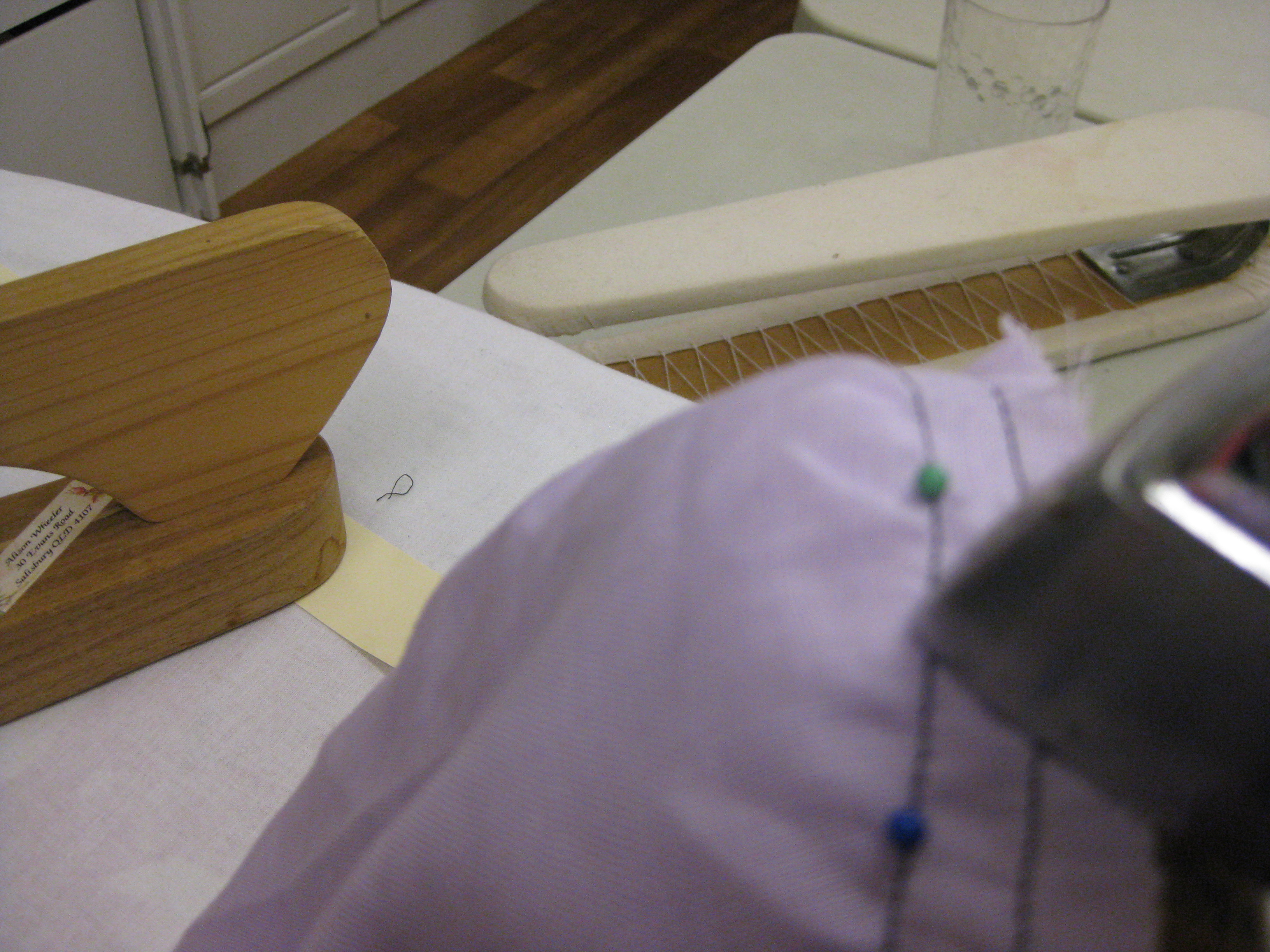
  • Fold the organza towards the seam allowance and press in place

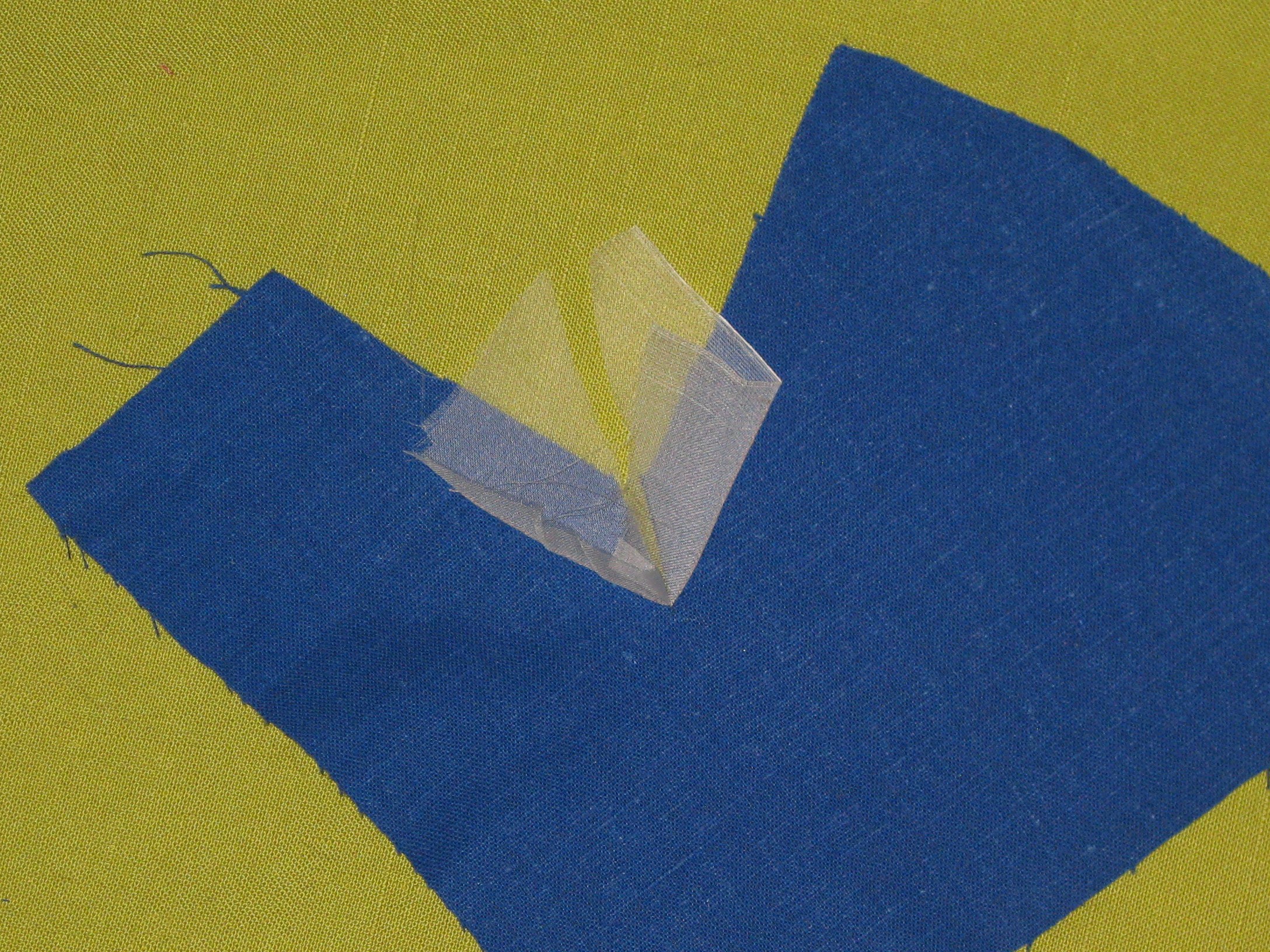
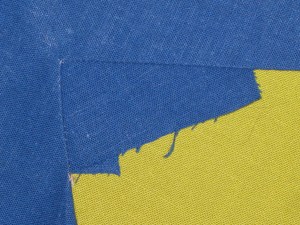
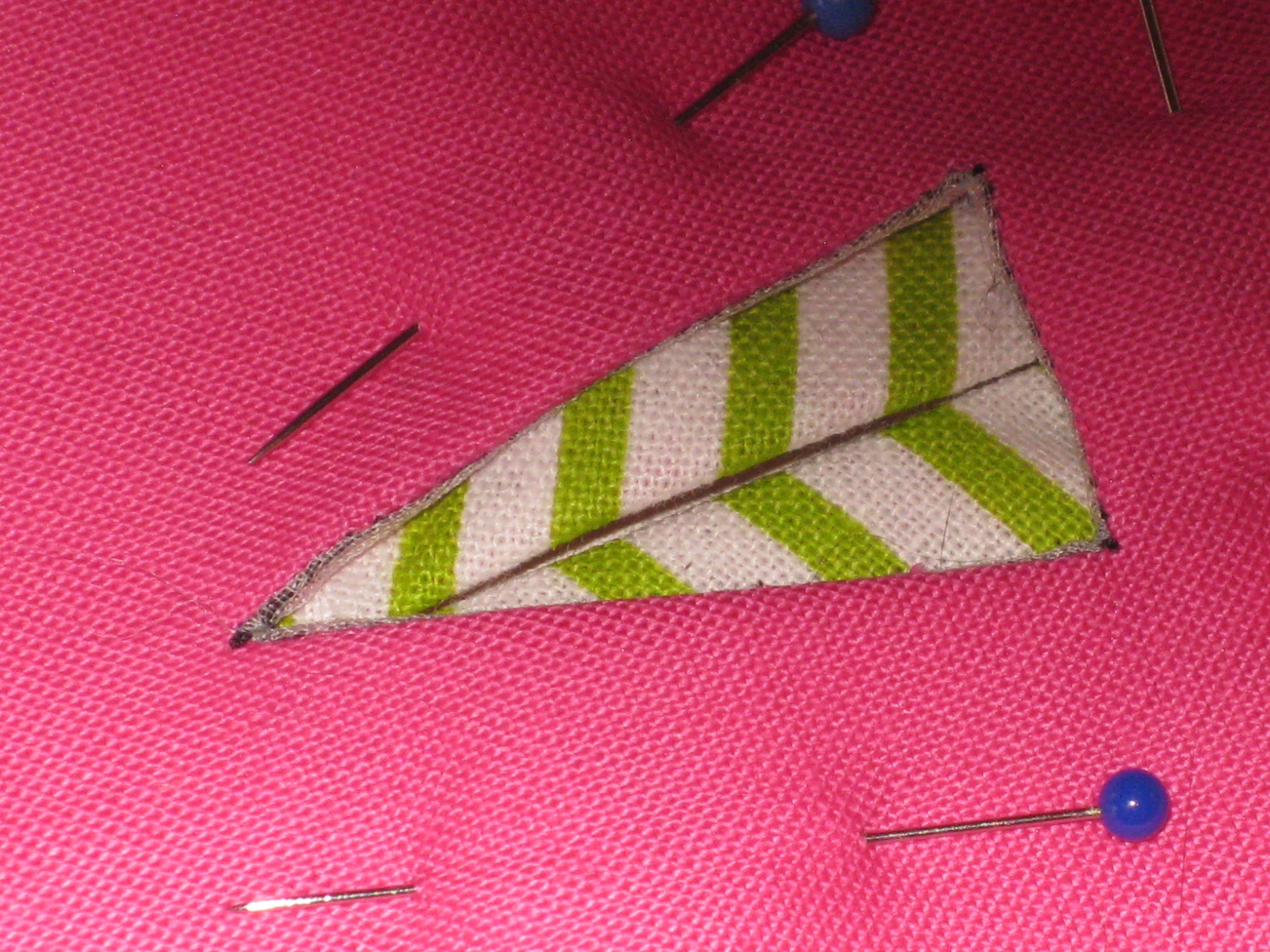
    Press the silk organza away from the seam lines.

    Press the silk organza away from the seam lines.

When using loose weave woven fabrics, stretch woven fabrics or knits:

  • Cut an on grain 5cm/2” square of silk organza
  • Cut an on grain 1cm/ ½” strip of fusible interfacing
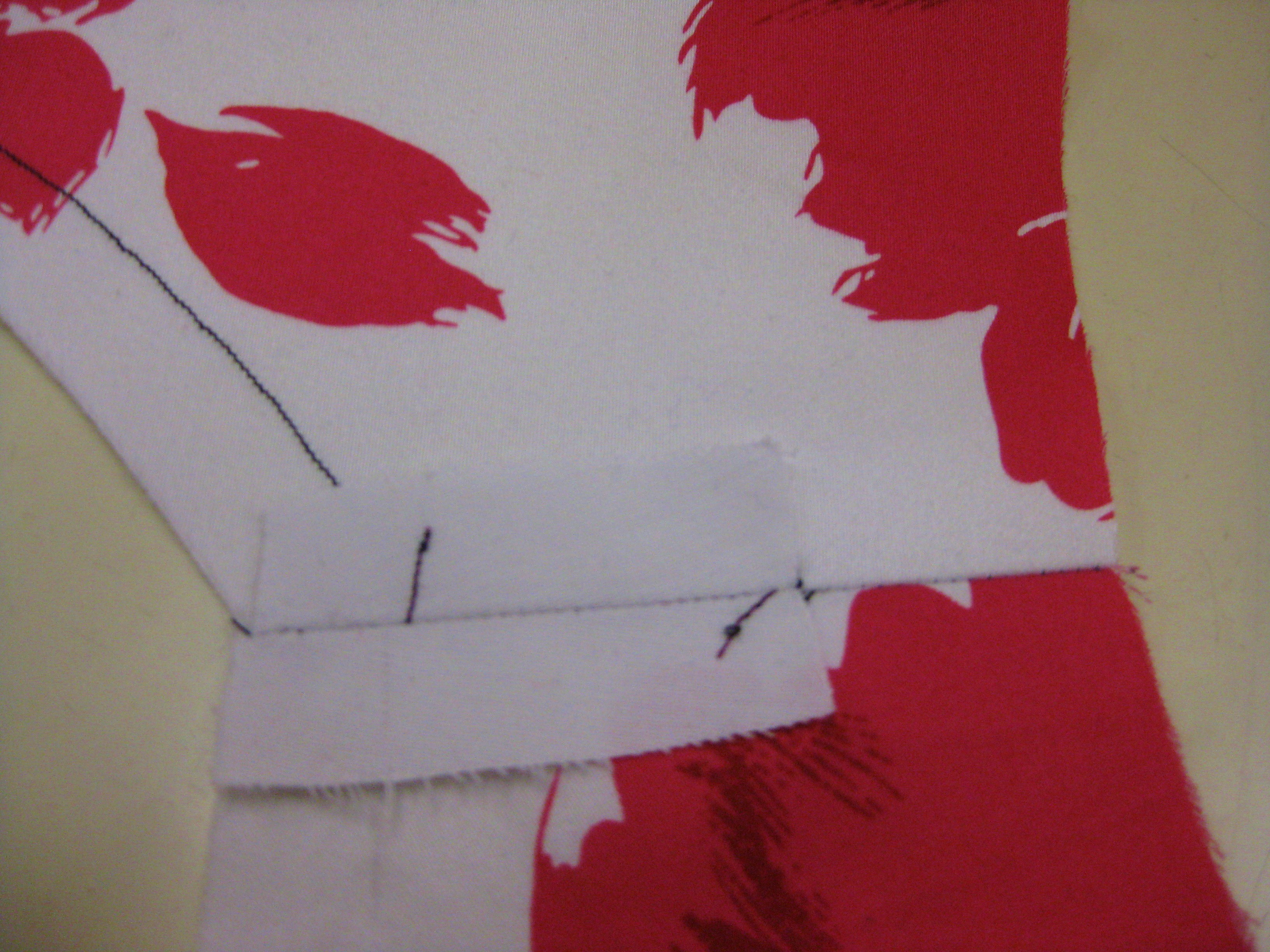
  • On the wrong side of the fabric, position the strip of interfacing centred over the seam lines on either side of the pivot point (usually marked with a small dot)
  • Cover with organza press cloth and carefully press to fuse interfacing in place

    Strips of fusible interfacing will protect the pivot point when it is clipped and prevent the stretching of seams.

    Strips of fusible interfacing will protect the pivot point when it is clipped and prevent the stretching of seams.

  • Pin the organza in place (again centred over the exact pivot point) against the right side of the fabric
  • Stay stitch using a stitch length of 1.0-1.5 on the seam line of the corner
  • If the fabric frays easily, use a toothpick to place a tiny drop of FrayCheck© on the wrong side of the fabric exactly over the pivot point – allow to dry thoroughly
  • Continue as above

Attaching the inset fabric:

The key to success is to stitch the seams on either side of the pivot point, one at a time.

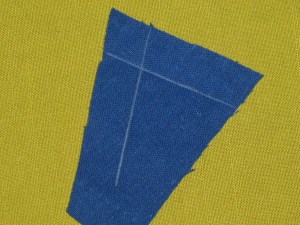
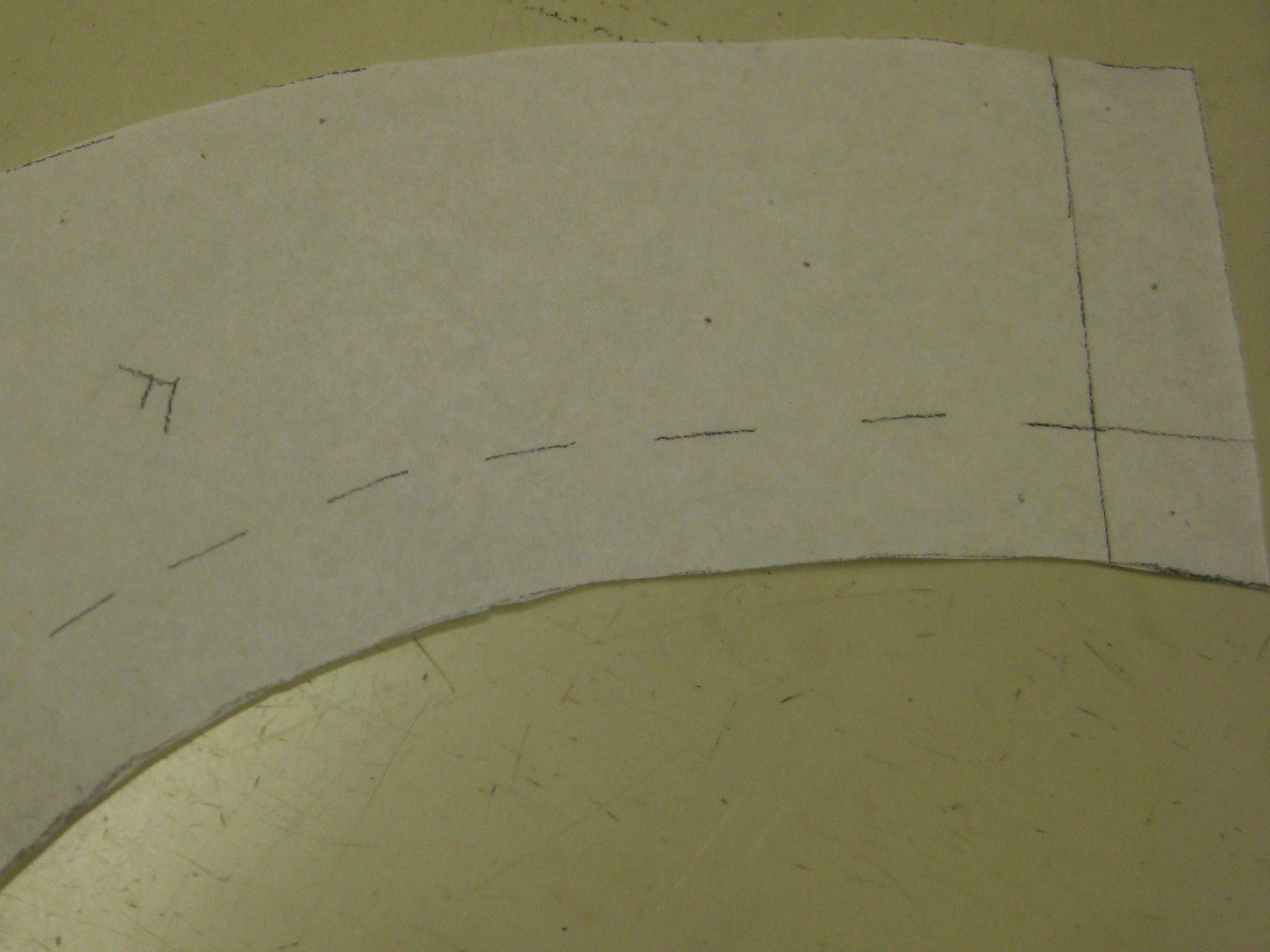
  • Mark the sewing line on the piece to be inserted

    Mark sewing lines on piece to be inserted.

    Mark sewing lines on piece to be inserted.

  • Matching the pivot points on both sections, pin with right sides together and organza inside the seam allowance, with the stay stitched side of the fabric upwards

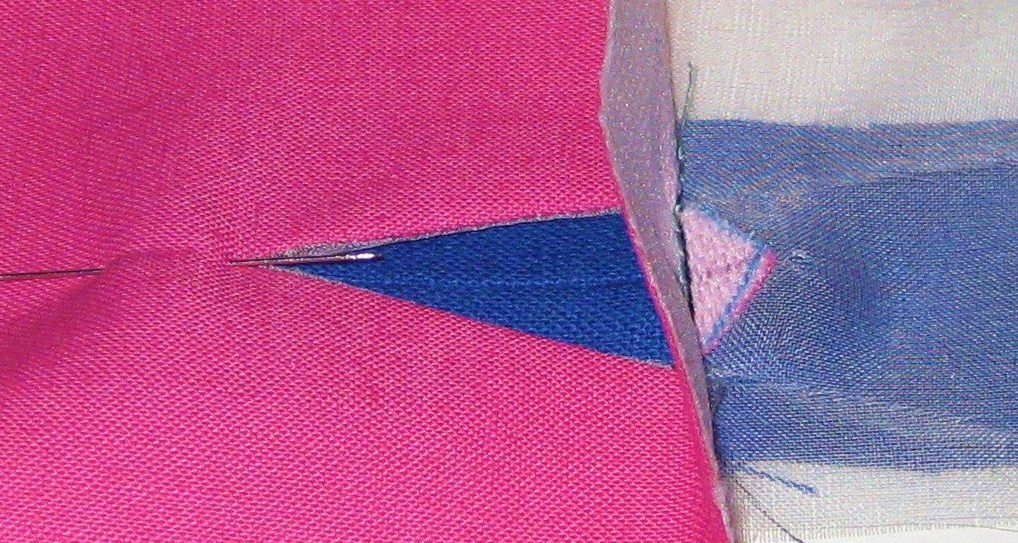
    Position fabric pieces with right sides together and the pivot point and seam lines aligned.

    Position fabric pieces with right sides together and the pivot point and seam lines aligned.

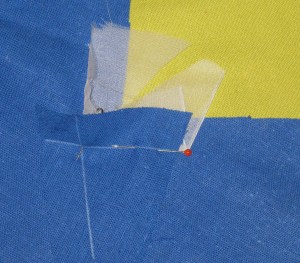
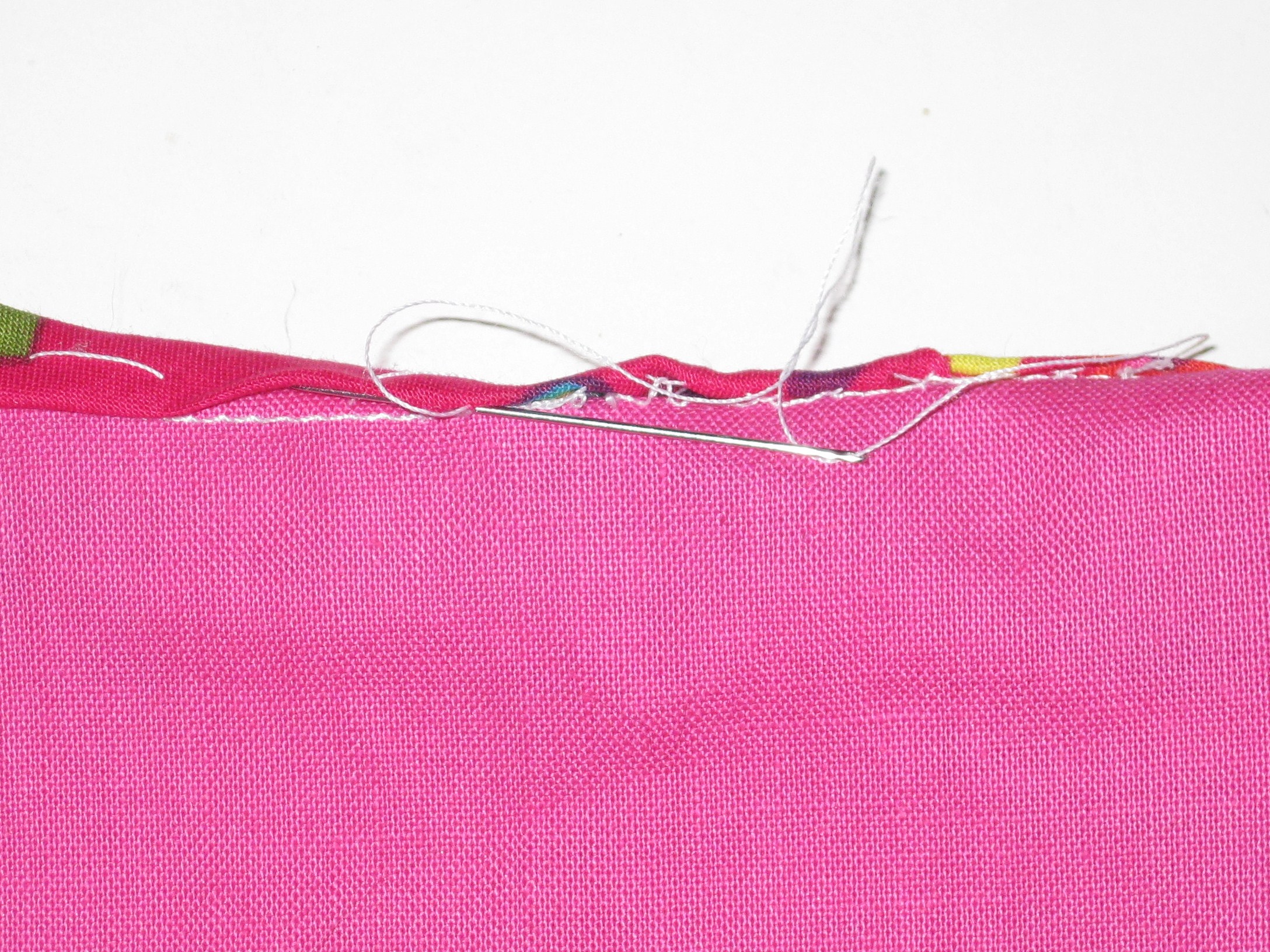
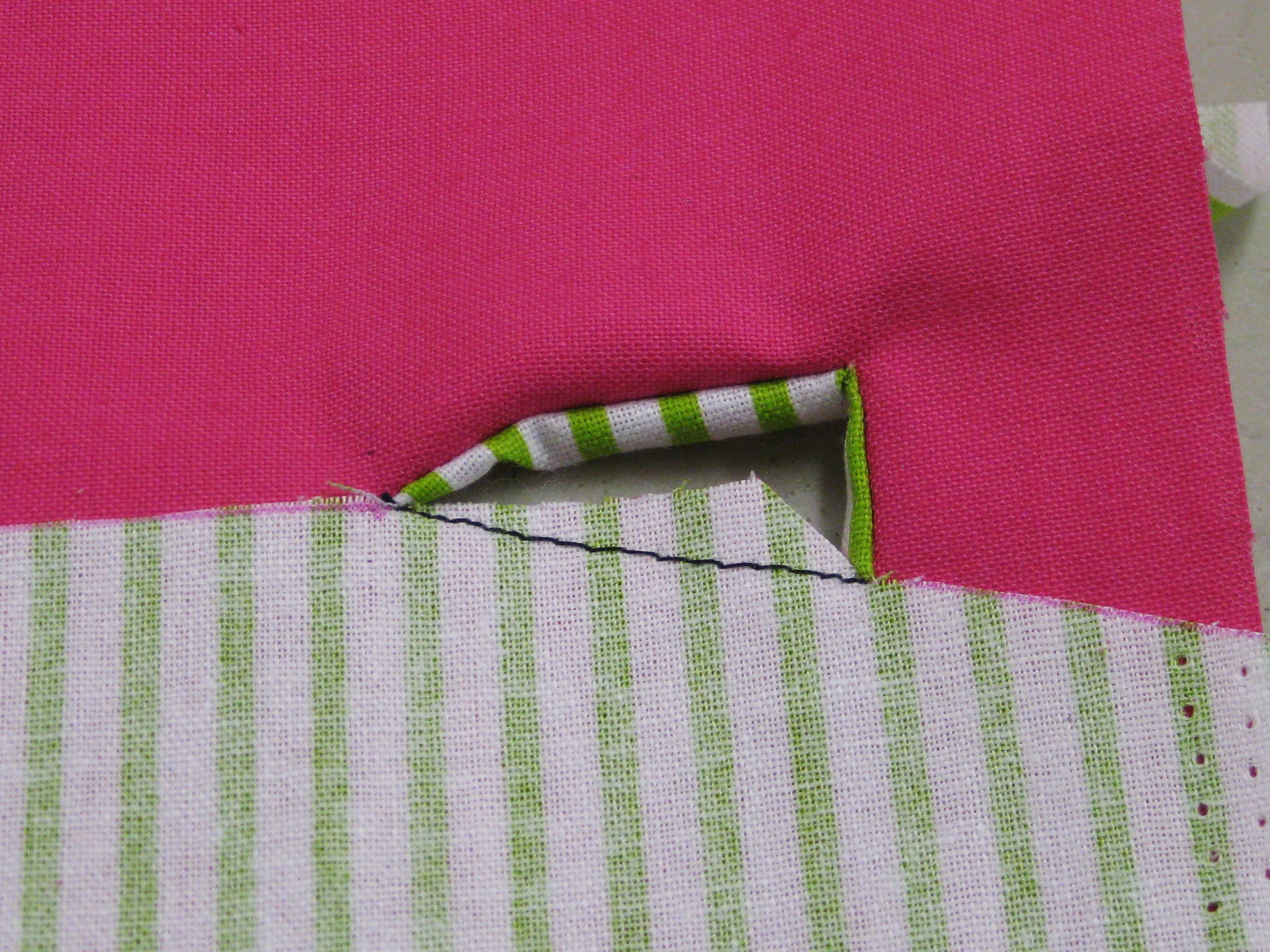
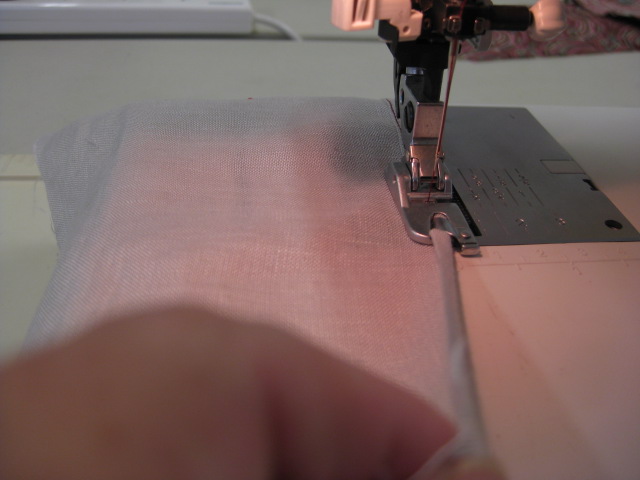
  • Stitch through the point on one side - keeping the stay stitching in view.

    Stitch through the point on one side – keeping the stay stitching in view.

    Start stitching approximately 6mm/ ¼” before the pivot point and continue just on the garment side of the stay stitching

  • Flip the fabric and repeat on the other side – the stitching will be in the opposite direction but it is more important to see the stay stitching line in both steps
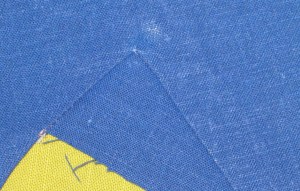
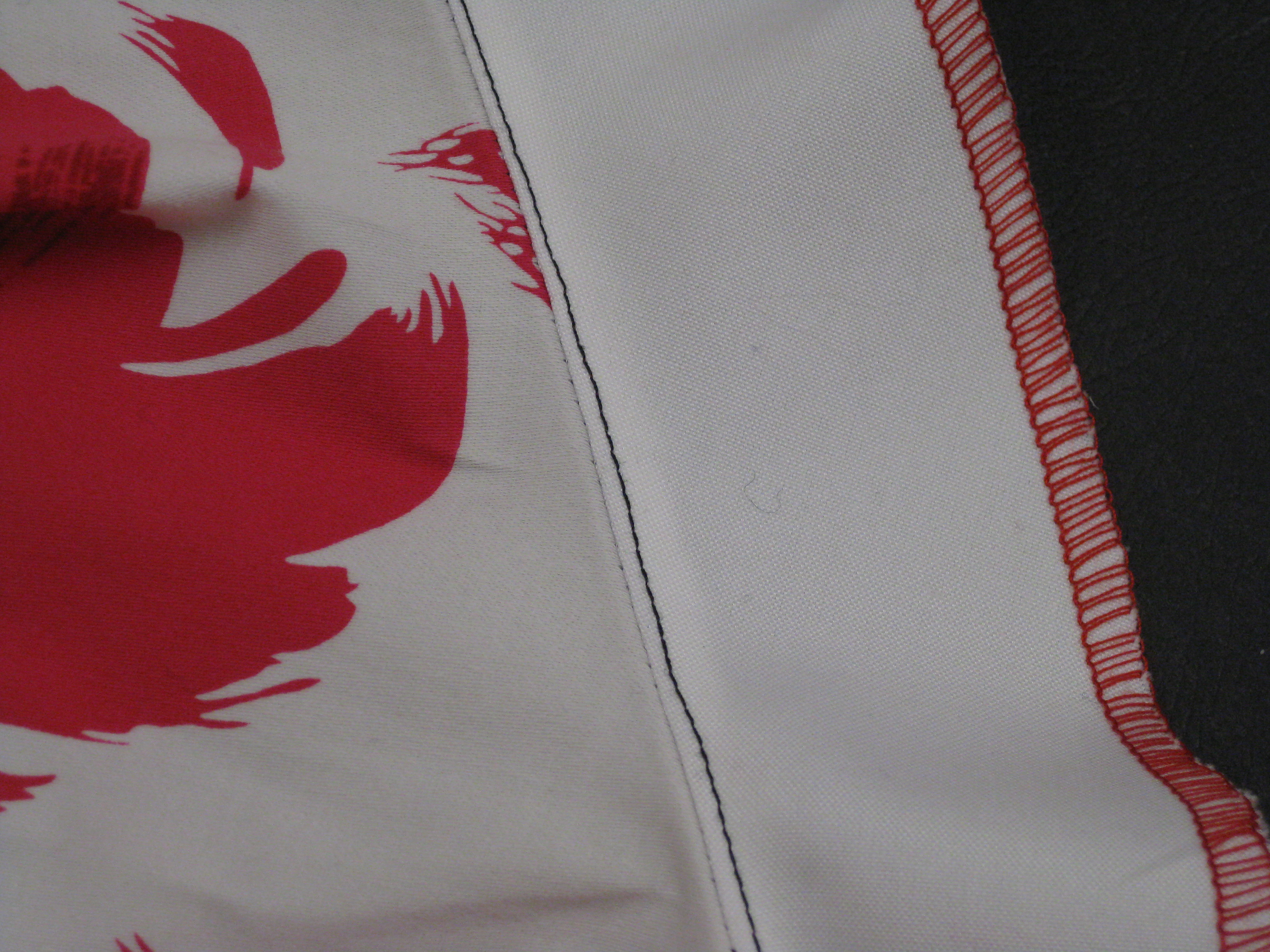
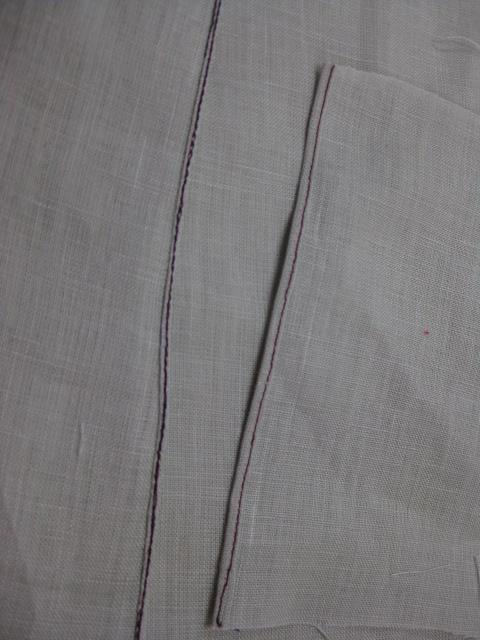
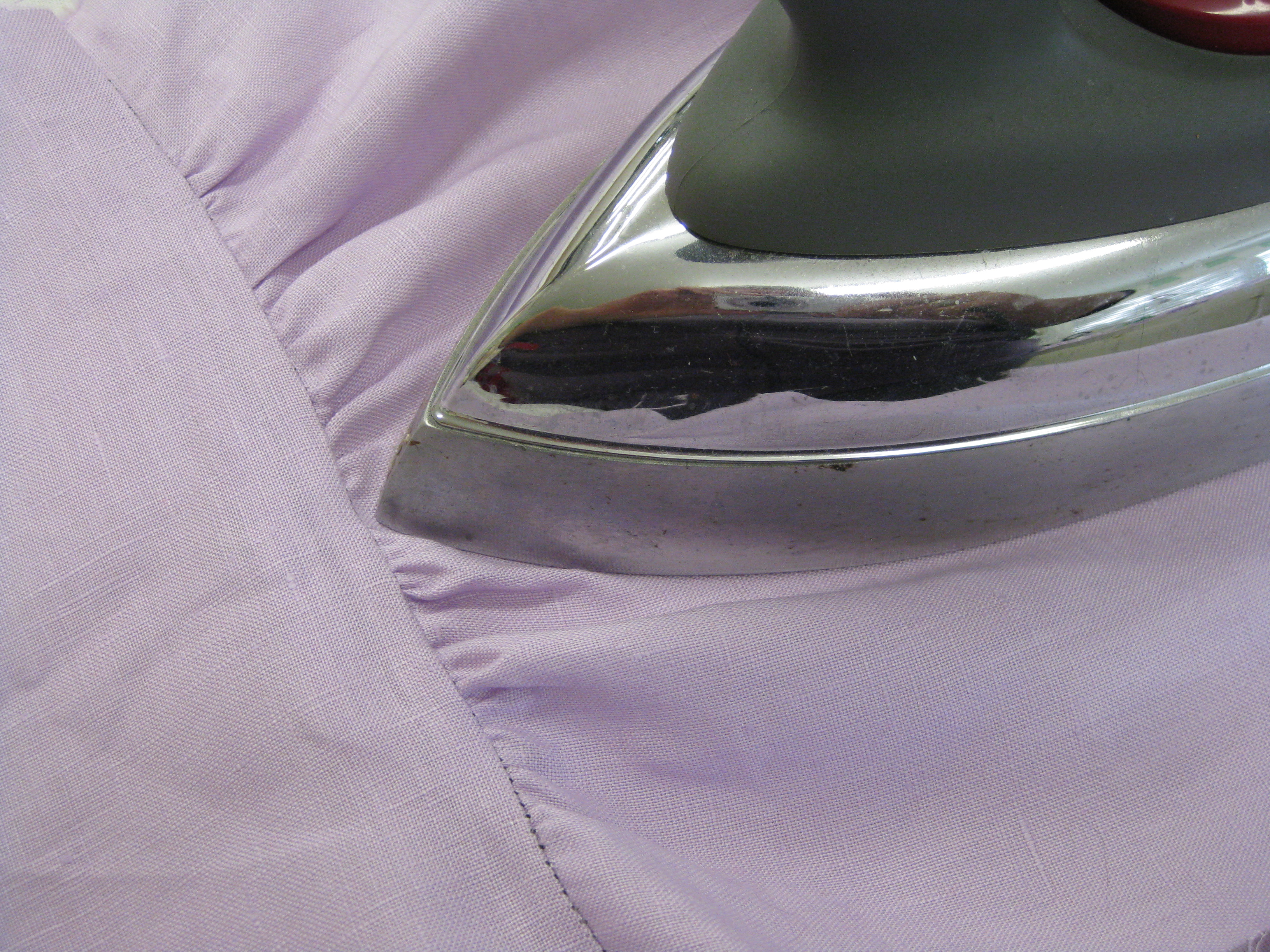
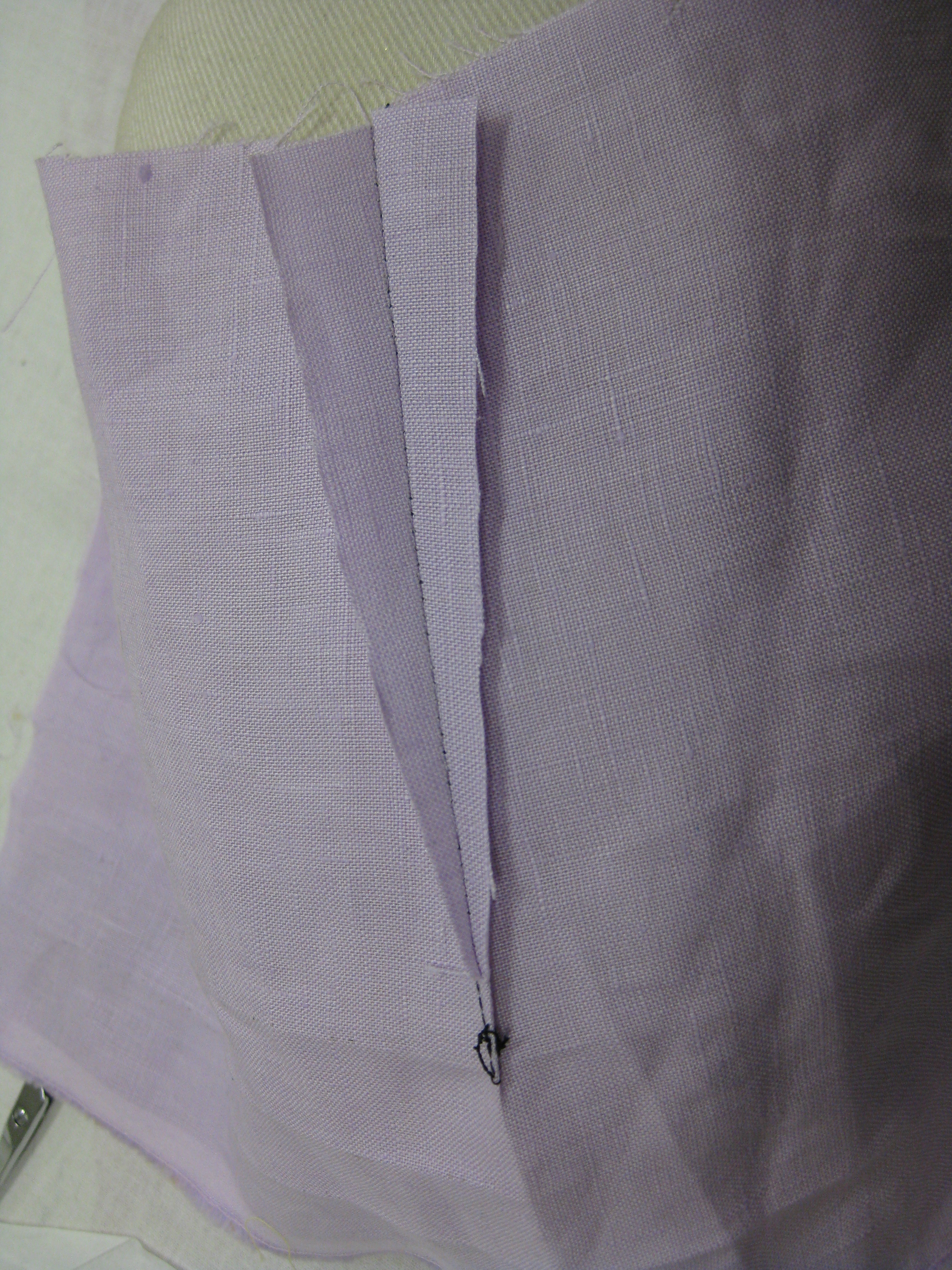
  • The finished seam can be pressed towards away from the inset corner or seam allowances can be pressed open for a smoother finish on both sides of the seam line.Face side with seam allowances pressed away from corner.
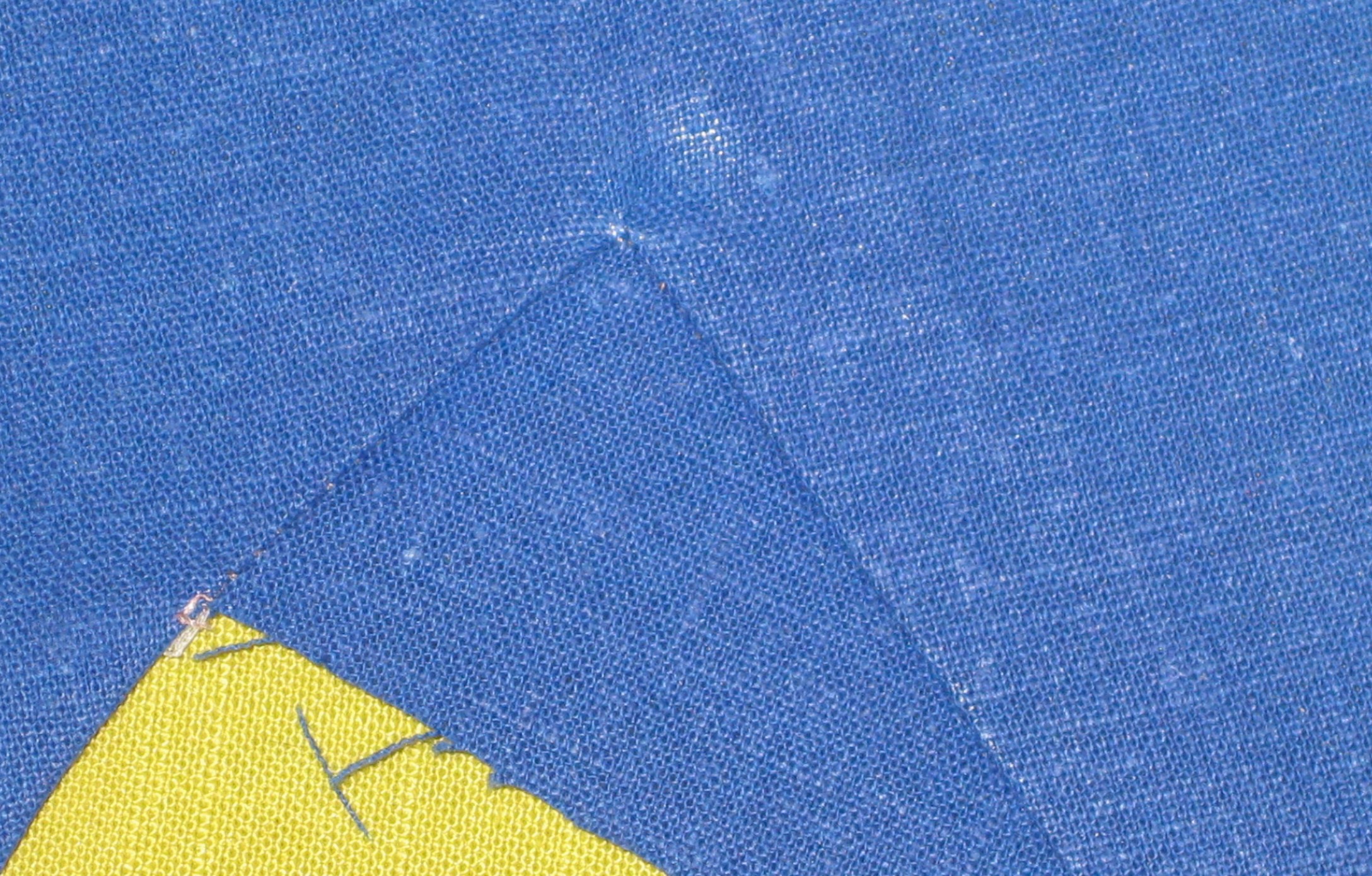
    Seam allowances pressed away from corner.

    Face side with seam allowances pressed away from corner.

    Face side with seams pressed open - surface is smoother.

    Face side with seams pressed open – surface is smoother.

    A very common feature in vintage patterns from the 1950’s is an extended sleeve with an inbuilt gusset to allow the maximum range of arm movement.  I made this dress a year ago. The original pattern has the gusset section on the front bodice but not the back.  When I made my initial toile, I discovered that this was not very comfortable and I added the same feature on the back bodice.   It has been extremely comfortable to wear.

    Vintage Vogue 2401

    Vintage Vogue 2401

    Vintage Vogue 2401

    Vintage Vogue 2401

    Vintage Vogue 2401

    Vintage Vogue 2401

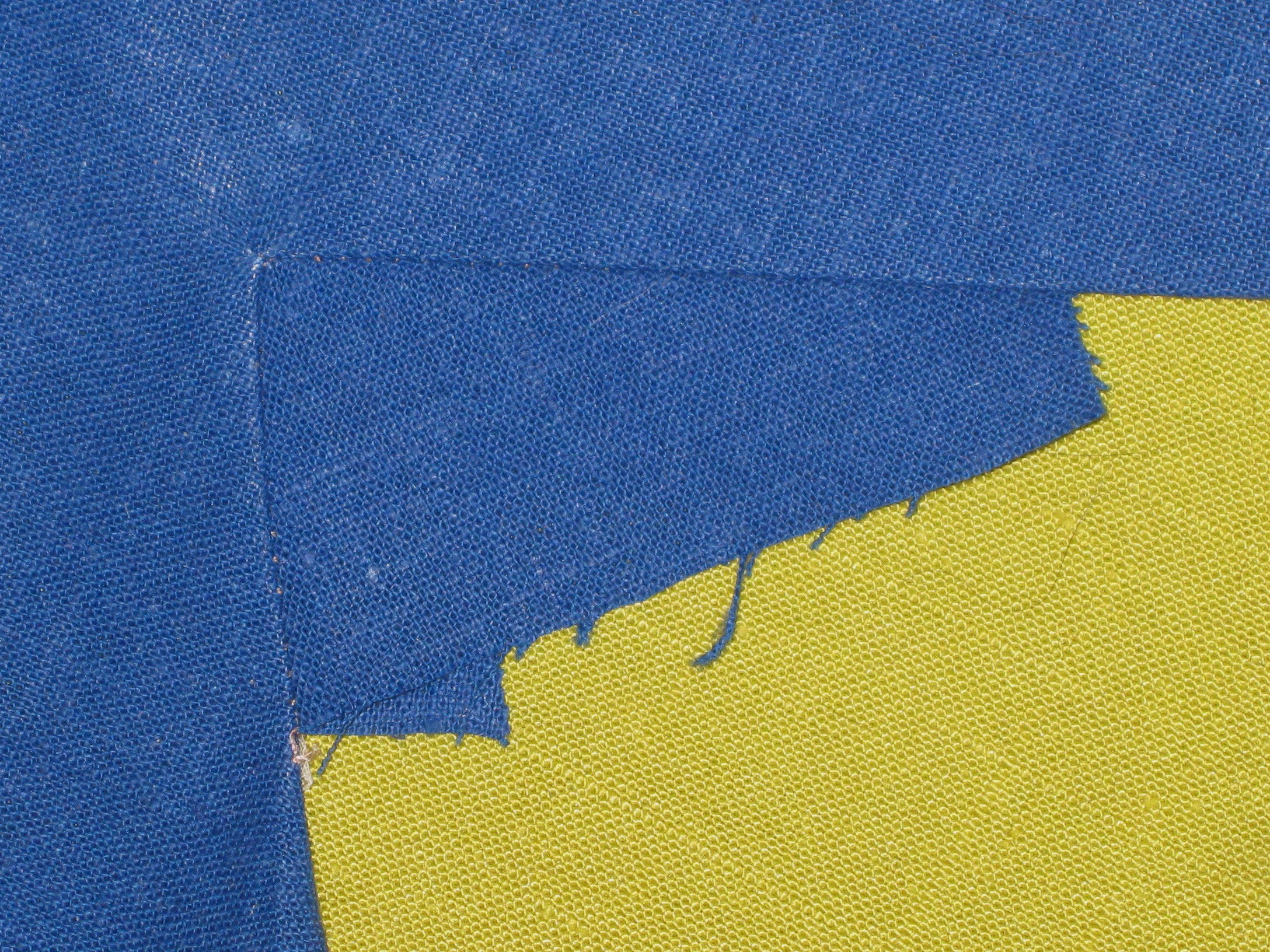
    Seam allowances pressed open at side seams and away from armhole seam in underarm area.

    Seam allowances pressed open at side seams and away from armhole seam in underarm area.

Before You Start Sewing

When we are about to start a new project it is so easy to be swept up in thoughts of how beautiful the fabric feels; the beautiful lines of our chosen style  and how we will look and feel when we wear our beautiful new creation.

Taking a step back to think about preparing the pattern and fabric and the techniques we will need to use is such a good idea on many levels.

Pattern Preparation

If you need to make a number of alterations, it is a good idea to trace the pattern pieces in your chosen size on to greaseproof paper.  The benefits of doing this are:

  • your original pattern is preserved (with all sizes in tact)
  • confusion between different markings for multi sizes can be minimised
  • seam lines can be marked and grainlines extended
  • seam allowance widths can be varied if desired
  • the pattern can be pinned together (along the sewing lines) with the writing side out and tried on to check the placement of details like necklines, pockets, etc.
  • alterations for fit can be made
  • additional pieces can be cut to make pattern matching with a single layer layout easier

Creased patterns affect accuracy so, if your pattern is creased, place it writing side down on your ironing surface and iron it flat with a warm, dry iron.

Fabric Preparation

Even though I love the feel of wearing a creation I have made using the as new fabric without pre-treating it, I have had a couple of disappointing experiences caused by not taking the time to either wash or steam my fabric before cutting out my garments.

One garment shrunk a whole size when fusible interfacing was applied.  Steaming the fabric beforehand would have avoided this problem.  The other experience was the garment shrinking during its first wash; again had I washed the fabric first this would not have happened.

In recent times, many natural fibre fabrics contain 3-5% Elastene© or Lycra© threads for comfort and to make them less prone to creasing.  These elastic threads are most commonly found in cotton but can also be found in silk, linen and woollen fabrics.  It is very important to pre-treat these fabrics to avoid lengthwise shrinkage during washing and/or steaming.  As a general rule, fabrics with polyester as the major fibre do not need to be pre-treated.

Remember when selecting fabric, it is always wise to take note of the care instructions.  Fabric retailers are required to have these attached to the bolt so if you can’t find them, ask the assistant.  Taking a quick photo of the tag can provide a helpful reminder for future fabric care too.

If the fabric has been stored for a while and you are not sure if it has been pre-treated, it is worth washing or steaming it before use.  Always make sure that the fabric has been ironed smooth and creases from storage removed before layout out for cutting.

Tear or pull a thread and cut on the crosswise grain.  If the selvages will not lie flat, carefully clip into them along the length of the fabric so the fabric is not distorted.

Fabric Layout

The key to success with any garment is accuracy in laying out the pattern and cutting the fabric.  Mistakes at this stage will affect how the garment goes together.

Pattern layouts are computer generated to minimise fabric wastage so following the layout as detailed in the guide sheet for different sizes and fabric widths is usually the best way to go with plain fabric.  However, there are other considerations as well.

If the pattern has been altered resulting in increased width and/or length, this will need to be factored into the layout as these changes often require additional fabric.

When using patterned fabrics (especially large graphic prints or florals or plaids), consideration also needs to be given to whether you will have enough additional fabric to place large florals attractively or match plaids or one-way prints.

If you fall in love with such a fabric, be sure to measure the pattern repeat and allow an additional repeat for each major pattern piece when you are purchasing.

Using a gridded cutting board is a great help with laying out the fabric on grain, especially when using loose weave or slippery fabrics.

When folding fabric for a double layout, right sides should be together.  This makes marking the fabric easier.  With a single layout, the fabric is placed with right side up.  Single layout is usually required for asymmetrical pieces and pattern pieces are usually placed with the writing side up.

There are many different options for holding the fabric in place for cutting.  When making my choice, I consider the number of pattern pieces, the fabric thickness and properties:

  • How many pattern pieces are there?
  • Will the whole layout fit on my cutting surface?
  • How thick is the fabric?
  • Is it stable?
  • Is it very slippery and difficult to keep in place?

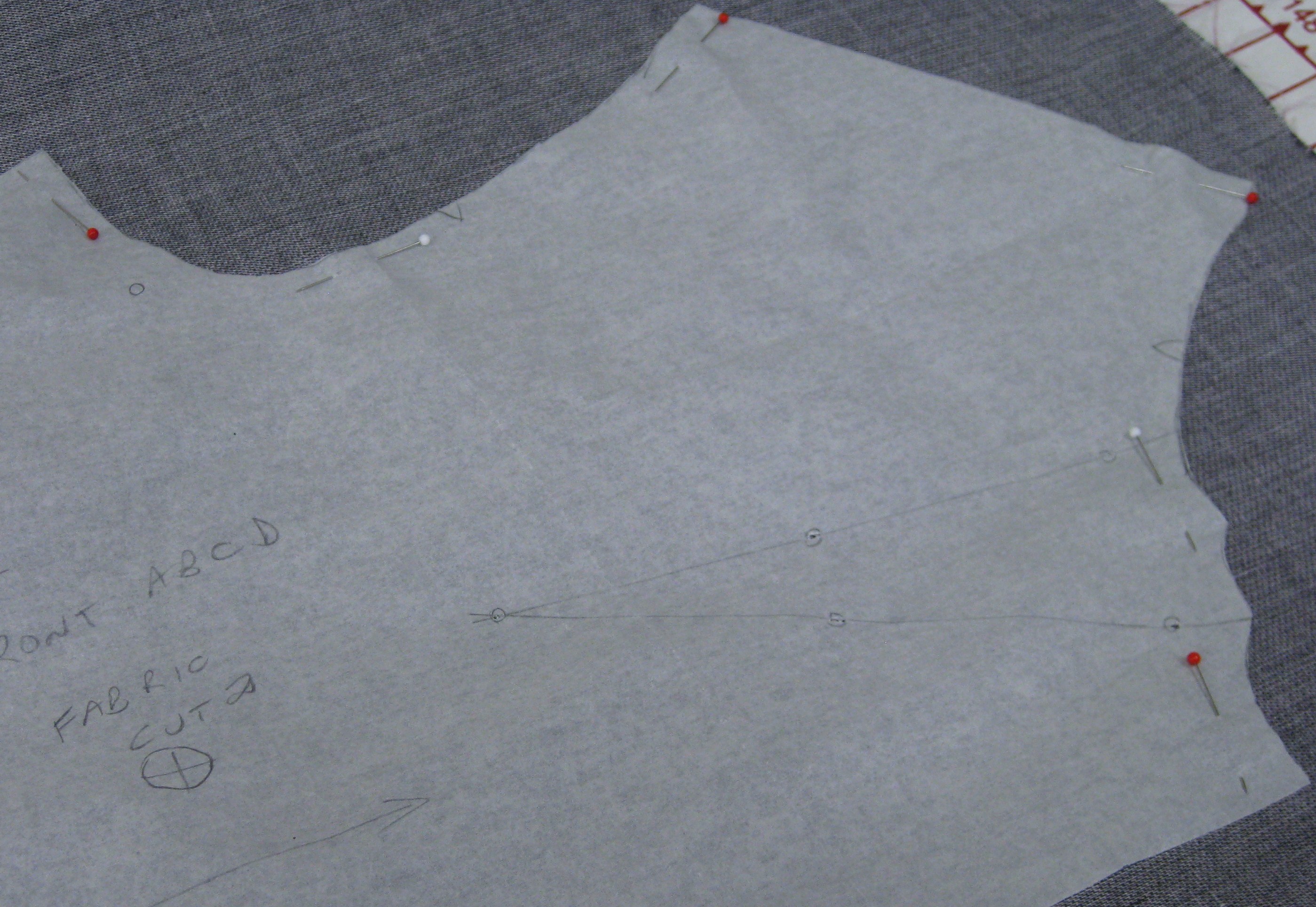
When working with a pattern with lots of pieces, I like to use pins placed within the seam allowances (to minimise the chance of marking my fabric) and parallel to the cutting edge as I feel this gives me the best control of the fabric when I am cutting.  Pinning in the corners and the centre of curves makes my cutting much more accurate.
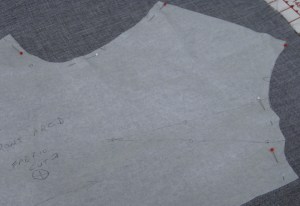
I prefer to pin within the seam allowance and parallel with the seam line. Make sure corners and the mid point of curves are pinned so they will not move when fabric is being cut.

I prefer to pin within the seam allowance and parallel with the seam line. Make sure corners and the mid point of curves are pinned so they will not move when fabric is being cut.

However, for garments with less pattern pieces and when using very stable fabrics and some knits, I use pattern weights.  Unless you have extra long pins, weights are also useful when the fabric is very thick and being cut with a double layout.

Align the selvages and crosswise grain of the fabric.  To avoid distortion during the cutting process, roll the fabric that would extend beyond the cutting surface so it will remain on the table and not fall off the edge.  The fabric can then be rolled at the pinned edge as you work your way along the yardage.

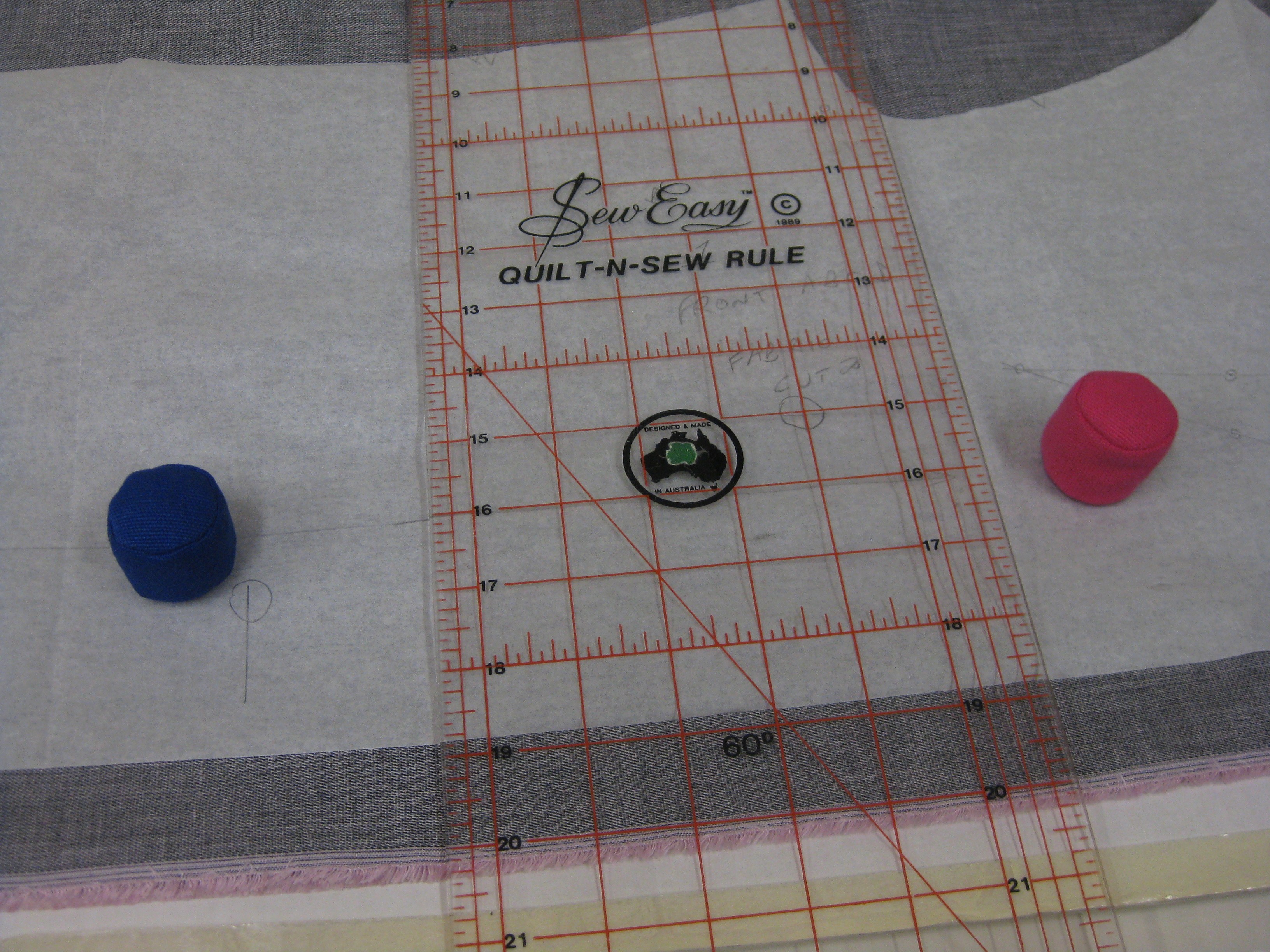
When laying out the pattern pieces, I always use a ruler to measure from grain lines to the selvage or fold.  It is difficult to be sure that a tape measure is actually at a perfect right angle to the edge and this can result in pieces being cut slightly off grain.  The weight of the ruler also helps by holding the fabric in place for pinning.

For very long pieces, for example a full length skirt or dress and pants, I extend the pattern grainline from top to bottom.  I measure from the grainline to the selvage/fold in the centre of the piece and anchor it with a pattern weight before repeating the process up and down along the whole length of the garment to check the grainline with my ruler.  The reason I do not pin within the body of the garment is that I do not like to risk pulling a thread or marking my fabric with a damaged pin.  Once the grainline is held in place it is easier to smooth from the centre and pin around the edges of the pattern.
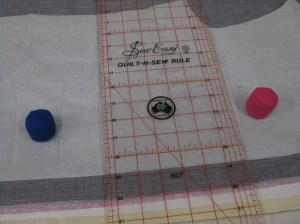
Use ruler to align grainline and weights to keep the grain line in place while pinning.

Use ruler to align grainline and weights to keep the grain line in place while pinning.

To place pattern pieces on the fold, I pin the top and bottom edges along the fold first.  While holding the centre of the pattern piece in place, I smooth across to the other side and pin.  So that I cannot pull a thread down the centre of a piece, I do not pin the pattern edge down the folded fabric.

Once all the pattern pieces are in place, cut roughly around each piece.  This preliminary step makes it possible to move the pieces so that you can cut at right angles to your body for greater accuracy.  If the scissors are parallel to your body, the bottom layer will be slightly wider than the upper layer and this will impact the ease with which the pieces go together during construction and the fit of the garment.

If for some reason you do not wish to cut all garment pieces at the one time, it is important to check that all the pieces fit your fabric yardage so that you do not run out of fabric when coming back to cut additional pieces.

Mark the wrong side of the fabric so that you do not inadvertently cut remaining pieces from the opposite side to your original pieces.
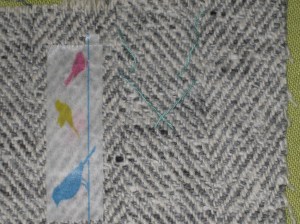
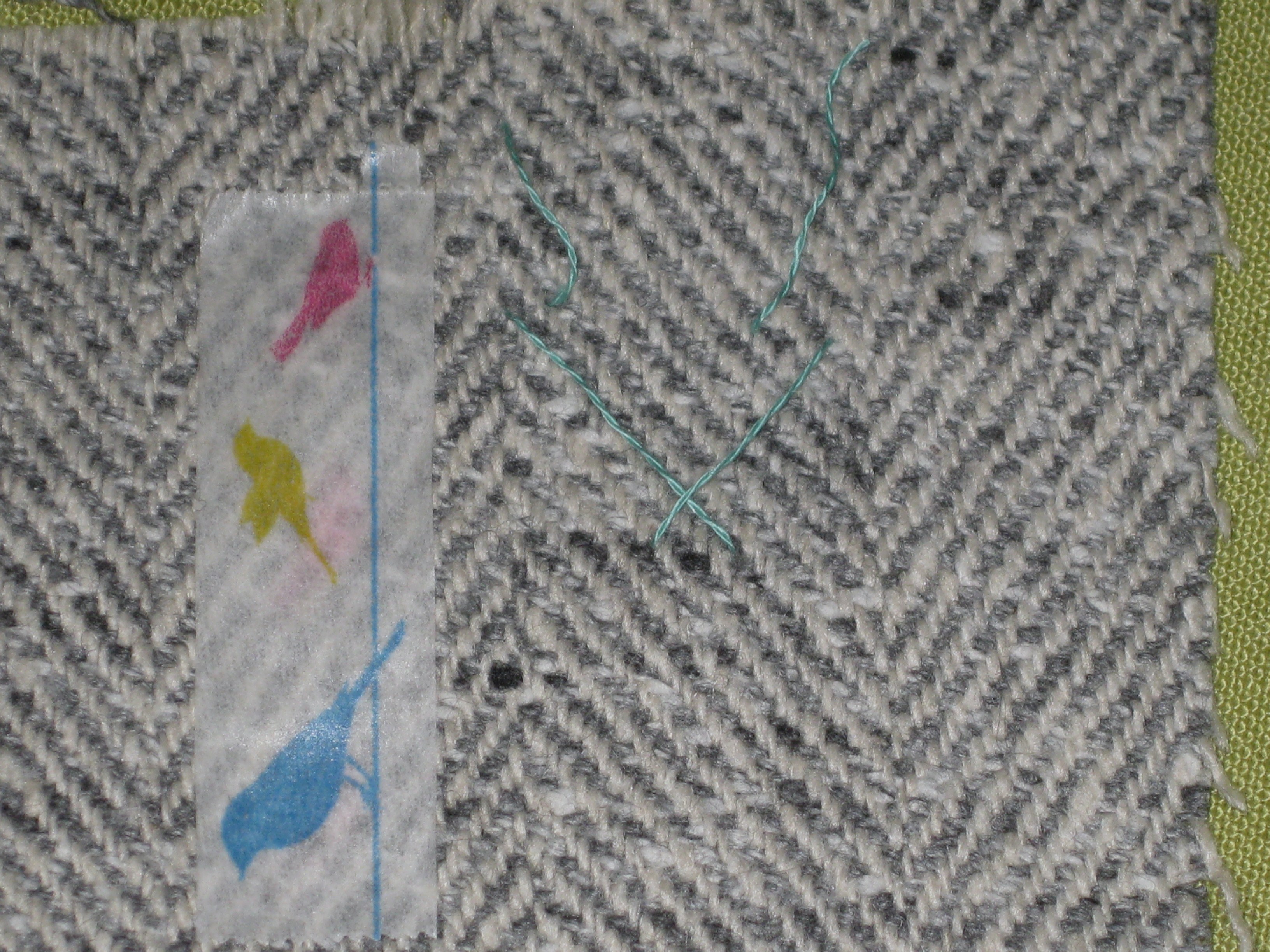
Use a piece of Washi tape or a hand stitch to indicate the wrong side of the fabric.

Use a piece of Washi tape or a hand stitch to indicate the wrong side of the fabric.

It is never a good idea to leave pattern pieces pinned to fabric for any length of time, especially if you live in a humid climate.  If you find a bent, burred or blunt pin, dispose of it immediately.

Cutting Out

I prefer to use dressmaking shears to accurately cut my pattern pieces.   The exception is when I am cutting straight pieces (waistbands, tab fronts, belt loops, etc) which I cut using a rotary cutter, mat and ruler.
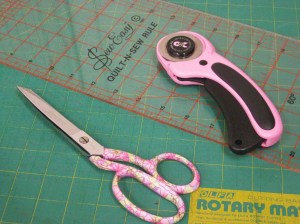
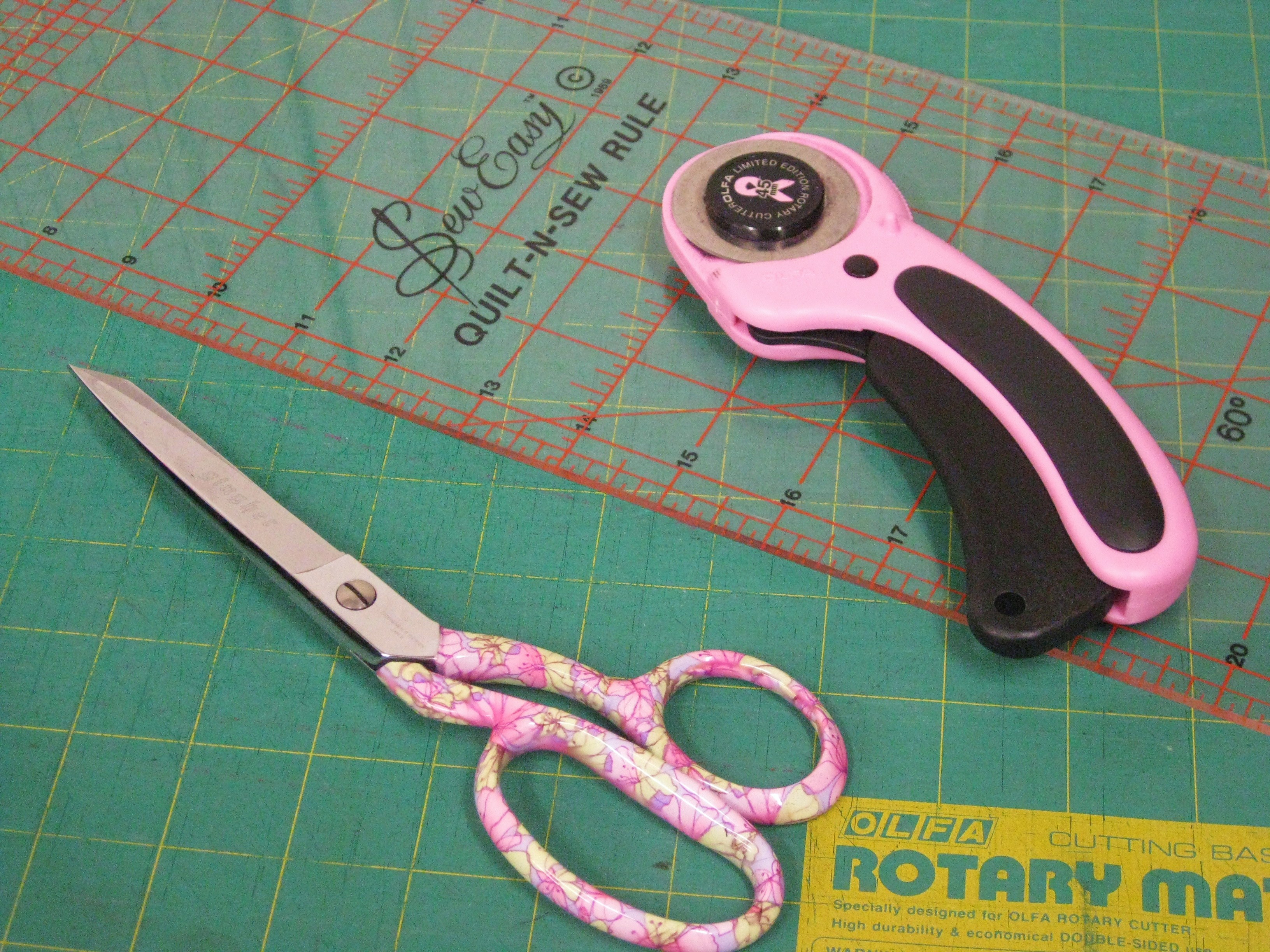
Dressmaking shears with rotary cutter, mat and ruler.

Dressmaking shears with rotary cutter, mat and ruler.

When cutting bias strips for binding, I also prefer to use a rotary cutter to achieve perfectly straight edges.  I simply measure the length and width of the pattern pieces and cut the bias pieces separately.

Either way, I always cut away from myself while carefully moving the pieces so that I can mostly cut at right angles to my body.  As I am right handed, I keep my left hand flat on the piece so that the fabric remains on the cutting surface as it is being cut.  Left handed sewers would simply reverse this.

If possible, I try to cut directionally with the grain of the fabric (similar to the direction of stay stitching – see blog post 26th April, 2015 covering Stay Stitching and Edge Stitching).

I have to admit that cutting out is not my favourite part of a project because I find it quite hard on my back, even though I have a table at the correct height.  A discussion with a physio resulted in some very good advice.  When you are standing at the cutting table, very slightly bend your knees and keep your feet a shoulder width apart.  I have tried this and it does make a difference.  I hope it works for anyone else with a similar problem.

Marking the Fabric

To help with accurate piecing of the garment pieces, there are various notches, dots, triangles and lines on the pattern pieces.  These need to be carefully transferred to the wrong side of the fabric.  Never risk using a marking implement on the face side of the garment.

There is a wide range of marking methods and tools.  The choice of marking method I use is always dependant on the fabric, style elements and where the marks need to be placed.
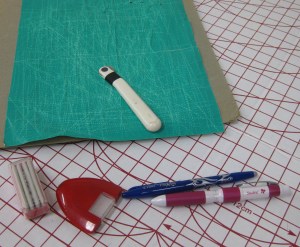
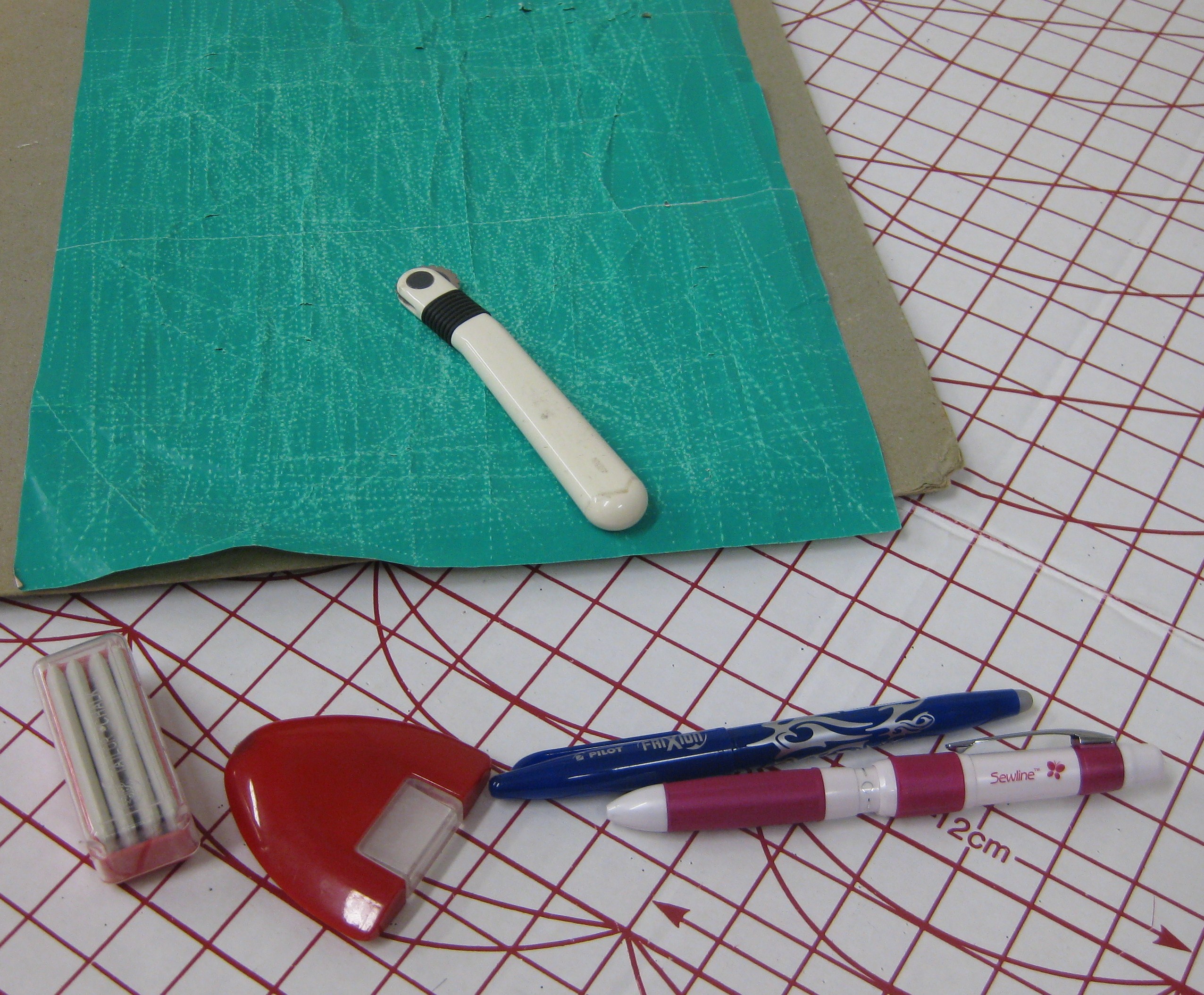
A selection of marking implements - dressmaker's carbon and tracing wheel; tailor's chalk and chalk wheel; Frixion pen and Sewline mechanical ceramic marking pencil

A selection of marking implements – dressmaker’s carbon and tracing wheel; tailor’s chalk and chalk wheel; Frixion pen and Sewline mechanical ceramic marking pencil

I believe all pens and pencil markers are best kept for markings in the seam allowances so that there is no chance that a permanent mark will show on the final garment.

For stable, non slippery fabric, pin marking works very well and is very accurate.  It is necessary to place the pins right before sewing the garment piece as they may leave marks if left in the fabric for any length of time.

Small snips (no more than 6mm in a 15mm seam allowance) are also a quick and accurate method for marks at the cut edges.  Simply remove the notches when cutting out the fabric and place the tip of sharp scissors in the middle of each notch and at centre front and centre back edges and make a small snip.  The only drawback with this method is that if the fabric edges are finished before the pieces are joined together, the clips will disappear.

Chalk markers can be used in both within the seam allowance and in the body of the garment (for example when marking grain lines, pocket placements, centre front line, etc.).

If the garment has complex elements (unusually shaped pieces, sharp corners or curves) the best and most accurate marking method is to use dressmaker’s carbon paper and a tracing wheel.  Just be sure to use the palest colour that can be seen on the fabric (I usually stick to white) so that the coloured lines will not be seen through to the face of the fabric.  If you are using an underlining, the marks should be transferred to this layer which is attached to the main fabric and sewn together – thus avoiding any possibility of the marks showing on the right side of the garment.

Slide the tracing carbon between the pattern and upper layer of fabric.  With a piece of cardboard or the underside of a rotary cutting mat under the piece, use the tracing wheel to run along all grain, seam and placement lines and through notches, dots, triangles etc.

Once the first piece of fabric has been marked, carefully remove the pattern and pin the fabric pieces together.  With the carbon paper face up against the bottom layer, trace over the previous marks to transfer them accurately to the second piece.

In areas where it is necessary for specific construction techniques to see the marks on the right side of the fabric, thread trace the marks with embroidery floss (one strand is usually sufficient).  This is particularly useful to mark the centre front and grainlines through to the right side which greatly assists when checking the fit of the garment.  The other benefit of hand stitching marks is that they will not come out of the fabric until you remove them – how many times have we had to get the pattern out to see a mark that has faded?

Tailor’s tacks using the same embroidery floss are great for placement marks for pleats and tucks.
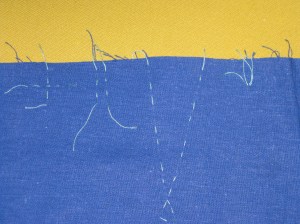
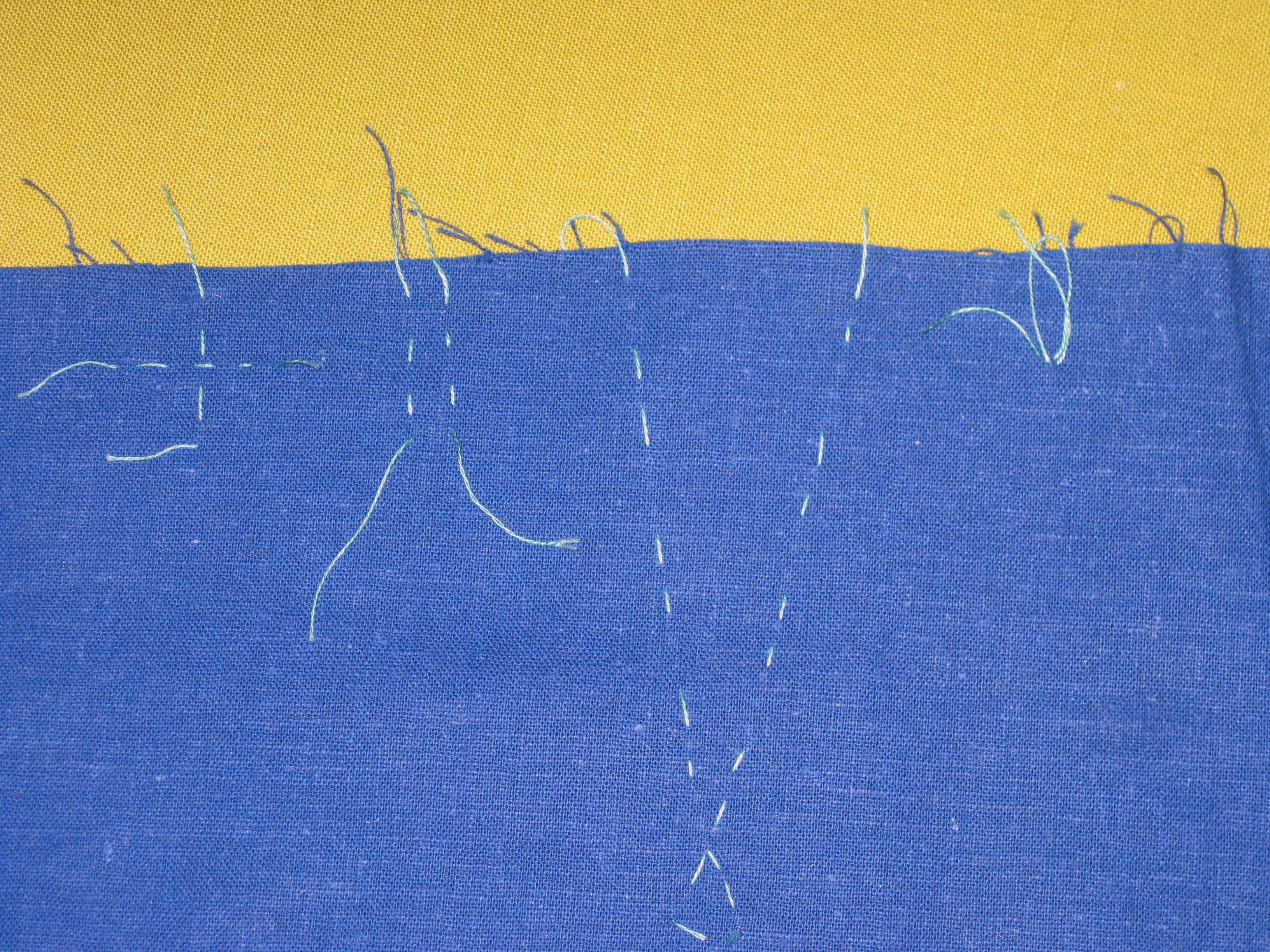
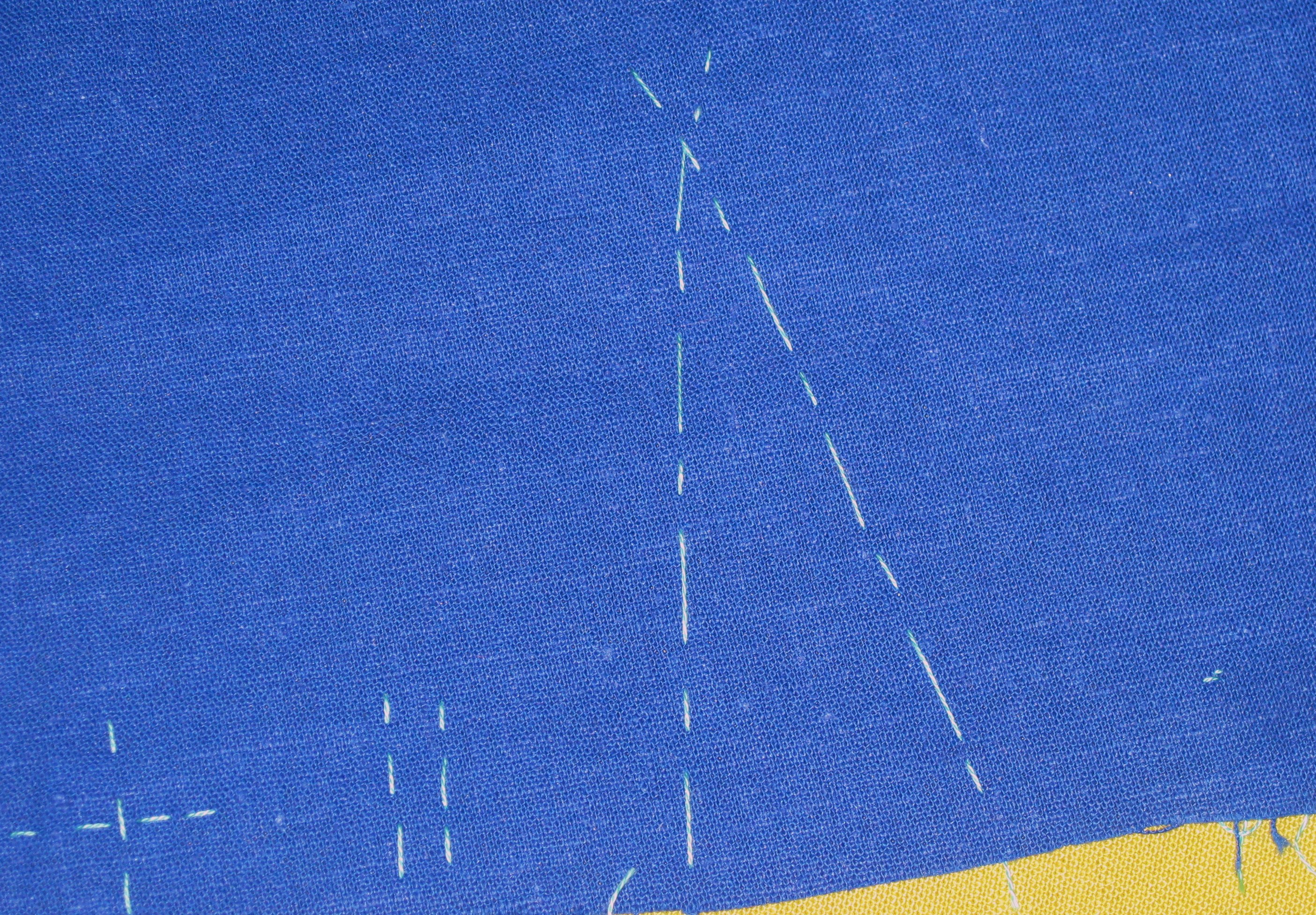
Marking by hand : L to R - crossed running stitches to mark dots; running stitch parallel to seam to mark notches; thread tracing to mark dart legs; tailor's tack to mark exact point

Marking by hand : L to R – crossed running stitches to mark dots; running stitch parallel to seam to mark notches; thread tracing to mark dart legs; tailor’s tack to mark exact point
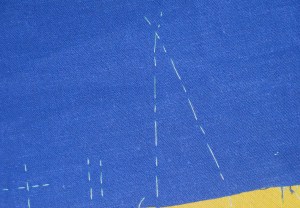
Marks seen on the right side of the fabric as well.

Marks seen on the right side of the fabric as well.

Whichever method is chosen, it is extremely important to test on a scrap of the fabric to be sure it will achieve the desired result and not cause unexpected problems.
Working With Bias Cut Garments

Most texts covering the use of bias cut recommend soft, fluid fabrics – including georgette, crepe de chine, silk satin (charmeuse), challis and crepe-back satin –  which drape beautifully when cut on the bias.  I have also used linen and cotton with pleasing results.

Bias refers to any diagonal intersection of lengthwise and crosswise threads.  True bias is when the fabric is folded diagonally so the crosswise threads are exactly 90° to the lengthwise ones.

Woven fabrics have the greatest amount of stretch along the true bias grain which accounts for the drape, comfort and body moulding properties of a bias-cut garment.

There is little difference in the drape of knit fabric cut on the bias to that cut on the lengthwise or crosswise grain.  This does not mean they do not work in these styles.  They are actually great for achieving dramatic effects with striped knits, especially Missoni fabric.

In addition to the beautiful drape of bias-cut garments,

Bias garments mould the figure and flow into a beautiful heavy drape towards the hemline.

Bias garments mould the figure and flow into a beautiful heavy drape towards the hemline.

There are two very practical benefits to sewing with bias.  First, since bias edges won’t ravel, seam finishes are completely unnecessary.  Secondly, bias-cut garments wrinkle far less than their straight-grain counterparts.

Pattern Selection:

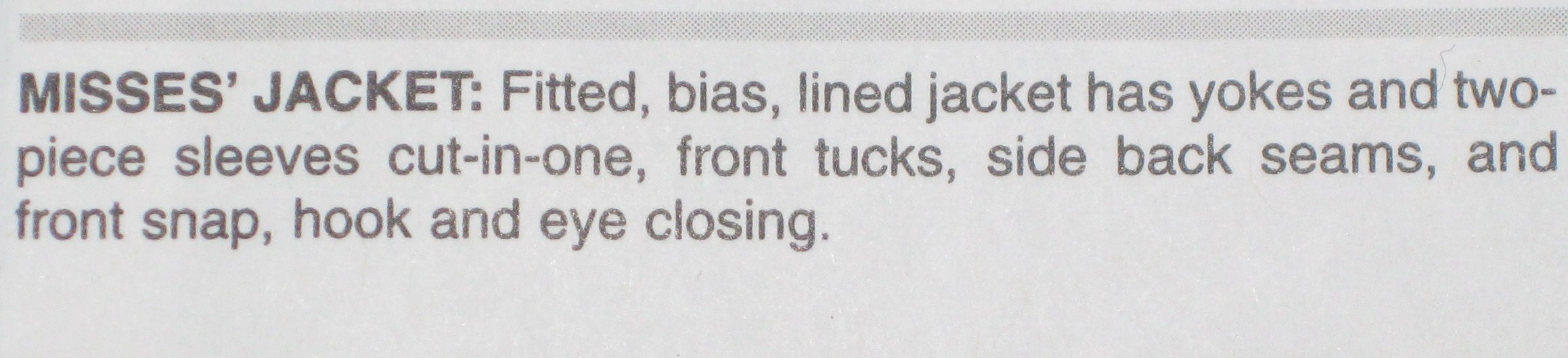
Bias cut is best suited to styles which will mould close to the body.   Cowl draping and skirts with fullness at the hem (frequently using godets) are common styles using bias cut.  This will be mentioned in the description of the garment on the back of the pattern envelope.

Pattern description mentions "bias".

Pattern description mentions “bias”.

Grainlines for the specific pattern pieces will be marked with the grain line on the bias.

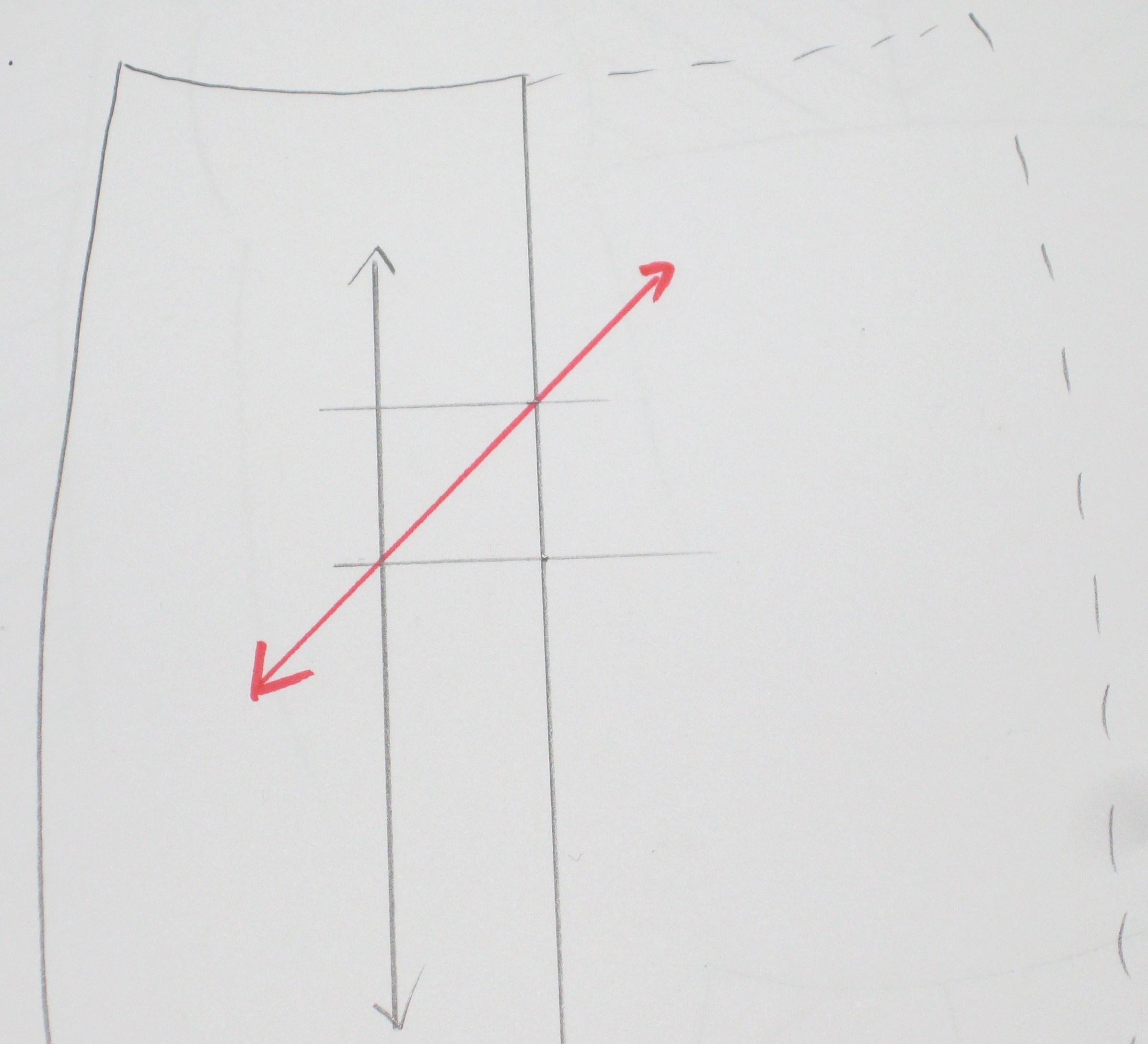
However, you can adapt any pattern by redrawing grainlines at 45° to the original grainline.

To draw a bias grain line, make a small 1"/2cm square box on the side of the existing grain line. Place ruler on opposite diagonal corners and draw a bias grain line.

To draw a bias grain line, make a small 1″/2cm square box on the side of the existing grain line. Place ruler on opposite diagonal corners and draw a bias grain line.

Cutting and Marking:

Fabric must be perfectly on grain.

To avoid distorting the fabric, work on a large, flat cutting surface and cover it with tissue paper.  Either tape the tissue to the surface or use a gridded dressmakers’ cutting board – an excellent tool to keep the fabric perfectly in place.  Once the fabric is correctly postioned, it can be pinned into the board or to the taped down tissue paper.  Do not allow any fabric to fall off the edge of the cutting surface.

For better control of the bias direction with individual pieces, cut your garment using a single layer layout.  If the pattern does not provide individual pattern pieces for each section to be seamed and for pieces to be cut on the fold, trace additional pattern pieces on greaseproof paper – paying particular attention to the grain lines.

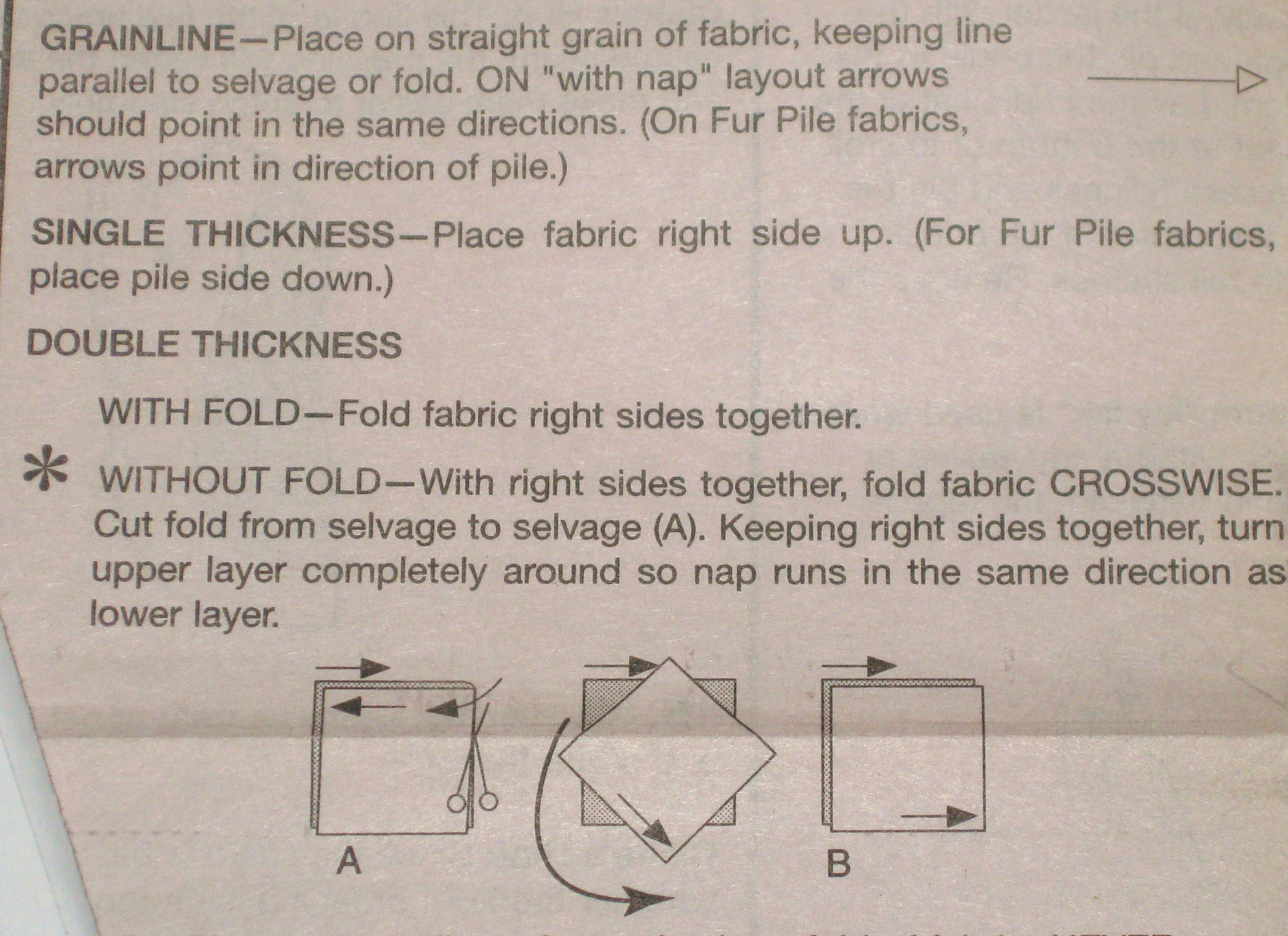
Guidesheet description of fabric layout - note No Fold option - cut and turn fabric before placing right sides together.

Guidesheet description of fabric layout – note No Fold option – cut and turn fabric before placing right sides together.

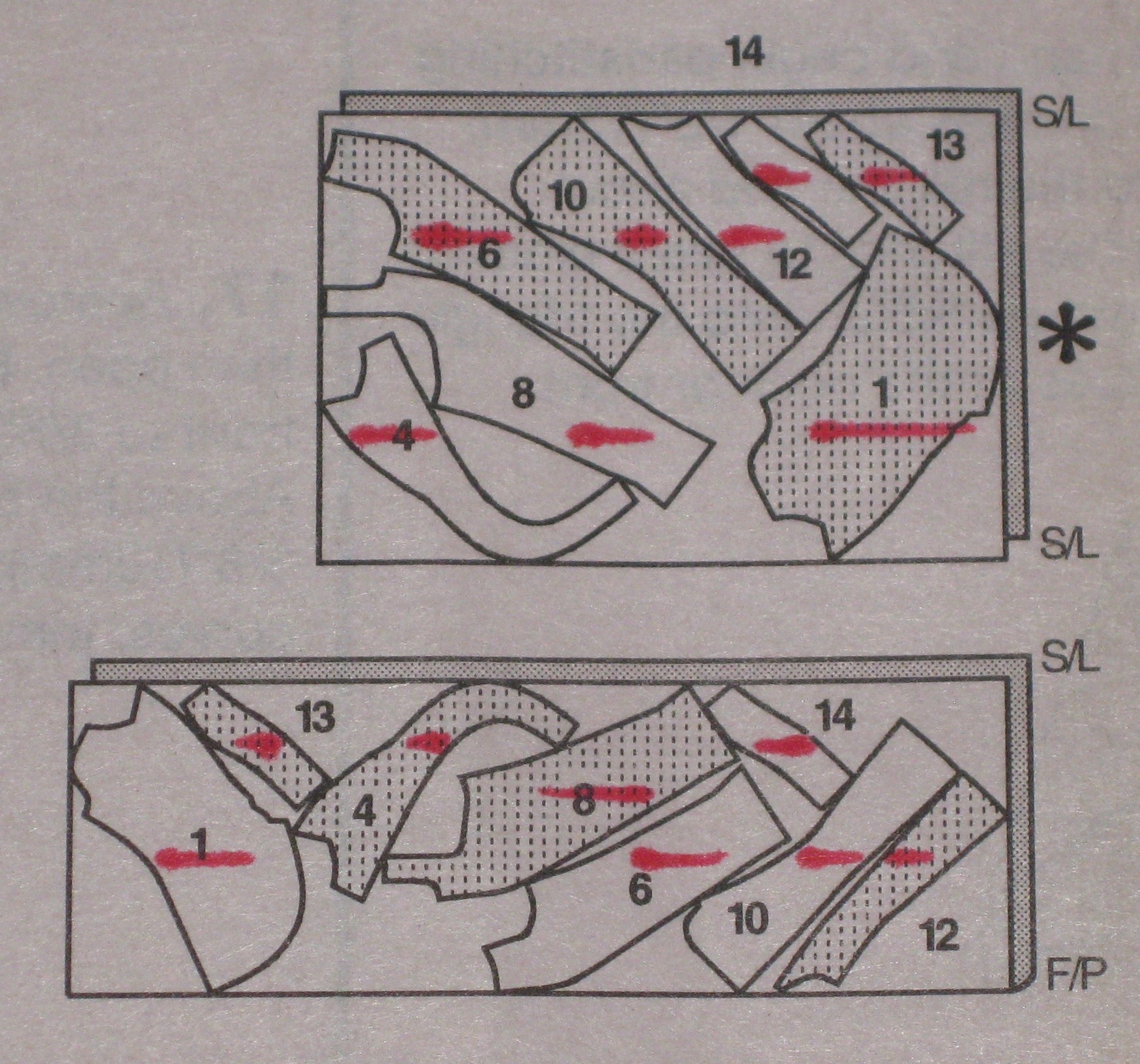
To minimize the problem of one side stretching more than the other, place the right and left pattern pieces at right angles to each other.

Extra care taken in the layout stage will make sewing easier.

Bias layout - grainlines parallel to selvage.

Bias layout – grainlines parallel to selvage.

Increase all vertical seam allowances to 1 ½” (8cm) to allow for any fitting adjustments caused the stretching of the bias.  When fabric is cut along the bias, the intersecting threads fan out, elongating the cut edge.  Moving the stitching line father away from this “expansion” will help eliminate rippled seams later on.

Pin the fabric with right side facing up to tissue paper (again checking that the grain lines are perfect – selvage and cross grain edges are at right angles and the fabric is anchored to the cutting surface either with tape or pins).

Cut the fabric and tissue paper as one, leaving tissue attached until stay stitching is completed.  Do not worry about ruining your scissors by cutting the tissue.  Polyester and silk fabric will blunt your shears anyway.

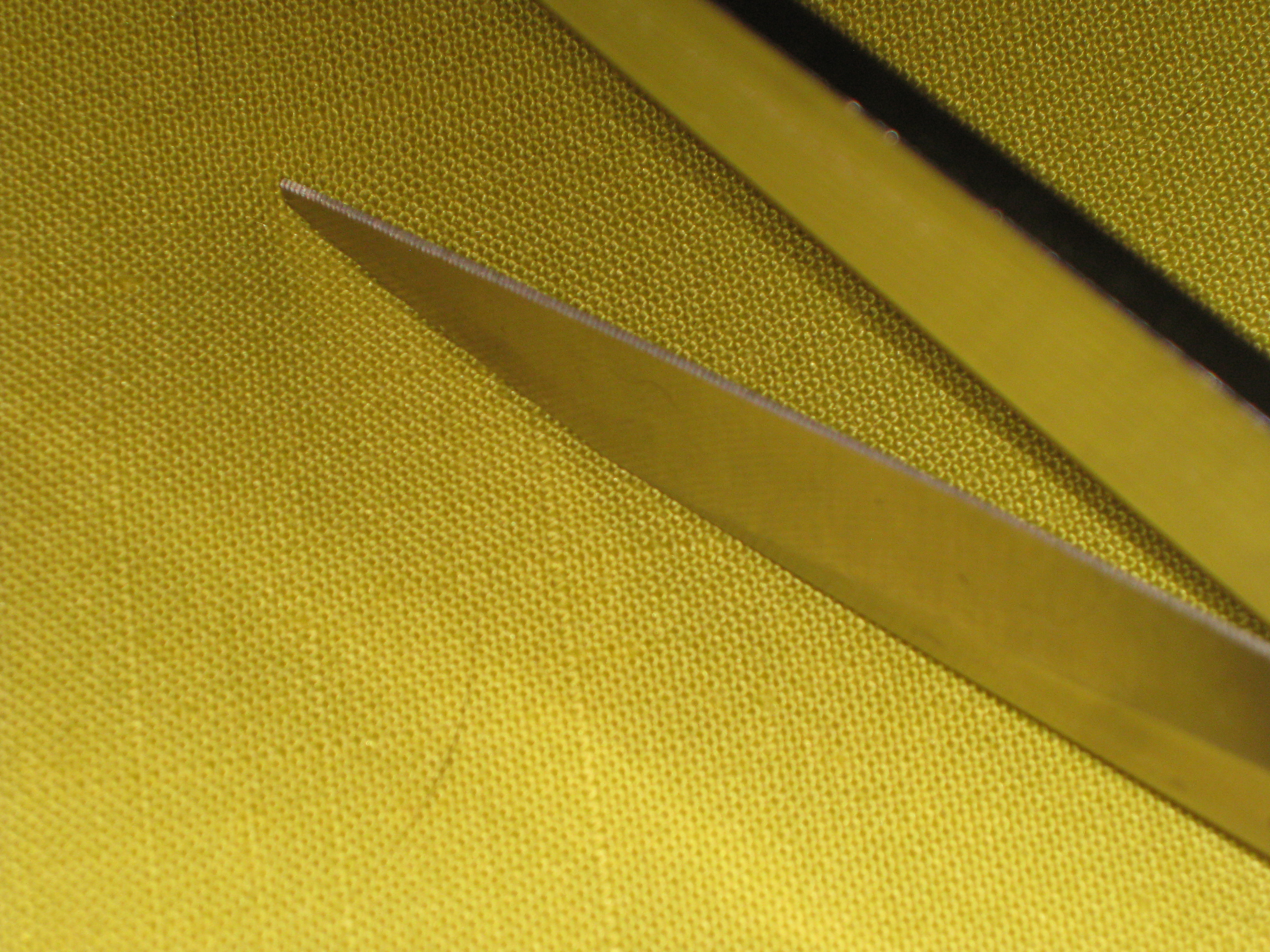
Using shears with one serrated blade is a great help as the serration stops the fabric moving and sliding as it does across the smooth blade when the shears are closed. IMG_3157

Serrated blade.

Serrated blade.

Mark all stitching lines before removing the pattern from the fabric.  Thread tracing, chalk or tracing paper and a tracing wheel are all good choices – test different methods on a scrap of fabric first to see which will best suit your project.

Stitching:

The key to successful bias sewing is to work with the stretch, not against it.

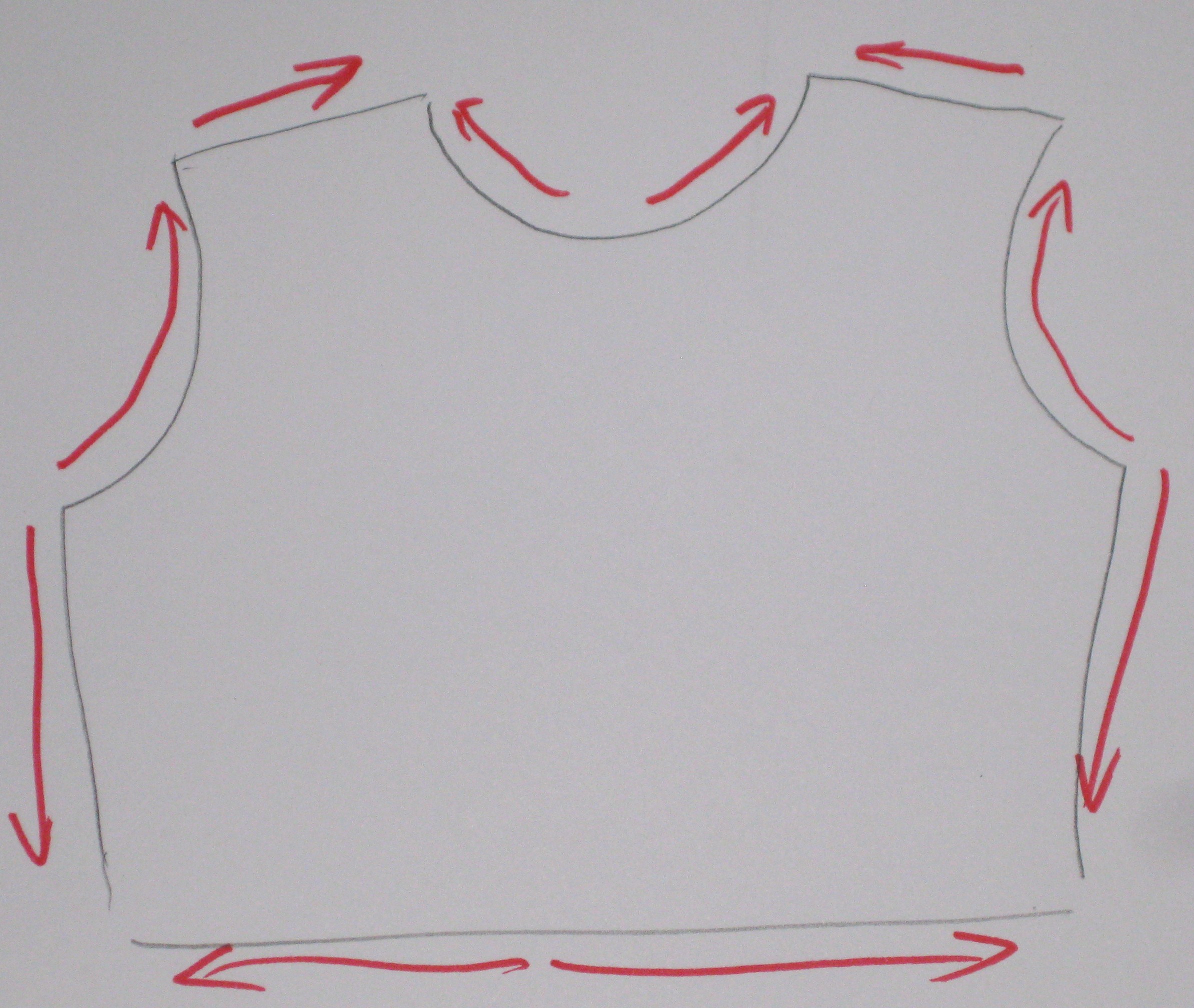
Begin by stay stitching any seam that will not land vertically on the finished garment – includes necklines, armholes, waistlines and asymmetrical seams – do this before removing the stabiliser.

Stay stitch in direction of greatest stretch - the opposite direction to what is used for on grain fabrics.

Stay stitch in direction of greatest stretch – the opposite direction to what is used for on grain fabrics.

Garments cut on the bias fit differently than garments cut on the straight grain.  It is wise to baste the garment together, allow it to hang for 24 hours, and try it on before doing any permanent stitching.

To baste two bias seams together:

  • Working on a large flat surface, pin the two garment sections right sides together with stitching lines matching
  • Leaving a 3” (7.5cm) unknotted tail, hand baste the stitching lines together for about 6-8” (10-15cm), leave a small loop to allow the fabric to stretch and repeat, until the whole seam is basted together
  • When joining a bias edge to one with a straight grain, use this method to eliminate puckers:
    • Before joining the bias edge to the straight grain edge, pin the bias section to a padded hanger and let it hang for at least two hours so the bias has time to “grow”
    • Remove the bias section and repin it to the pattern piece – remark all of the symbols from the pattern piece
    • Hand baste the two sections together along the stitching line.

Permanent stitching also requires some special handling:

  • At the start of a seam, insert the needle approximately 3mm/ 1/8” from the edge of the fabric and lower the presser foot to secure the fabric
  • Because the bias seam allowances tend to narrow during stitching, do not use the cut edge of the fabric as a stitching guide. Instead, stitch along the basted stitching line.
  • Gently stretch the fabric, putting one hand in front and the other hand behind the presser foot as you sew.
  • Stitch about 8-10” (20.5-25.5cm) then stop with the needle in the fabric. Raise the presser foot, let the fabric relax, lower the foot and stitch again.  Repeat until the entire seam is stitched.
  • When stitching vertical seams, follow the pull of gravity, stitching from neckline to hemline. For necklines and horizontal seams, stitch from the centre out.
  • To avoid ripples, press each seam in the same direction it was stitched.
  • Once the seam is stitched and pressed, trim the seam allowances to 5/8” (1.5cm).

When stitching and pressing, it is important to support the fabric so that its weight doesn’t distort the shape of the garment.

Hemming:

Bias-cut garments should hang for at least twenty-four hours before hemming.  This same rule applies to bias-cut sleeves – let them hang before hemming or applying cuffs.

Either a hand rolled or machine stitched narrow hem are the best choices, particularly when working with lightweight fabrics.  (See “And So To The Hem” posted 5th April, 2015).

Design Ideas:

Bias cut can be used to great effect when using stripes.  Before purchasing the fabric, trace off additional pattern pieces and use a gridded board to estimate the amount of fabric needed.  It can normally be expected that bias cut garments utilise more fabric than the same garment cut on the straight grain.

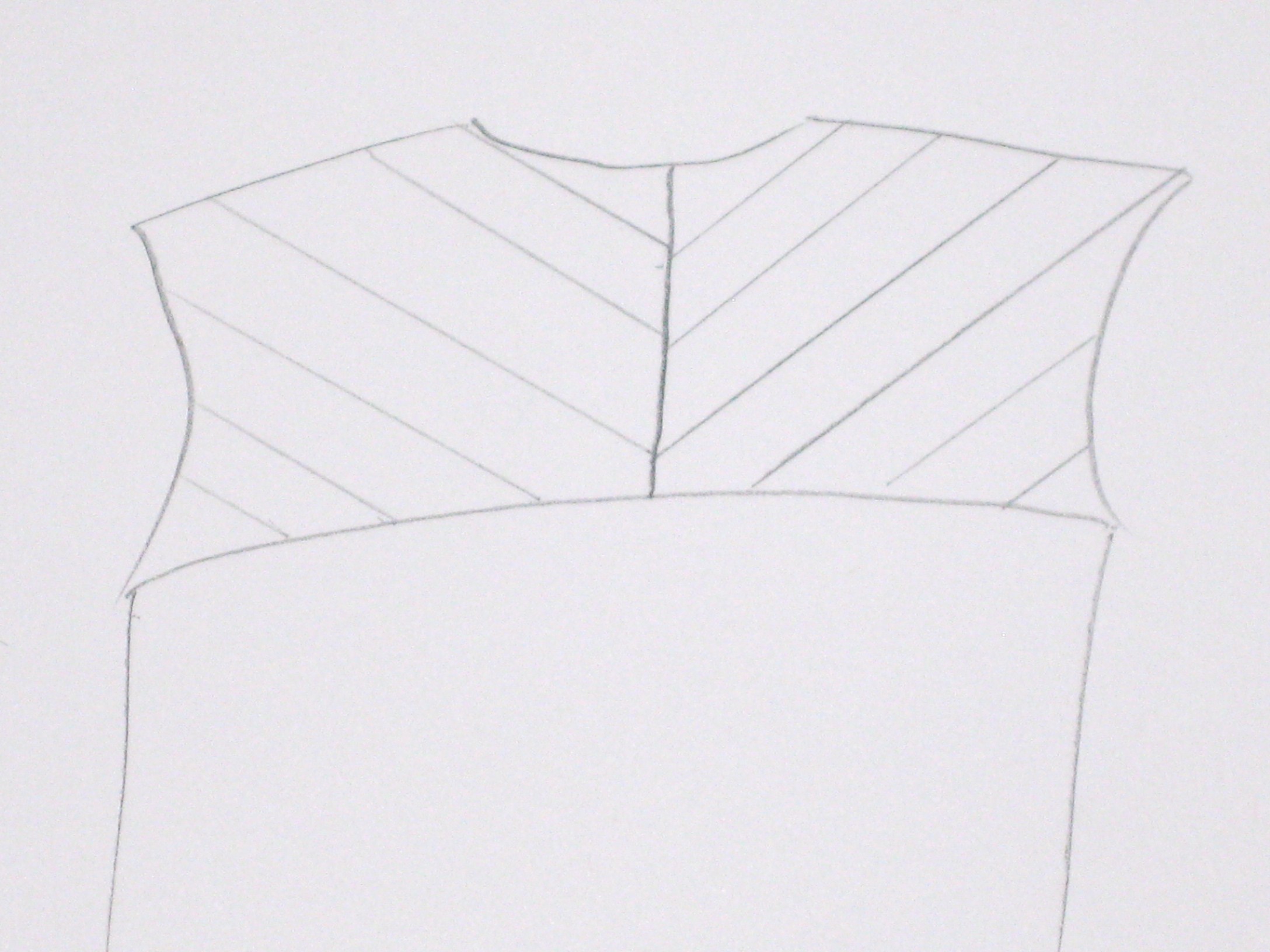
Consider when making a shirt cutting the yoke, pockets, collar, cuffs, or tab front on the bias so the stripes form chevrons.

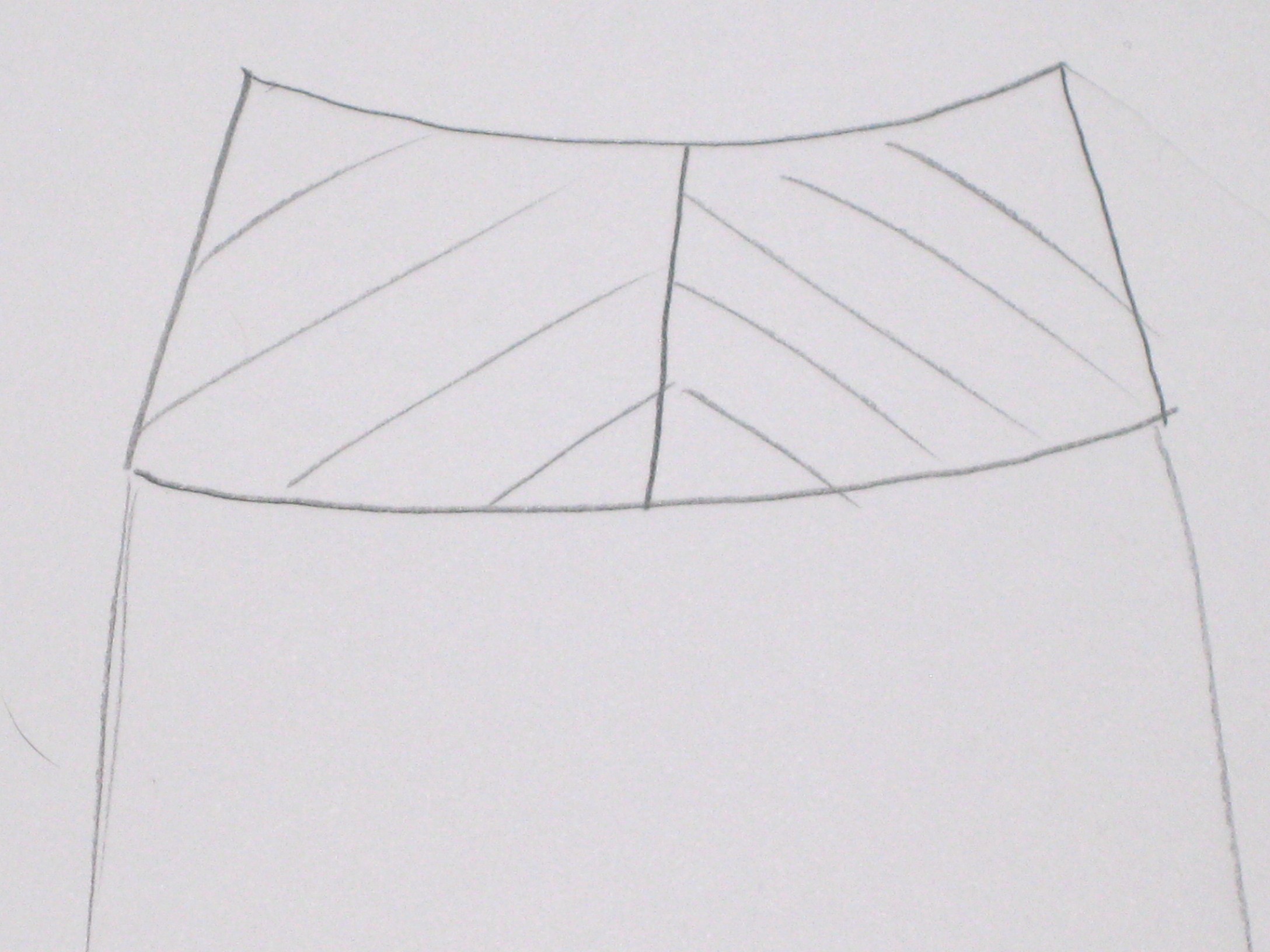
A bias cut facing can be used on the yoke of a skirt or pants as well.

A similar effect can be achieved on a panelled skirt or dress or in the centre back  or front panels of a princess style jacket.

Bias cut yoke - line with on grain facing

Bias cut yoke – line with on grain facing

Mark centre of yoke. Cut apart and add seam allowance. Add bias grain line. Use on grain facing for stability.

Mark centre of yoke. Cut apart and add seam allowance. Add bias grain line.
Use on grain facing for stability.

Centre front panels cut on bias grain. Cut facings on grain for stability.

Centre front panels cut on bias grain. Cut facings on grain for stability.

If you have never sewn a bias cut garment before, my suggestion would be to start, as I did, by making a four piece linen skirt.  Because the fabric is not slippery, you can focus learning the techniques before tackling that super slinky silk satin.

Finishing the Outer Edges

Portions of this article were first seen in Dressmaking with Australian Stitches magazine Volume 21, Issue 4 (Facings) and  Volume 20, Issue 12 (Applying Bias Binding to Curved Edges).   Permission has been sought and granted for electronic use and the photos and text remain the property of Alison Wheeler – Sewing Lady.

Facings are used to finish and support the outer edges of a garment.  They are most commonly seen at necklines and armholes but can also be used to finish detailed hem edges on dresses, jackets and tops, sleeves; as well as waist and hem edges on skirts and pants.

However, they are by no means the only way to finish necklines and armholes.  When working with sheers, slinky or shiny fabrics, facings can give the edges too much weight and will be visible from the right side of the garment.  A better option to finish these edges on these types of fabrics is to use a narrow binding.

Facings:

Most patterns include facings which are cut from the garment fabric.  There are times when these instructions need to be modified.

Where a fabric is thick (for example a heavy weight wool or silk woven from thick threads), using the garment fabric for facings would result in very thick and bulky edges when facings are trimmed and turned to the wrong side.  This situation also occurs at the hem edges when thicker fabrics are folded back to form the hem.

In these cases, cutting a facing from a lighter weight fabric (interfaced before being applied to the garment) would give the desired stability at the outer edge while resulting in a smoother outer edge.  The weight of the lighter fabric would need to compliment the fashion fabric.  Good choices to consider are cotton homespun for thick and heavy fabrics or cotton lawn for medium weight.

Consideration also needs to be given to the type of stabiliser (interfacing) to be used.  Fusible interfacings seem to be the most commonly mentioned in pattern guide sheets today.  However, they are not the only choice.  The use of a sew-in interfacing can also give good support.  Silk organza gives great body to facings and works particularly well with linen and loose weave fabrics.

Where more stiffness is needed, for example with a stand-away neckline, light to medium weight Shapewell  (the sew-in variety) also works very well in keeping the neckline in shape during the life of the garment. (See blog posted  18th April – Vogue 1303 Kay Unger Dress)

Regardless of the type of fabric and interfacing used for facing pieces, the following application method works well:

Stay stitch the neckline edges – use a small stitch (2.0) just inside the seam line (see blog posted 26th April – Staystitching and Understitching).

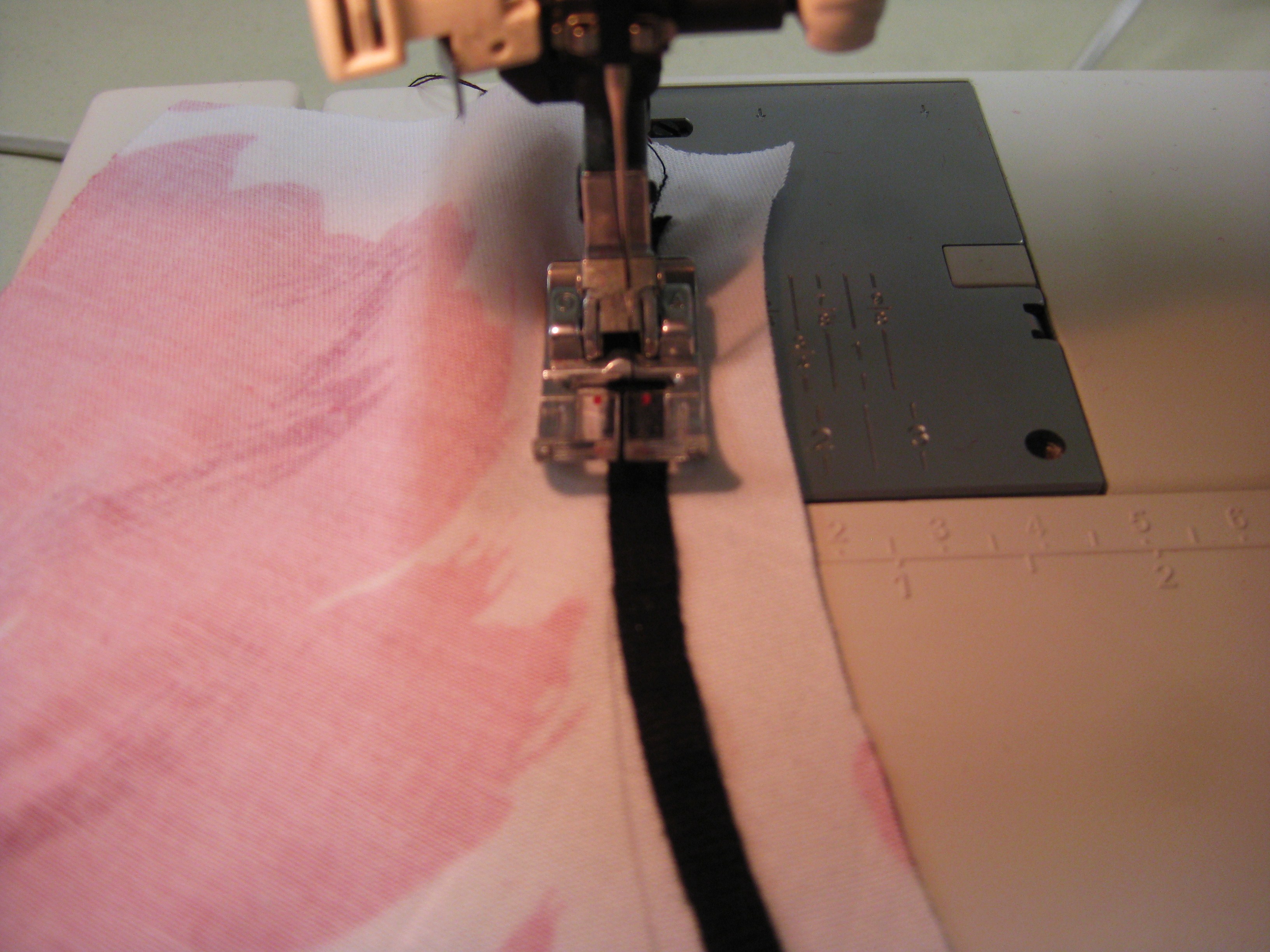
Taping the waist line edges on skirts and pants will prevent the garment from stretching during wear:

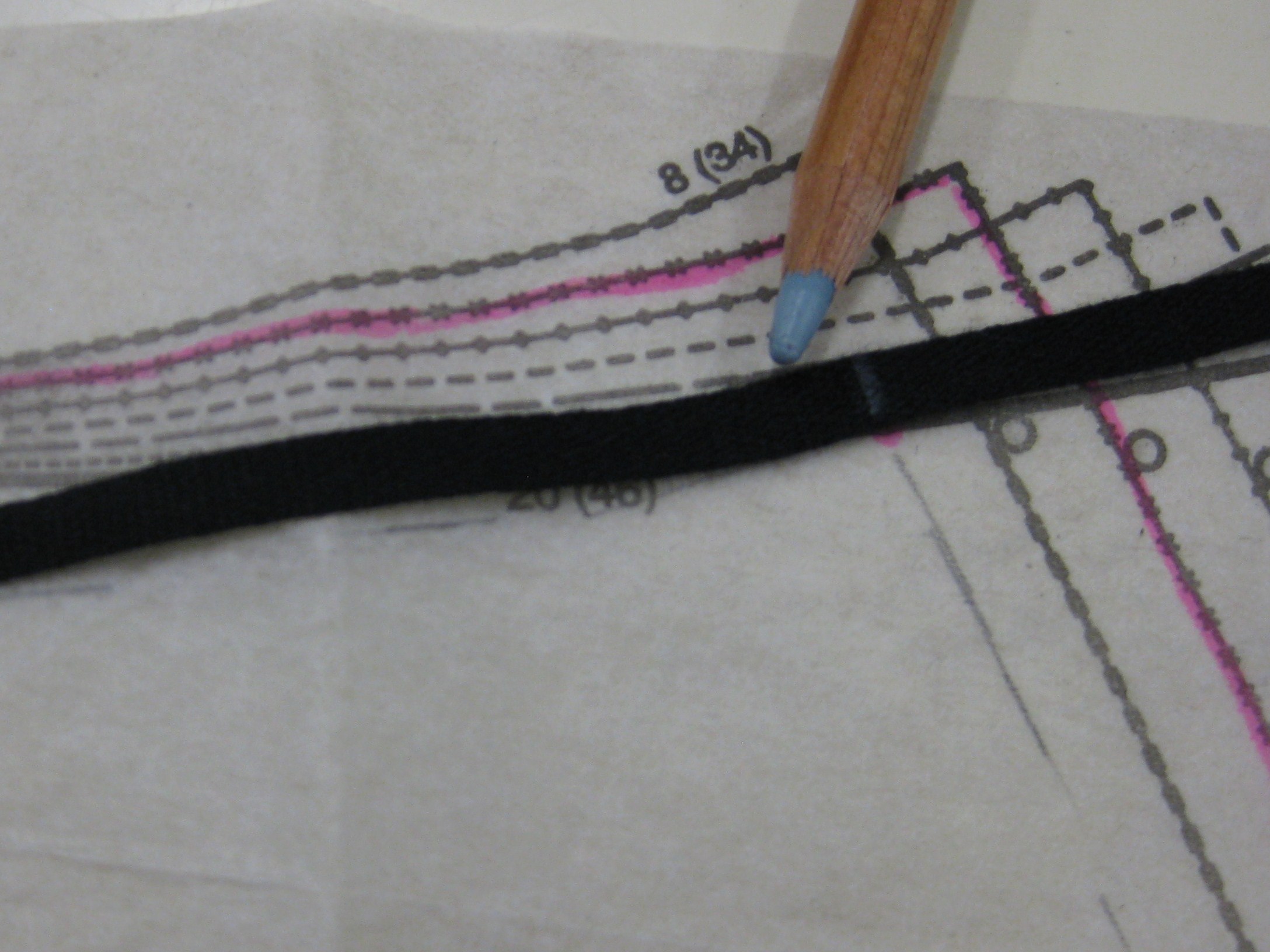
  1. Use 6mm cotton tape or grosgrain ribbon
Use waist seam line on the pattern to measure the tape exactly.

Use waist seam line on the pattern to measure the tape exactly.

  • Measure the waist length from the pattern
  • Stitch the appropriate seams, leaving the zipper opening, and press them open
  • Mark the centre point of the tape and the garment
  • Matching these reference points, pin the tape in place centred over the waist seam line – tape will cross the open seam allowances
Stitch with tape uppermost. The feed teeth will ease the skirt in place.

Stitch with tape uppermost. The feed teeth will ease the skirt in place.

  • Stitch in place just within the seam allowance.

Interface the facing with chosen method.

Construct the facing and clean finish the outer edge by overlocking or another method appropriate to the fabric being used.

Pin the facing to the garment edge with right sides together and keeping the cut edges even :

Pin through facing seam allowance and then through garment seam allowance to ensure seam lines are aligned.

  • Place a pin in the seam allowance of the facing 15mm from the cut edge and take it through the garment in the same position – this is a great method to make sure that the seam allowances are perfectly aligned at the seam line
Pin facing to garment. To prevent slippage and make it easier to avoid puckers, pin at right angles to the seam and take a small bite with the pin right around where the seam line lies.

Pin facing to garment. To prevent slippage and make it easier to avoid puckers, pin at right angles to the seam and take a small bite with the pin right around where the seam line lies.

  • Placing pins at right angles to the seam line and with just a tiny bite of fabric will assist greatly in making sure the fabric does not move and eliminate puckers. Be sure to remove the pins as you come to them.

Stitch the facing in place.

Press the seam to meld the stitches into the fabric.

Trim the seam allowances to between 3 and 6mm (depending on the thickness of your fabric) –

  • To assess where your seam allowance needs to be clipped so that it will lie flat when the facing is turned in, fold the trimmed seam allowance towards your garment and you will see where it needs to be flattened against the fabric. Clipping will allow this to happen.
Clip seam allowances on an angle towards centre front and centre back.

Clip seam allowances on an angle towards centre front and centre back.

  • To avoid the possibility of weakening the seam, clip seam allowances diagonally to the seam line. Use very sharp, smaller scissors to do this.  Simply place the tip of your scissors exactly against the stay stitching and clip.
  • If your fabric is light in colour, stagger the clips on the garment edge against the facing edge so that the clips will not be visible through the face of the garment.
  • When using thicker facings, facing seam allowance needs to be graded slightly narrower than seam allowance of the face fabric.  This makes for a smoother, less bulky seam.

Press the seam allowance open – using a point presser makes this task much easier – and then towards the facing.

Place open seam along either a point presser or seam stick.

Place open seam along either a point presser or seam stick.

Facing turned to inside of garment with smooth seam allowance.

Facing turned to inside of garment with smooth seam allowance.

Understitch – This is done from the right side of the facing with all seam allowances under the facing and causes the garment edge to roll slightly towards the facing.  Outer edge of facing is then caught by hand to the seam allowances of the garment.  (see blog posted 26th April – Staystitching and Understitching)

Secure – Handstitch to seam allowances and around zipper openings.

Other Options:

Facings can be brought to the right side of the garment  as a design feature in lieu of a separate band:

  • Face the facing piece (as detailed above) with a lightweight fabric, eg silk organza or lightweight cotton by piecing the outer edges to give a smooth edge
  • Tip: Fusible interfacing can be used to clean finish the edge of the facing but care is needed to fuse the sewn edge only  before carefully fusing the remainder of the facing towards the cut edge.
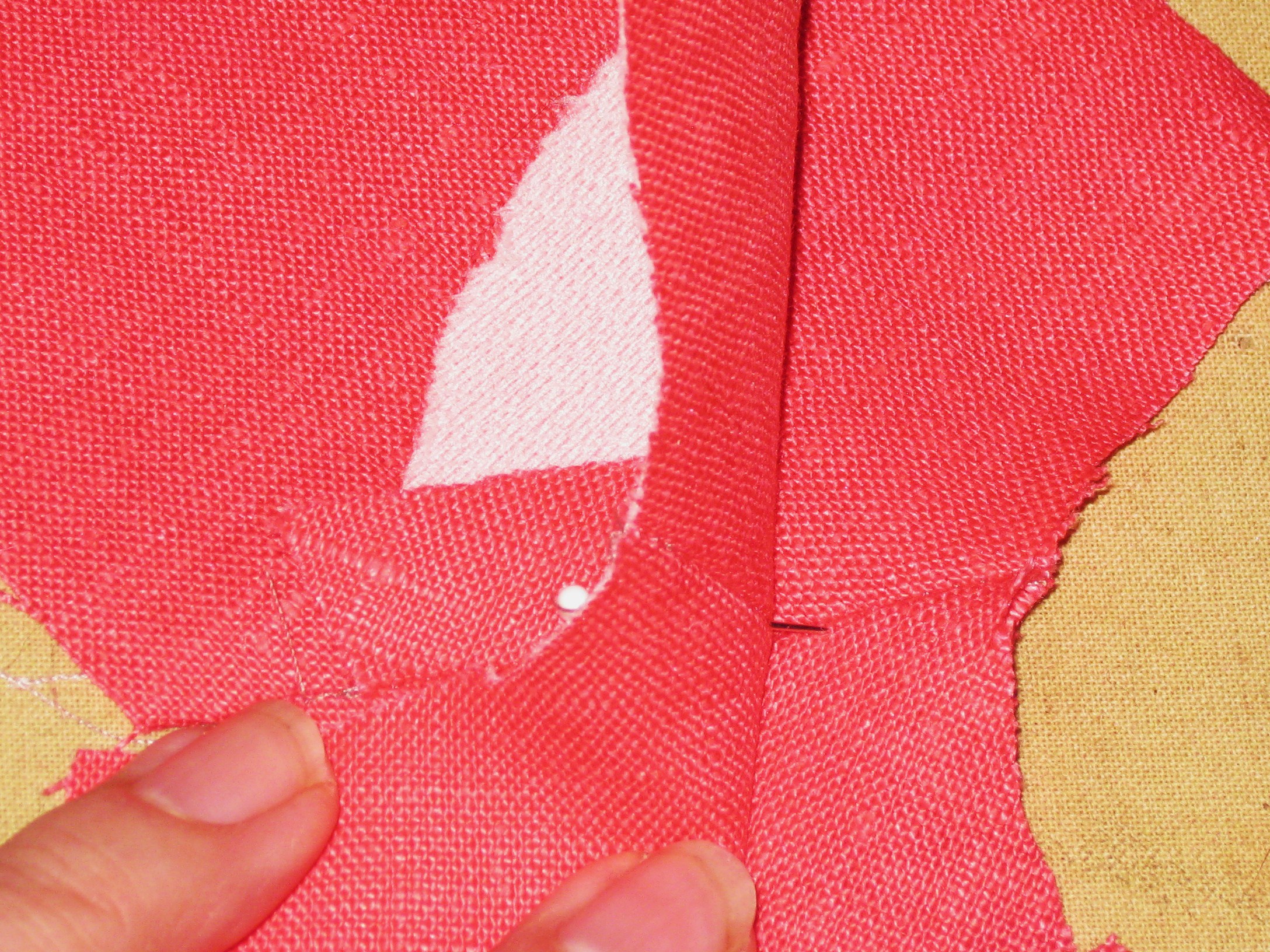
Stitch area which will sit under the facing with wrong sides together; clip and stitch remainder of seam with right sides together.

Stitch area which will sit under the facing with wrong sides together; clip and stitch remainder of seam with right sides together.

  • To avoid exposing the garment’s seam allowance at the edge of the opening, stitch the seam allowance with wrong sides together in the area to be covered by the facing. Clip the seam allowance, turn the seam allowances so that right sides are together and stitch the remainder of the seam
  • Apply the right side of the facing to the wrong side of the garment and stitch, trim and clip. Press before bringing the facing to the right side of the garment
Facing is turned to right side and edge stitched in place. This is an alternative to a separate band. Seam allowance is invisible from underside of neck edge.

Facing is turned to right side and edge stitched in place. This is an alternative to a separate band. Seam allowance is invisible from underside of neck edge.

  • Edgestitch in place from the right side of the garment

This option of facing the facing can also be used on the inside of a garment where a neat finish is required, especially when using a light coloured or sheer garment.

Facing the facing with lightweight fusible interfacing results in a neat, smooth finish on the inside of the garment - no shadow of overlocking can be seen from the right side of a light coloured garment.

Facing the facing with lightweight fusible interfacing results in a neat, smooth finish on the inside of the garment – no shadow of overlocking can be seen from the right side of a light coloured garment.

When working with a thicker fabric, a shoulder seam allowance can be eliminated from neck and armhole facings to achieve a smoother, flatter result:

Mark seam allowances on pattern pieces.

Mark seam allowances on pattern pieces.

  • Mark the seam allowances on the facing pattern pieces
  • Overlap the seam lines in the shoulder area and, using either a front or back fold depending on the pattern style, cut a one piece facing
Overlap seam lines to make new facing pattern piece.

Overlap seam lines to make new facing pattern piece.

  • Part of the facing will be on the bias which results in a facing which moulds to the body and is less likely to roll towards the neckline
Back section of facing will be on bias grain which moulds well to the upper curve of the back.

Back section of facing will be on bias grain which moulds well to the upper curve of the back.

  • To eliminate the bulk of seams at armhole edges where separate front and back pieces are provided, use the same method and redraw a grain line at right angles to the new shoulder position.

Applying Bias Binding to Curved Edges:

There are a number of things to consider when using a bias binding finish to curved edges.

The first consideration is the thickness of the neckline edge.  If the garment has pleats or gathers, the edge will be thicker and this will take up some of the bias trim width.  It would be wise to cut the bias strip wider to accommodate this extra thickness.

Secondly, the thickness of the garment fabric needs to be considered.  If using a heavier fabric the thickness at the edge to be bound needs to be considered.   In these situations, it would be better to use a double binding technique.  The bias strip is cut four times the desired finished width plus two seam allowances.  If the fabric is lighter or firmer, a single binding may well suffice – cut the strips twice the finished width plus two seam allowances.  A small allowance in width to allow for the turn of the cloth may also be needed.

Tip: Whichever method is chosen, making a sample first is important to ensure a good final result.

The seam allowance should be removed from the area to be bound to maintain the original position of the outer edge.  If this is not done, the neckline or armhole will be too narrow.

So that I can achieve strips with an even width and evenly cut edge, I usually cut bias strips using a rotary cutter, mat and ruler.  If you have a pattern piece for the trim, measure its width and length and cut your strips by the exact width but allow extra length to enable you to use a bias join which is much flatter and less bulky.

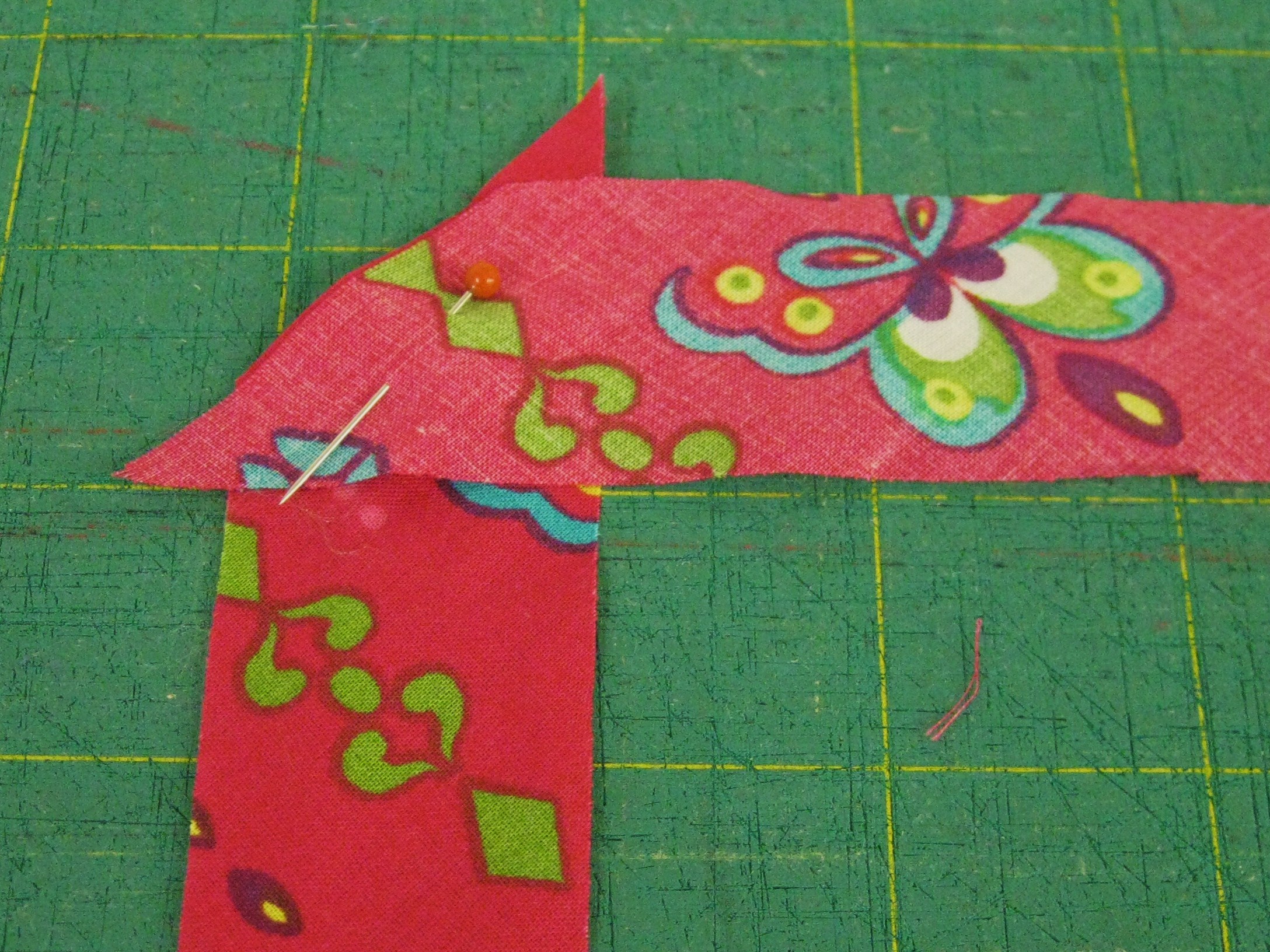
If you do not have enough length in one strip, it is quite easy to join strips.  Simply cut several strips in the correct width.  Place one strip right side up vertically on a grid; take another piece and place it with right sides together at right angles and to the right of the first piece.

Place bias strips at right angles and stitch across the angle.

Place bias strips at right angles and stitch across the angle.

Pieces are then stitched across the diagonal (which is on the straight of grain and will not stretch) – use small stitches and hold threads – do not back stitch.  Seams are trimmed to 6mm and pressed flat and then open.

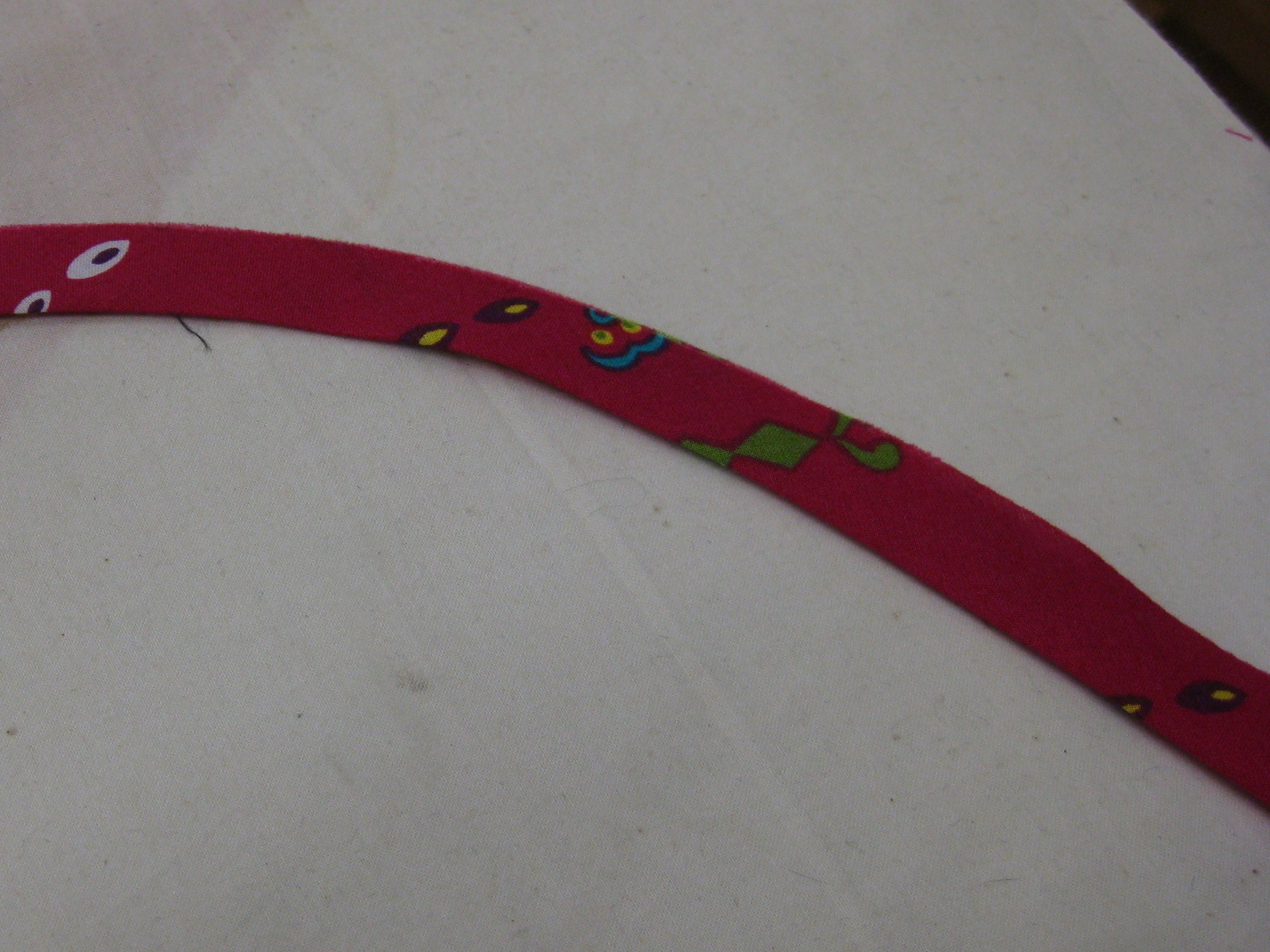
Steam stretch the length of the bias to remove as much stretch as possible.

Steam stretch the strip before it is shaped so that it will be less likely to twist once applied. Pull strip away from the iron and steam press.

Steam stretch the strip before it is shaped so that it will be less likely to twist once applied. Pull strip away from the iron and steam press.

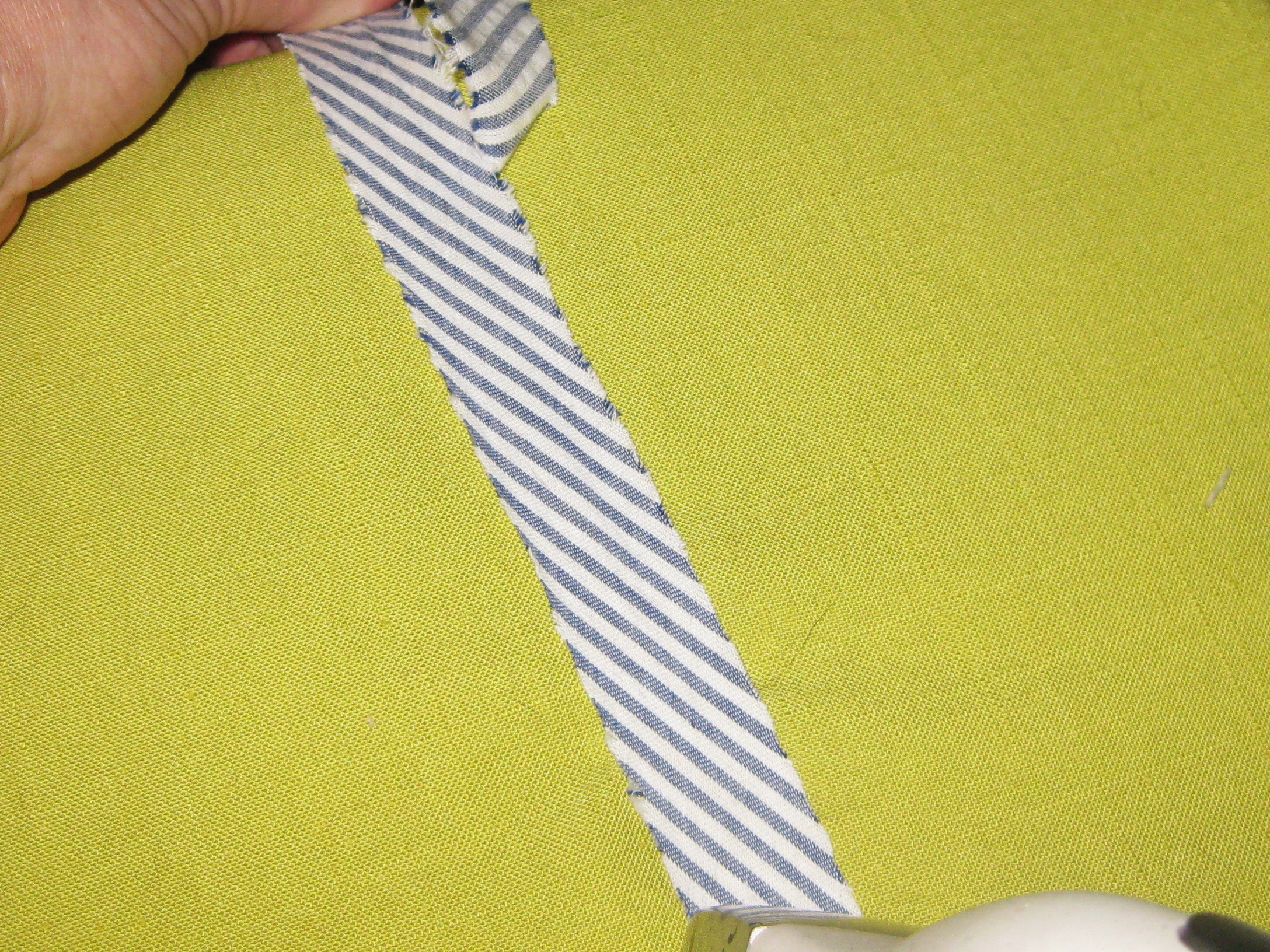
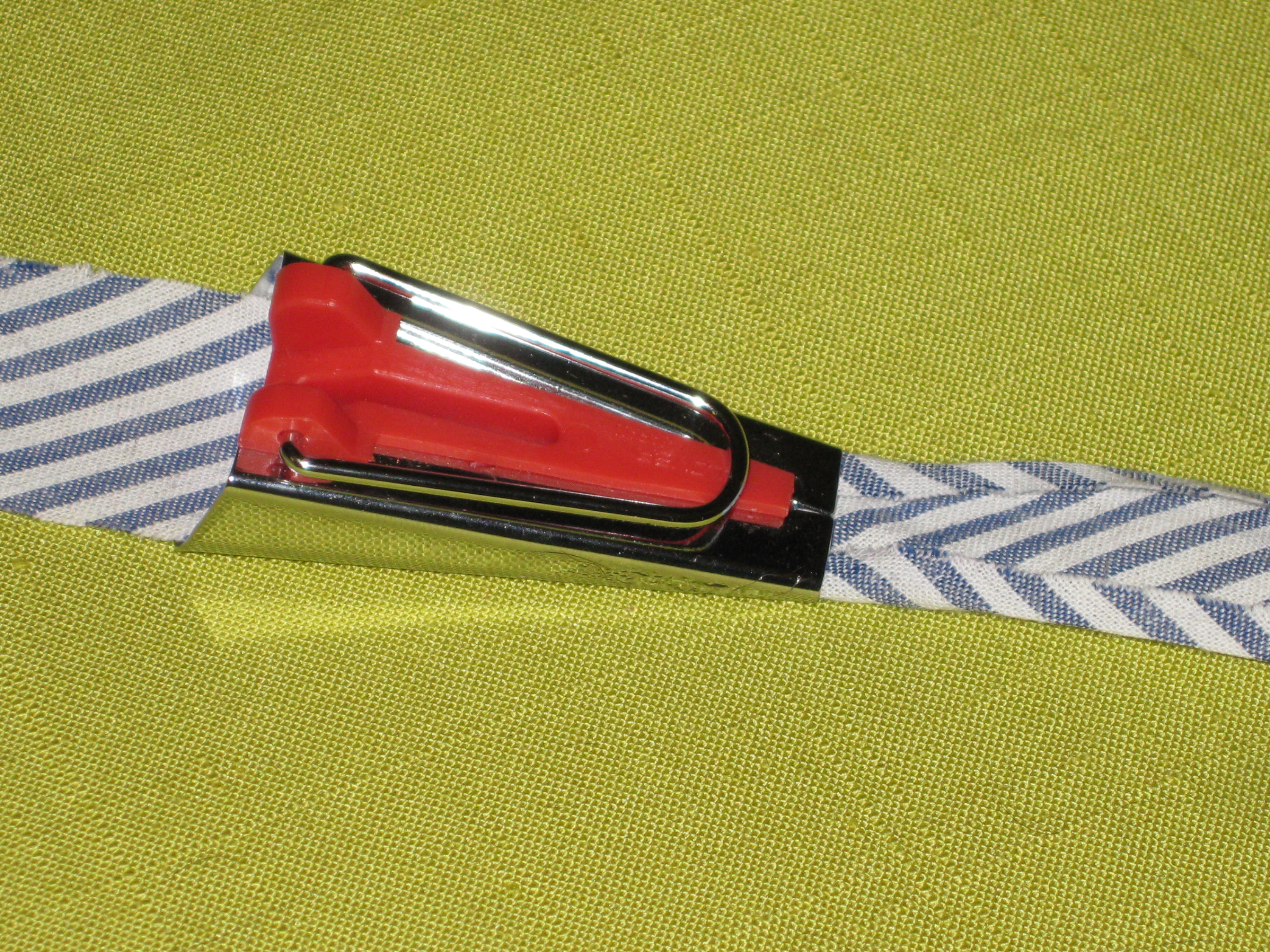
Using a bias maker, turn under the edges of the bias strip.

Feed fabric strip into bias maker. Press folded edges as you slowly slide the bias maker along the strip.

Feed fabric strip into bias maker. Press folded edges as you slowly slide the bias maker along the strip.

Once your strips are ready to be applied, take a look at the shape of the curve they will need to match.

Use pattern edge to measure curve.

Use pattern edge to measure curve.

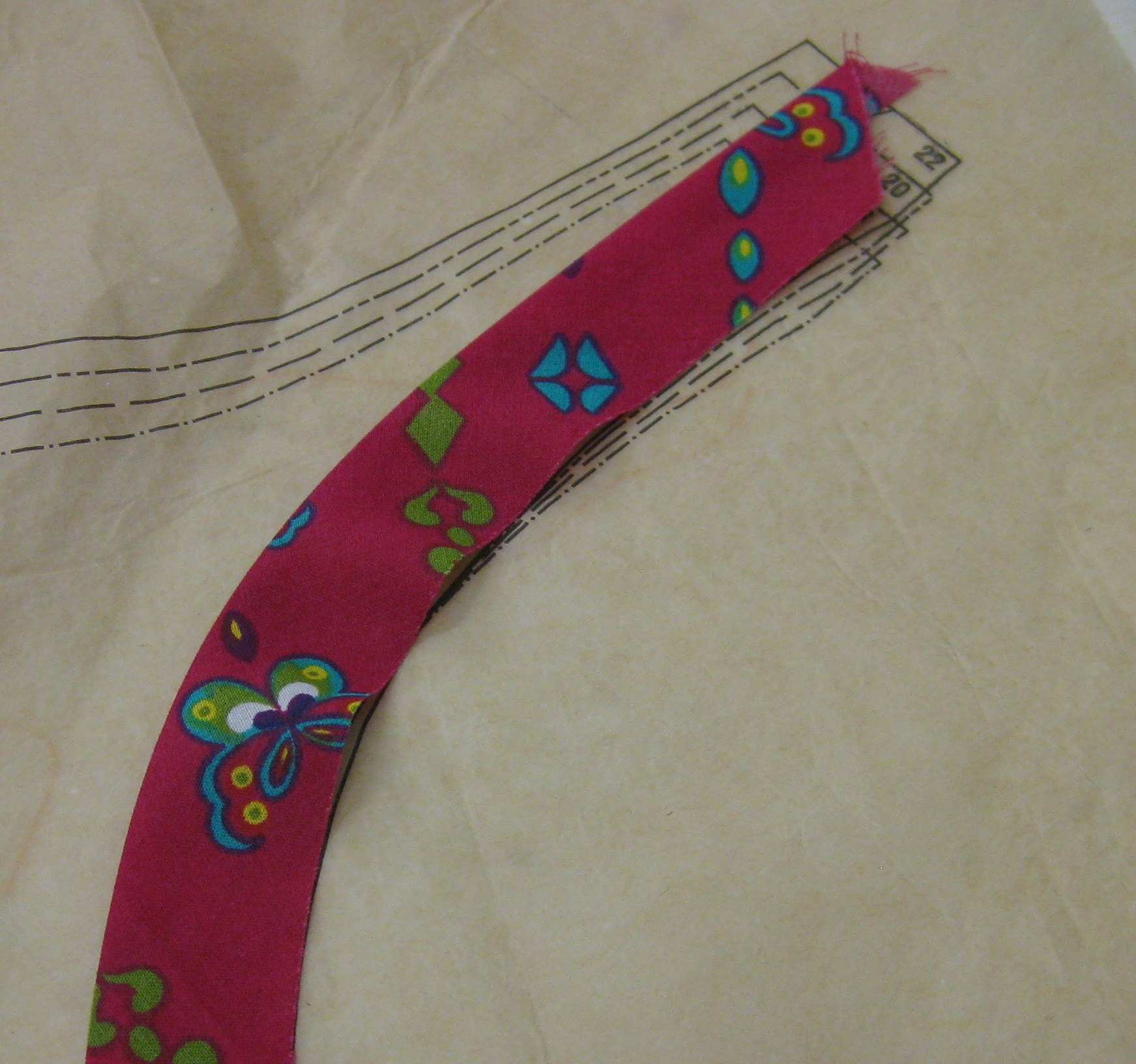
Using an iron and steam, press the bias strips into the shape of the curve of the pattern piece.  When applying the bias to a neckline the inside curve is applied to the neckline.

Press curve before attaching binding.

Press curve before attaching binding.

If you are using satin or other tricky fabrics or applying a binding to a neckline edge with pleats or gathers, tacking the binding in place before machine stitching will really help in achieving accuracy.

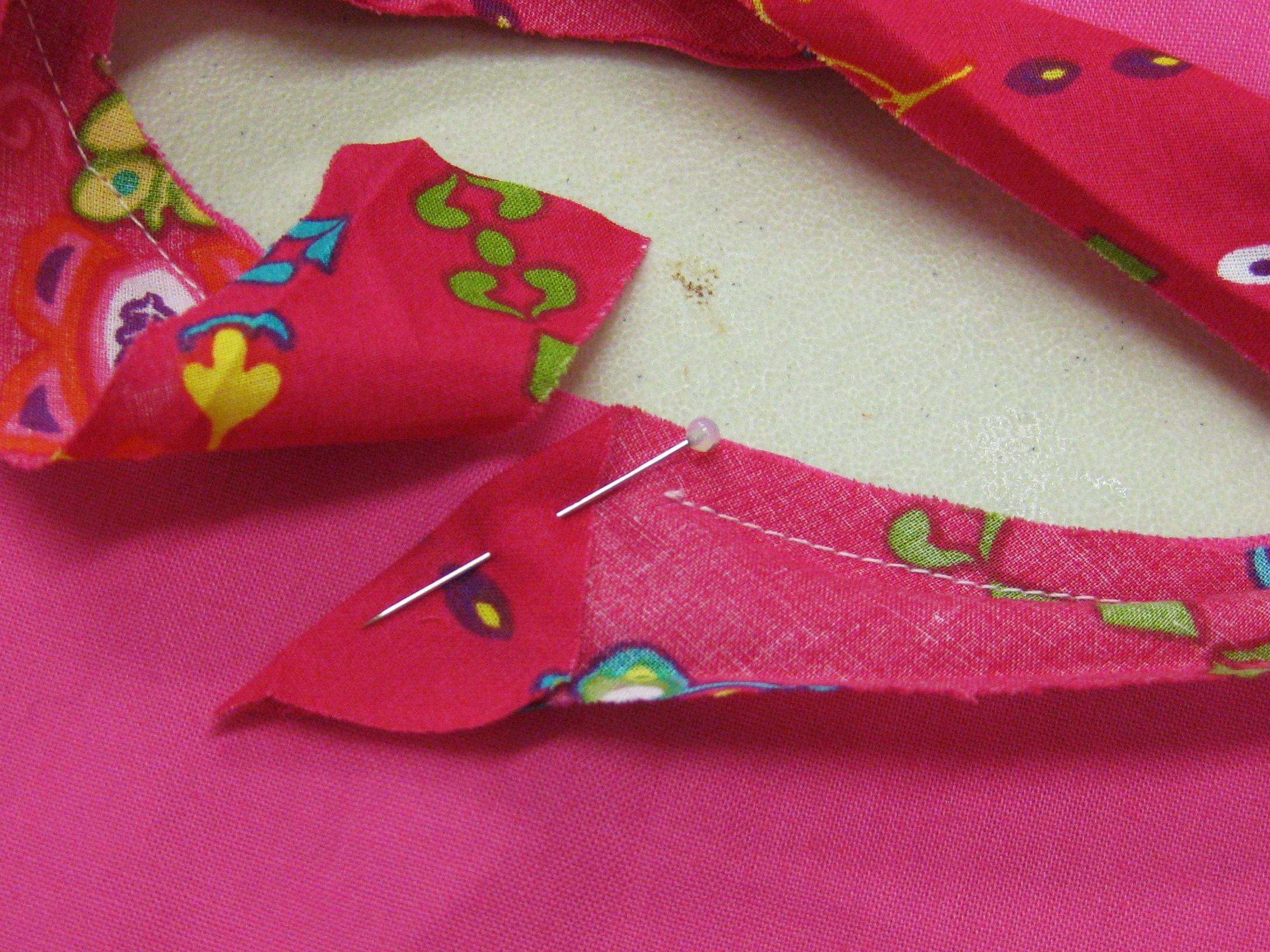
When machine stitching, start away from the thickness of a seam line.  Fold edge at right angles and commence stitching the binding in place.

Fold binding at right angle and commence stitching over the fold.

Fold binding at right angle and commence stitching over the fold.

Leave approximately 10cm on either end of the binding unstitched.  Lay this remaining edge over the previously stitched fold and continue stitching over this section for approximately 2-3cm.

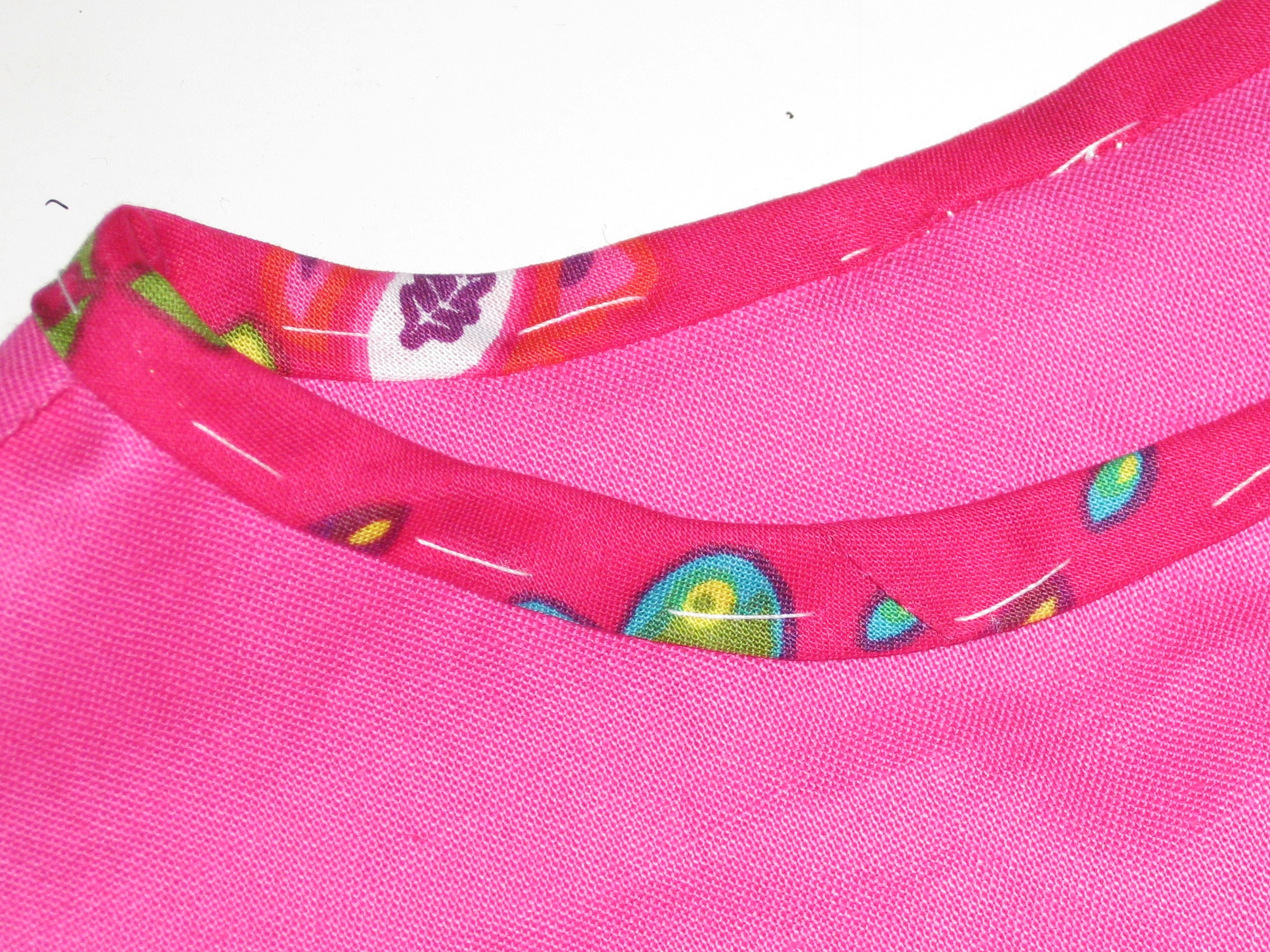
Trim seam allowance to slightly narrower than the desired binding width and gently roll folded edge of binding to the stitching line.  Place pins at right angles to the seam when holding the fold in place.  Tack in place.

Turn binding at right angles to the seam line. Tack in place so it does not move or ripple.

Turn binding at right angles to the seam line. Tack in place so it does not move or ripple.

Invisibly hand stitch by placing hand needle under a machine stitch and taking a stitch through the underside of the folded edge of the bias.

Roll folded edge back slightly. Hand stitch catching the bias just under the folded edge.

Roll folded edge back slightly. Hand stitch catching the bias just under the folded edge.

Make several stitches and then pull the thread to make the binding roll into place.  Do not press the rolled outer edge flat.

Why do we need to include Staystitching and Understitching in garment construction?

A short post this week.  However, I am covering two techniques vital to a high quality finish on garments.  Both these techniques are mentioned in pattern guidesheets but are often overlooked.

Staystitching is used to prevent outer seams (curves) stretching during construction and fitting.  It is a very important technique and should not be omitted from the construction process.

Done on a single layer of fabric, the stitching line should be made with small stitches (1.5-2.0) and lie within the seam allowance and no further than 3mm / 1/8” from the sewing line.  The stitches are positioned close to the seam line for maximum control of the seam.

Staystitching just inside the seam line.

Staystitching just inside the seam line.

They also protect the seam stitching when the seam allowance is clipped to allow it to spread inside the garment when the seam allowances flip to the wrong side.

Tip: Position the fabric to cater for the 15mm / 5/8” seam allowance and move the needle one to two positions to your right so that the stitching sits very close to the seam line but not on the seam line.

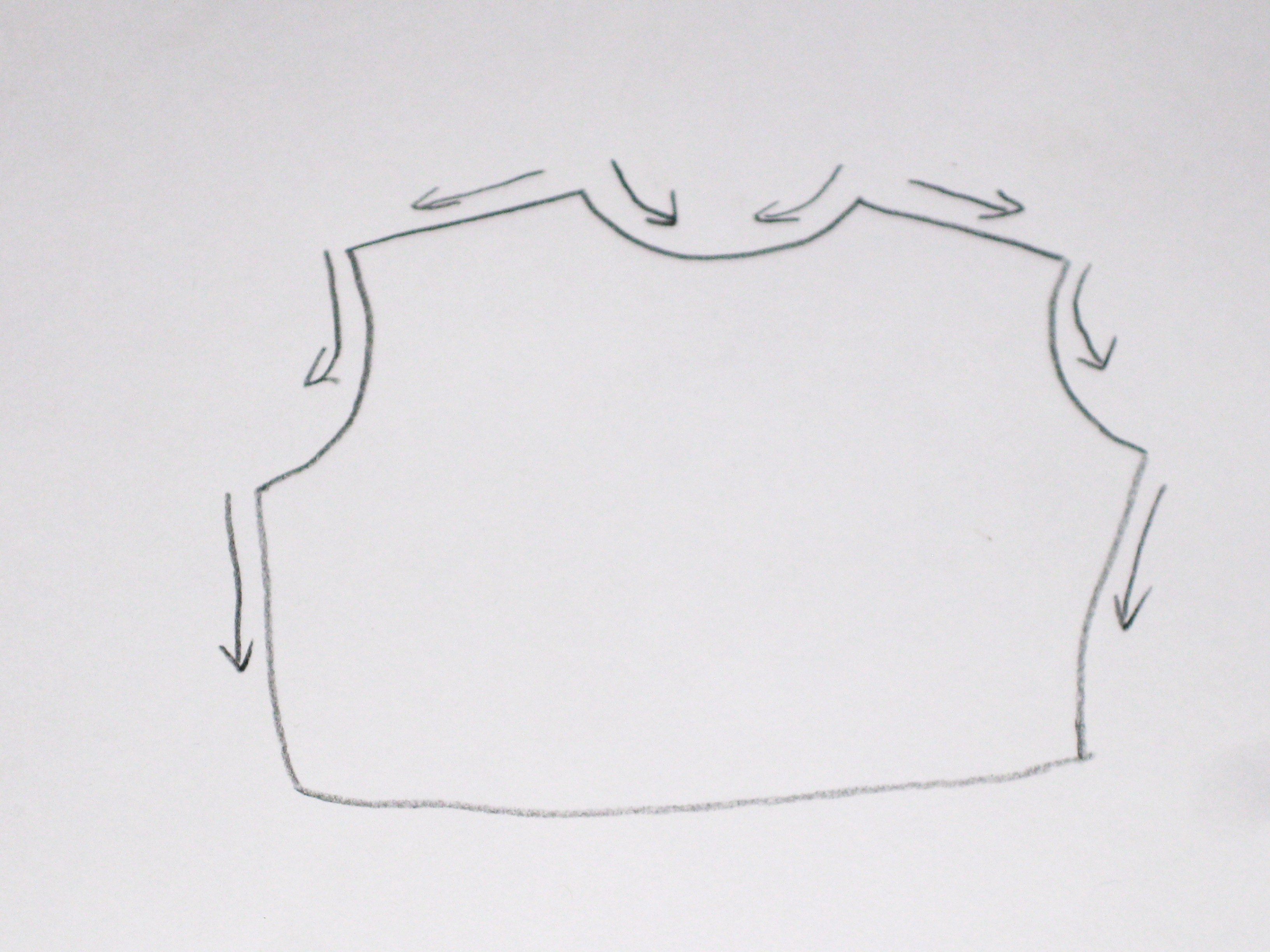
Staystitching needs to be done directionally with the grain of the curve or from widest to narrowest in straight areas (for example, shoulder seams):


Directional staystitching will preserve the grain

Directional staystitching will preserve the grain

Curved areas:

  • From shoulder to centre front
  • From shoulder to centre back

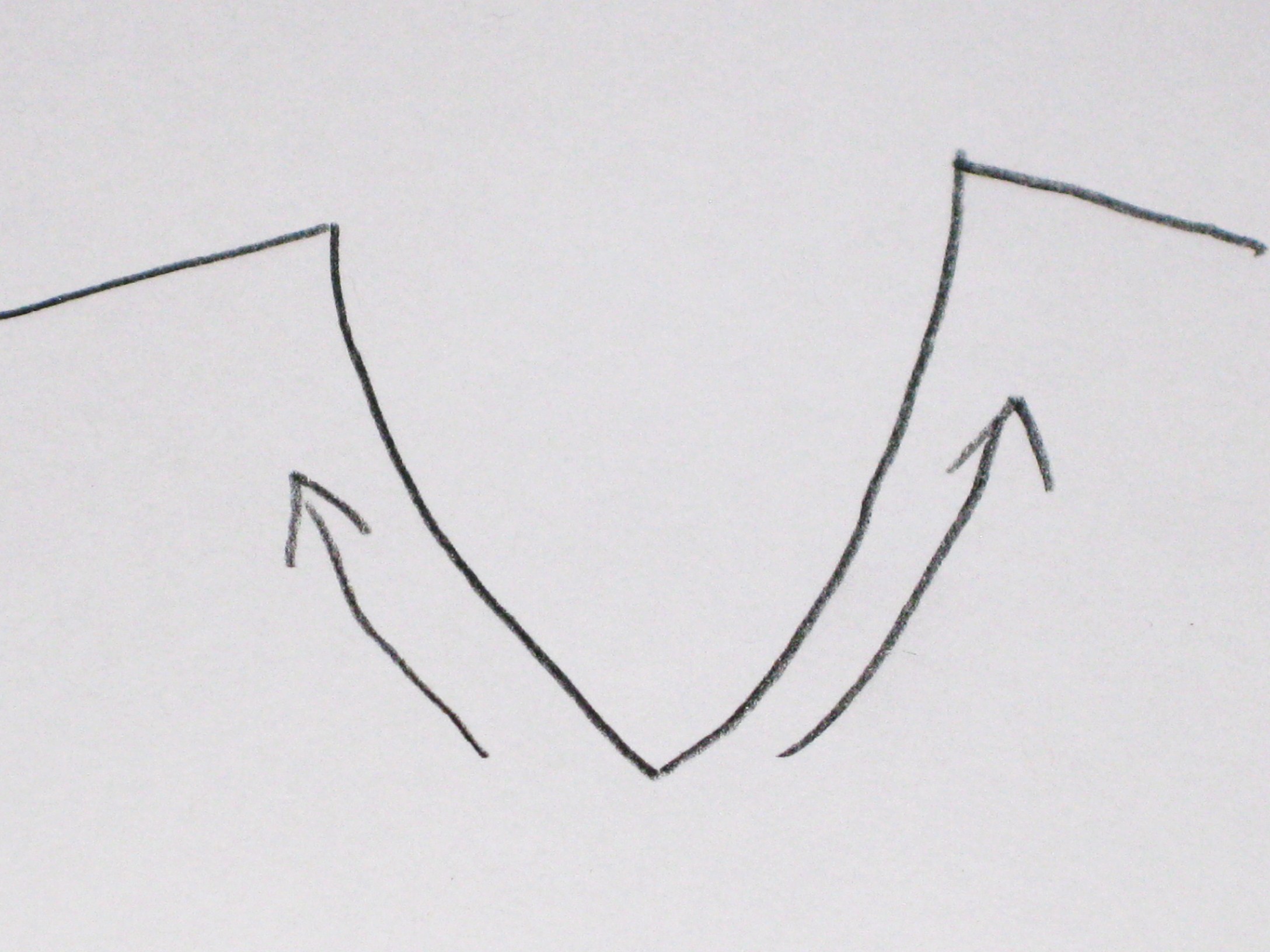
V necklines:

  • From centre front to shoulder


V necks are stitched from bottom of V towards shoulder. This will result in both sides of the V laying flat when the garment is complete.

V necks are stitched from bottom of V towards shoulder. This will result in both sides of the V laying flat when the garment is complete.

  • From centre back to shoulder

Waist edges:

  • From side seam to centre front


Waist staystitching - especially useful when applying a yoke.

Waist staystitching – especially useful when applying a yoke.

  • From side seam to centre back

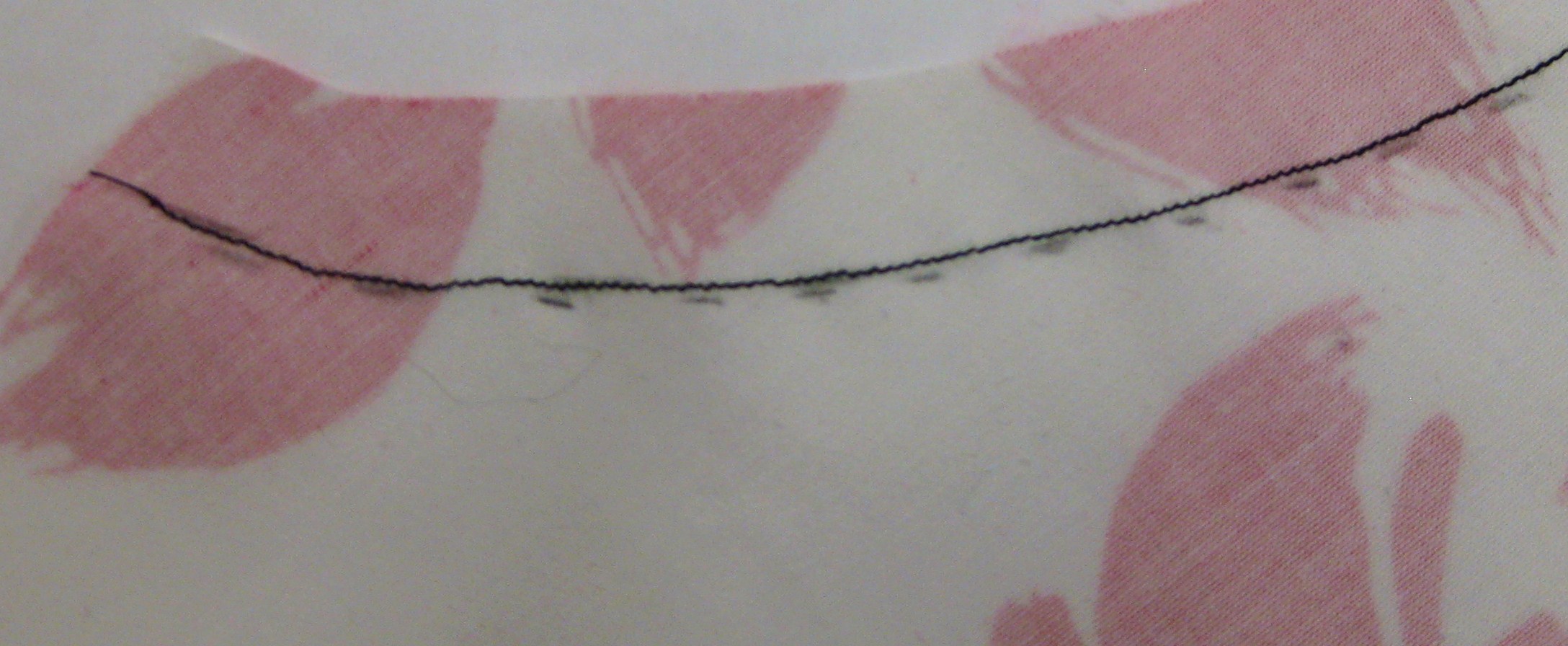
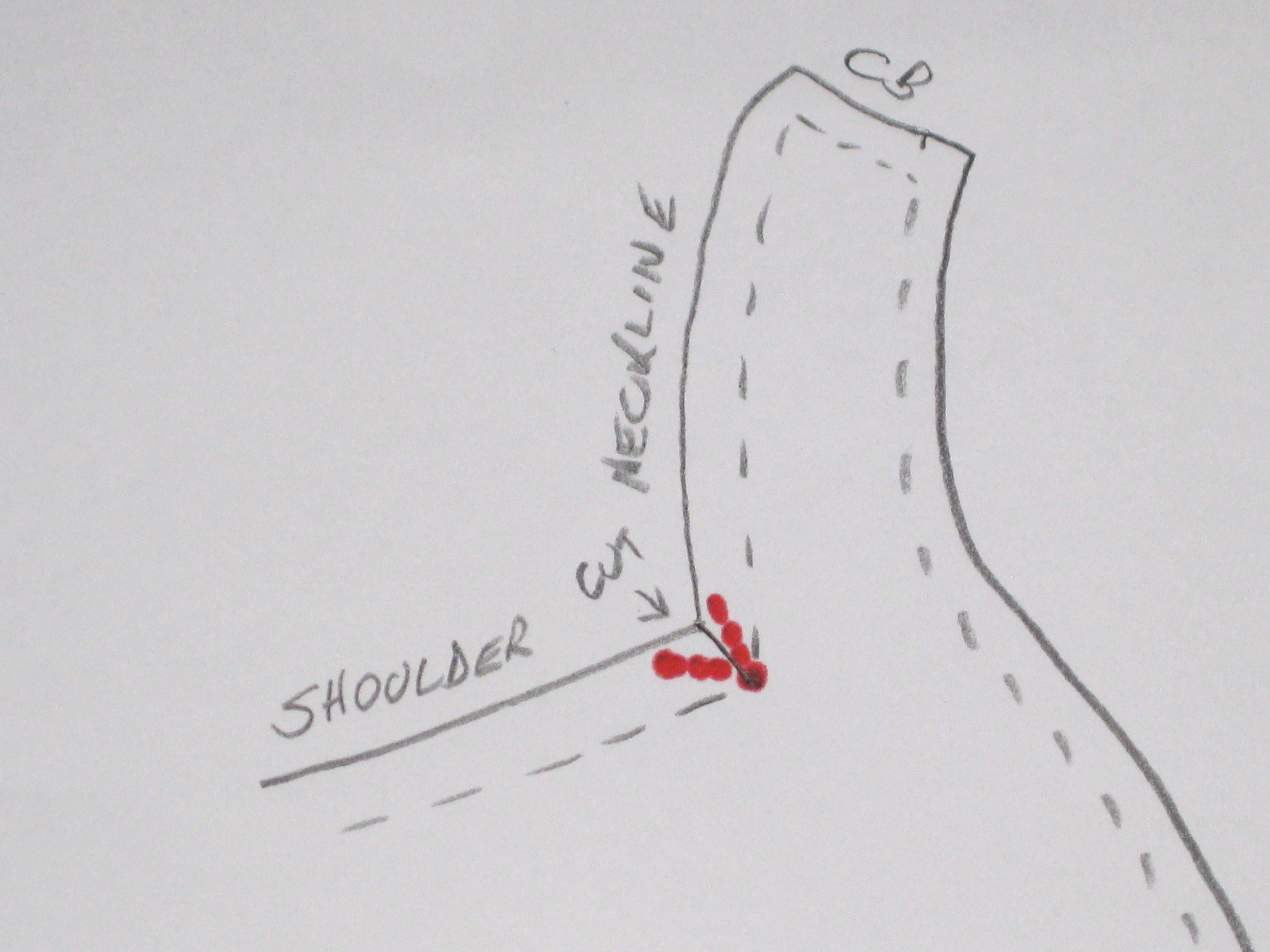
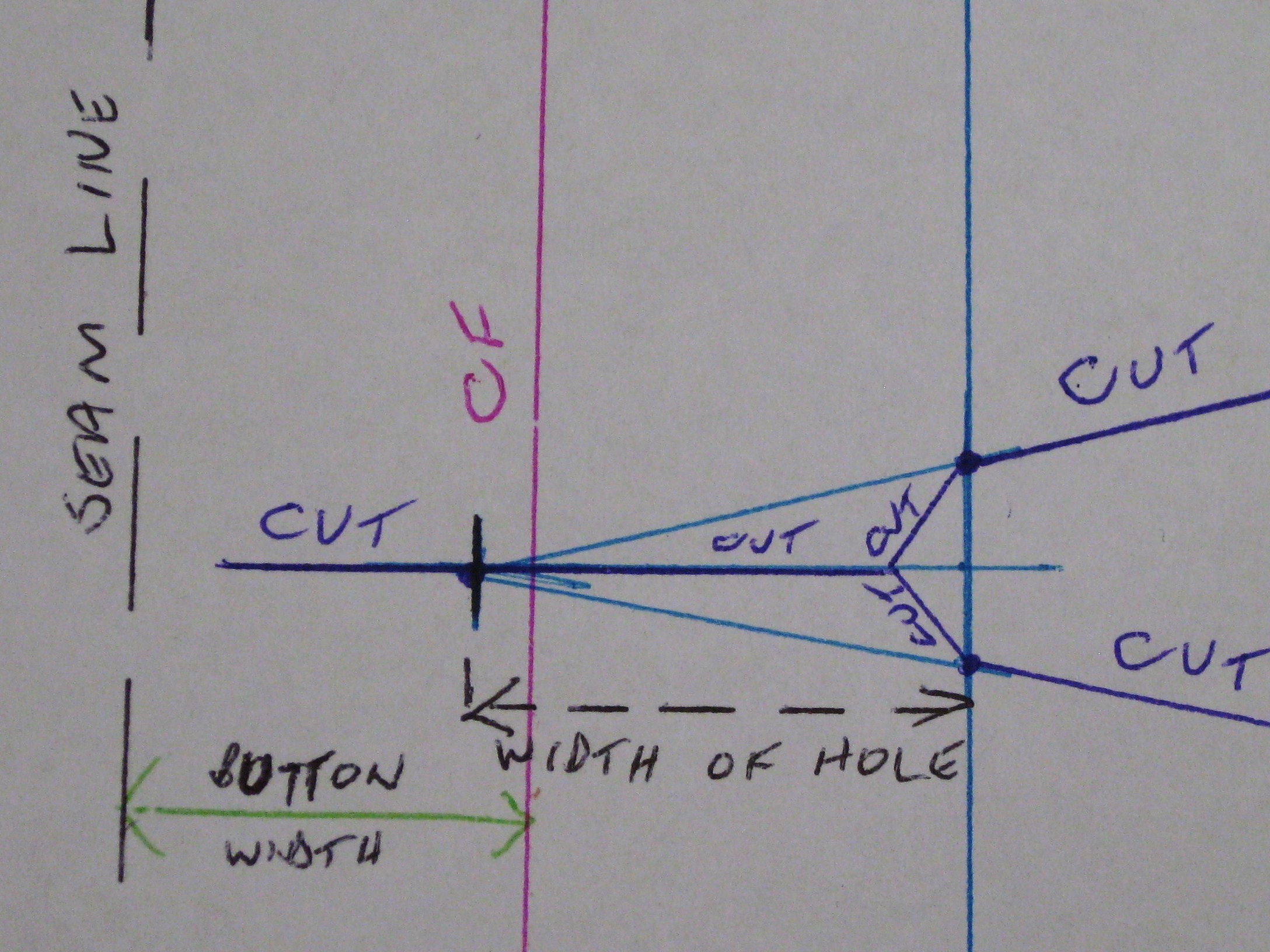
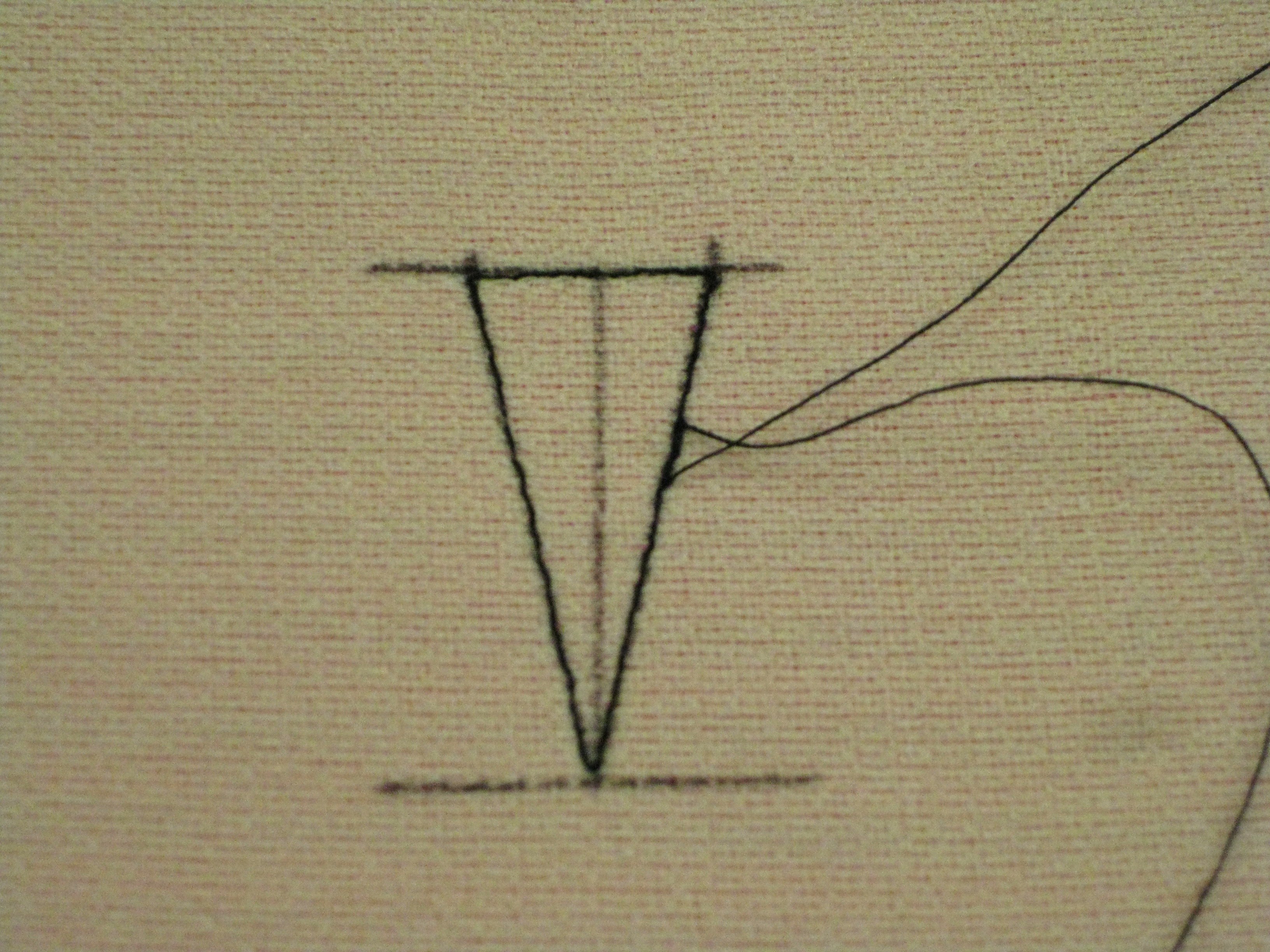
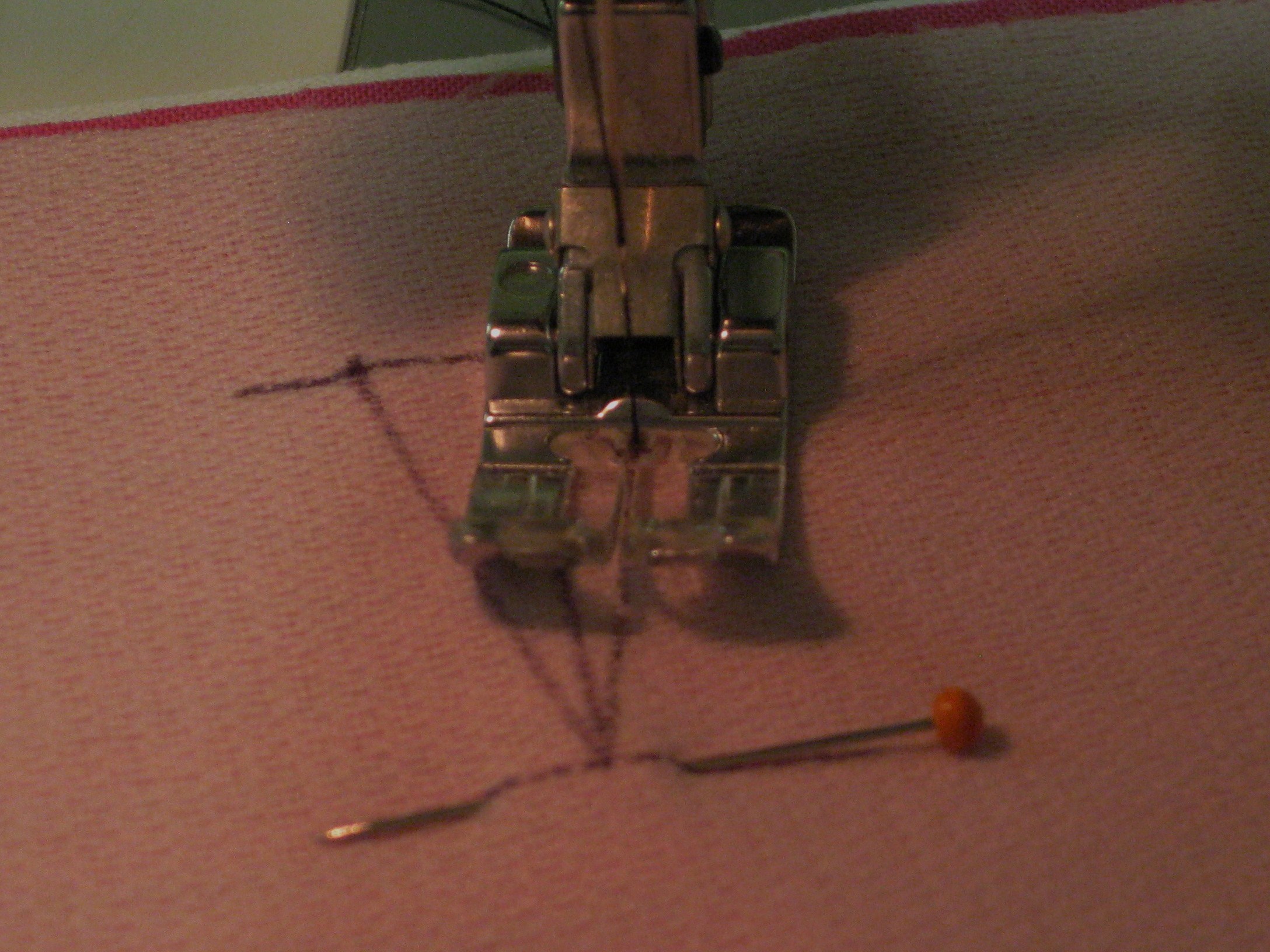
Staystitching is also essential where it will be necessary to clip to a corner point during the construction.  Most pattern guideline sheets indicate staystitching up to the marked point and away from it at 90° followed by an instruction to clip up to the point.  This often results in staystitching remaining visible once the seam is sewn and can cause the clip to expand beyond the point while manipulating the fabric.

As an alternative, I usually staystitch to the point within the seam allowance, using a 30° angle, and leave the clip until it is necessary to move the fabric.  I find this results in a sharp, strong corner.

Staystitching in a narrow V instead of right angle still protects the point as it is cut and will not result in staystitching being visible in finished garment.

Staystitching in a narrow V instead of right angle still protects the point as it is cut and will not result in staystitching being visible in finished garment.

Understitching helps the facings to roll to the inside of the garment, giving a smooth outer edge and helping to keep the facing and/or lining from showing during garment wear.

It should always be used, even if the edge of the garment is to later be topstitched.

Once the facing seam allowance has been notched or clipped, lightly press it towards the facing/lining.   With the garment right side up, stitch through the facing and the seam allowances  at 2-3mm from the seam line and on the inside of the garment.

Understitching applied to the facing will hold the seam allowances in place and allow a soft roll on the outside of the garment and no facing showing.

Understitching applied to the facing will hold the seam allowances in place and allow a soft roll on the outside of the garment and no facing showing.

Vogue 1303 Kay Unger Dress

I made this lovely Kay Unger dress in some beautiful stretch cotton sateen with a stylised floral print.  I purchased the fabric a few years ago from the Fabric Collection at Mount Ommaney and have been waiting for just the right occasion to use it.  The dress code for Tina’s wedding was “garden party” so, since the print reminds me of Monet’s style of painting flowers, I decided it would be perfect.

Kay Unger dress Vogue 1303

Kay Unger dress
Vogue 1303

Kay Unger dress Vogue 1303

Kay Unger dress
Vogue 1303

Line drawing Vogue 1303

Line drawing Vogue 1303

I have made this pattern before so any fit issues had been addressed.   Even though I am not a svelte shape, I believe a well fitting garment that skims rather than envelopes is quite flattering.  It is certainly a lovely dress to wear, especially lined with a silk and cotton mix which keeps me comfortable in the sticky heat of late summer (the weather did not know it was Autumn!). The fabric was lighter in weight than I had remembered and, since I decided to use couture methods of construction, I decided to add a sew-in interfacing around the neckline and armholes to keep the dress in shape and support the piping. The pleated drape across the front of the dress has been supported with a shaped backing made from firm soft cotton.  The seams of the bodice and skirt have been catch stitched in place so they would not move out of place during wear and laundering over the life of the garment.

Seam allowances stitched to mid section fabric.

Seam allowances stitched to mid section fabric.

I drafted a “facing shape” on the original bodice front and back and traced this off as a pattern for the lightweight Shapewell  sew-in interfacing.  The interfacing was tacked to the seam line around the neck and armholes which were then staystitched and clipped in both the dress and lining.

Sew in interfacing tacked in place to support neckline and armholes.

Sew in interfacing tacked in place to support neckline and armholes.

A strip of lightweight fusible interfacing was applied to the centre back seam to support the weight of the invisible zipper.  IMG_2951Once the zipper was installed, the tapes were attached to the interfacing at the top of the zipper – the stitch used is a catch stitch.

Seam allowance tacked to interfacing and tape folded back and stitched in place.

Seam allowance tacked to interfacing and tape folded back and stitched in place.

I made the piping from cotton cut into bias strips, wrapped around rat tail cord and machine stitched using a narrow piping foot. After pinning the piping around the neckline and armholes, I tacked it in place close to the cord and caught the flange to the seam allowance and interfacing (using a catch stitch).  I then fell stitched the folded edges of the lining just under the piping cord.  The ends of the cord were trimmed so they do not overlap at the underarm seams or centre back seam.

Piping was hand stitched to neckline and armholes and machine stitching removed from piping to give a softer finish.

Piping was hand stitched to neckline and armholes and machine stitching removed from piping to give a softer finish.

Lining fell stitched to neckline, armholes and along zipper tape.

Lining fell stitched to neckline, armholes and along zipper tape.

The silk and cotton lining has been hand stitched (using a fell stitch) to the zipper tape and the seam allowances between the bodice and backing fabric and mid section and skirt have been stitched together to avoid the possibility of the lining riding up.   Lace has been hand stitched in place to finish the lining hem.

Lining mid section hand stitched to garment seam allowance at top of skirt section.

Lining mid section hand stitched to garment seam allowance at top of skirt section.

Seam allowances of lining and garment between bodice and underlay stitched together

Seam allowances of lining and garment between bodice and underlay stitched together

Lightweight fusible interfacing has been applied in the hem allowance before the edge was finished with rayon seam binding (Hug Snug) and stitched by hand.  This keeps the hemline in shape with this lightweight fabric.IMG_3006

Lace added to hem of lining.

Lace added to hem of lining.

I thoroughly enjoyed wearing my “garden party” dress to Tina’s wedding.  It was comfortable all day and evening and I am sure I will wear it a lot more next summer.

Triangular Bound Buttonholes

Bound buttonholes can be made in any shape which will suit the overall garment design elements and button shape.  Because of the shape of the centre front panel of my Marcy Tilton jacket (Vogue pattern and unfortunately now discontinued) which is wide at the hem and narrows towards the collar, I decided that triangular buttonholes would work really well.

Front bands are wider at the hem and narrow towards the neckline.

Front bands are wider at the hem and narrow towards the neckline.

Button sits at the point of the buttonhole.

Button sits at the point of the buttonhole.

There are two methods which can be used and the chosen method will depend on the thickness of the fabric and the desired finish.

Measure the width and depth of the button and add 1/8” / 3mm when determining the length of the buttonhole opening.

Wrap thin ribbon around the button and mark the width.

Wrap thin ribbon around the button and mark the width.

Lay the ribbon flat and measure from the fold to the mark. Add 3mm/ 1/8" and this will be the required opening.

Lay the ribbon flat and measure from the fold to the mark. Add 3mm/ 1/8″ and this will be the required opening.

Interface the fabric under the buttonholes as well as the facing.  Make positioning marks on the wrong side of the garment and thread trace through to the right side of the garment.

Mark the triangular opening on the wrong side of the garment.

Mark the triangular opening on the wrong side of the garment.

Position the buttonhole either vertically or horizontally. Vertical buttonholes are centred on centre front line. Horizontal buttons are positioned as above.

Position the buttonhole either vertically or horizontally.
Vertical buttonholes are centred on centre front line.
Horizontal buttons are positioned as above.

  • The wrapped method gives the appearance of the buttonhole lips raised above the surface of the garment:
    • Cut a piece of fabric for the buttonhole lips approximately twice the width of the finished buttonhole plus at least 1” /25mm and the length of the finished buttonhole plus 2” /5cm. Mark the centre lengthwise as well as the position of either end of the buttonhole.
    • Position fabric with right side of buttonhole fabric to right side of garment.

      Position fabric with right side of buttonhole fabric to right side of garment.

      Position the patch against the right side of the fabric, aligning the centre line over the buttonhole placement line.

    • Starting on one long side, stitch around the buttonhole shape (SL 2.0). Do not backstitch but overlap the stitches for approximately ¼” / 6mm.
      Overlap the stitching to finish.

      Overlap the stitching to finish.

      Using small stitch length, start along one long side and stitch around the triangular shape.

      Using small stitch length, start along one long side and stitch around the triangular shape.

    • Using sharp scissors, make an small clip along the centre line and cut right into the point of the triangle. Then cut right into the corners at the base of the buttonhole.
Slash buttonhole fabric to point and on the same angles as the sides of the buttonhole.

Slash buttonhole fabric to point and on the same angles as the sides of the buttonhole.

Cut on angle of long sides and to point

Cut on angle of long sides and to point

  • On the outside of the triangle, carefully clip the fabric to the pointed end of the buttonhole.
  • Carefully turn the fabric to the wrong side being sure that the fold lies along the centre.
Turn buttonhole fabric to wrong side along base.

Turn buttonhole fabric to wrong side along base.

Turn one side.

Turn one side.

Turn second side.

Turn second side.

Pin in place and press.

Fold buttonhole fabric so that it meets in centre of the hole.

Fold buttonhole fabric so that it meets in centre of the hole.

Fold back the triangle at the base of the buttonhole and, following the previous stitching line, stitch through all layers to hold the buttonhole lips in place.

Press finished buttonhole from both sides.

Press finished buttonhole from both sides.

Fold back the base and machine stitch just inside the original stitching.

Fold back the base and machine stitch just inside the original stitching.

Faced method results in the buttonhole lips appearing to be recessed:

  • Cut a piece of silk organza approximately 3” x 2” / 8cm x 5cm and mark the centre lengthwise and across at either end of the opening. Position the patch against the right side of the fabric, aligning the centre line over the buttonhole placement line.
  • Place silk organza against right side of the facing and stitch around chosen opening.

    Place silk organza against right side of the facing and stitch around chosen opening.

    Starting on one long side, stitch around the buttonhole shape (SL 2.0). Do not backstitch but overlap the stitches for approximately ¼” / 6mm.

Tip:  If your fabric is inclined to fray or move, stitch around the shape twice.

  • Using sharp scissors, make an small clip along the centre line and cut right into the point of the triangle. Then cut right into the corners at the base of the buttonhole.
  • Carefully turn the organza to the wrong side and press in place.
  • Cut a 2 pieces of fabric for the buttonhole welts – 2” wider and longer than your opening. Place these pieces right sides together and mark the centre lengthwise.  Using a long machine stitch, join these two pieces along the centre line.
    To make lips for faced method, stitch fabric strips right sides together with long straight stitch.

    To make lips for faced method, stitch fabric strips right sides together with long straight stitch.

    Fold each side away from the centre and press in place.

    Fold fabric with right sides out and press.

    Fold fabric with right sides out and press.

    Position lips with join in centre of hole. Stitch across base.

    Position lips with join in centre of hole. Stitch across base.

    Position the buttonhole welts under the faced hole with the centre line running from the point to the centre of the base. Fold back the garment and stitch across the base.

Tip: Pinning the garment piece to the ironing board before slipping the buttonhole welts in place will make this easier

  • Fold back the garment along one long side of the triangular opening and stitch through the garment and into the welt. Repeat on the other side.
    Fold garment back and stitch just inside former stitching lines.

    Fold garment back and stitch just inside former stitching lines.

    Remove tacking stitches and trim the shape.

    Remove tacking stitches and trim the shape.

The faced method can then be used with either technique to finish the buttonhole openings in the facing of the garment.  The underside of the buttonhole can replicate the triangular shape or take the form of a rectangle over the opening.

Turn organza to wrong side of facing and press.

Turn organza to wrong side of facing and press.

Turn organza to wrong side of facing and press.

Turn organza to wrong side of facing and press.

IMG_3037

Both of these styles use the same construction method:

  • Apply the facing to the garment, trim, grade and understitch as needed
  • Press the facing in place
  • From the right side of the garment, place a pin through the corners of the buttonhole and into the facing
  • Place the organza patch over the pins and mark the stitching lines round all sides of the buttonhole
  • Stitch in place, clip and turn as detailed above – press in place and then handstitch to the wrong side of the buttonhole.
    Position faced hole in facing over the underside of the buttonhole and handstitch in place.

    Position faced hole in facing over the underside of the buttonhole and handstitch in place.

    IMG_3041

Triangular buttonholes are great fun and I hope you will give them a try.

And So To The Hem

Portions of this article were first seen in Dressmaking with Australian Stitches magazine – Volume 21 No 11.
Permission has been sought and granted for electronic use and the photos and text remain the property of Alison Wheeler – Sewing Lady.

When asked about how a garment is coming along, how many times have we said, “It all finished except for the hem!”  This is probably because the hem is usually noted in the guide sheet as the last piece of the construction puzzle and we are nearly there!  How often would we even think about how the garment is to be hemmed until we reach this step?

And yet, a poorly finished hem can mar an otherwise well constructed garment.

Things to consider: 

  • the design of the garment – is the hem a main feature or should it blend into the background?
  • the weight, drape and transparency of the fabric – which method is appropriate to achieve the look you want?
  • the fullness of the hem – is it straight or curved?
  • the number of colours in a print and which is the most dominant – which thread colour which will be the least noticeable? Will the show through of a print spoil the look of the finished hem?

Some basics: 

  • a hem should not be too wide or heavy for the garment and should not pull the fabric tight or make puckers
  • a hem should not be too narrow to provide support to the lower edge of the garment
  • unless it is meant to be a feature, the hem should just blend into the overall garment
  • as a general rule, the more curved the hem (for example in a circle skirt) the narrower it will be
  • using a press cloth, press the folded edge before stitching the hem in place and iron over the whole hem when completed.

Tip: Silk organza makes a wonderful see through press cloth.

Suggested Hem Widths:

Commercial patterns display the hem allowance included in the garment close to the hem finish on each appropriate pattern piece.  These are a guide only and can be increased or decreased depending on the fabric being used and the desired hem finish.

As a guide, the hem allowances I most often use are:

Dresses, skirts, pants, jackets               2 inches/5cm

Blouses and shirts                                   5/8” /15mm

Skirts with curved hemline                   5/8” /15mm

Jeans                                                         1/1/2″ /4cm

So, having thought about what you want to achieve, what are the options?  Will you stitch by hand or machine?

Machine Stitching Options:

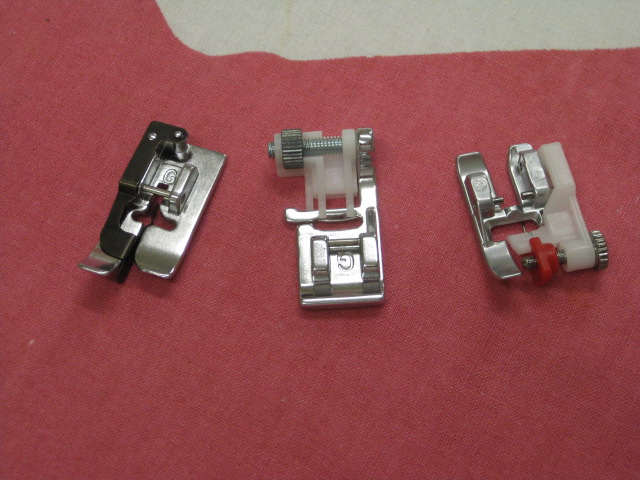
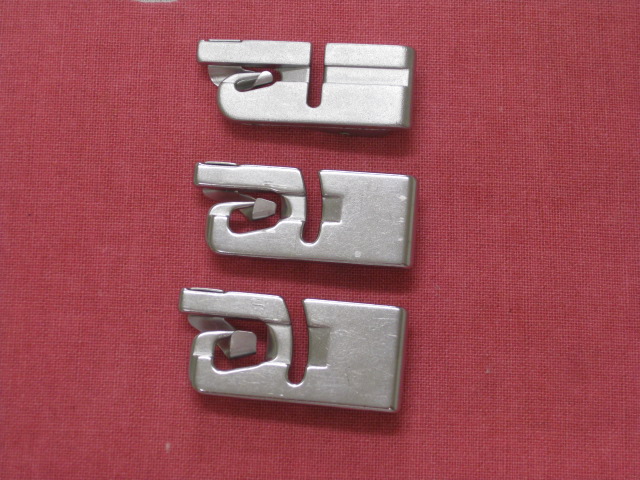
Most sewing machines provide at least one blind hem stitch  which, when used with the appropriate presser foot, do quite a good job.

A selection of blind hem feet

A selection of blind hem feet

A selection of blind hem feet

A selection of blind hem feet

A selection of blind hem feet

However, any machine stitching will add a degree of stiffness to the fabric.  Machines with automatic tension adjustment will lower the tension for the blind hem stitches.  A machine blind hem is best suited to garments which are made of a more robust fabric will take more wear, for example children’s clothes and trouser hems.

Hems on these garments can also be stitched with a straight stitch along the top of the hem allowance. Again, loosening the tension slightly may be needed so the stitching will not pucker.  Stitching which shows on the right side of the garment needs to be stitched on that side. 

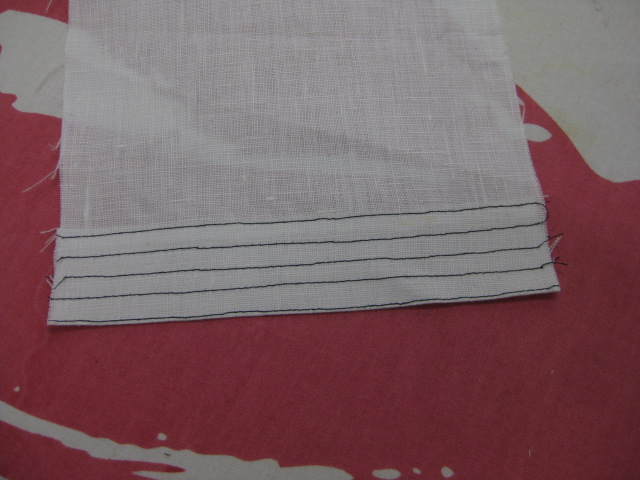
An interesting effect can also be achieved using multiple rows of straight stitch.  This technique is called channel stitching.

Channel stitching

Channel stitching

This method adds quite a lot of stiffness to the fabric and should only be used on stable fabrics such as linen, medium weight cotton or silk. 

Care needs to be taken when machine stitching a garment made with a stretch woven fabric (that is a fabric which contains 3-5% Spandex, Elastene, etc).  The hem is usually stitched along the crosswise grain which is the direction of greatest stretch in the fabric.  Unless the fabric has very good recovery, this can cause problems.  My advice when hemming these fabrics is to add a lightweight fusible interfacing with the most stable grain against the wrong side of the hem and/or to stitch the hem by hand.
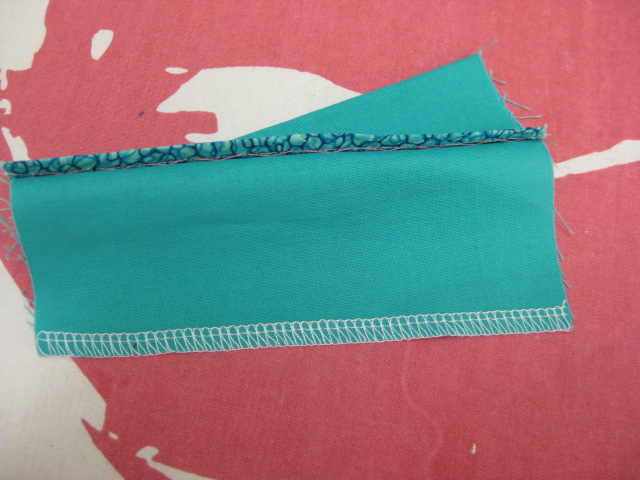
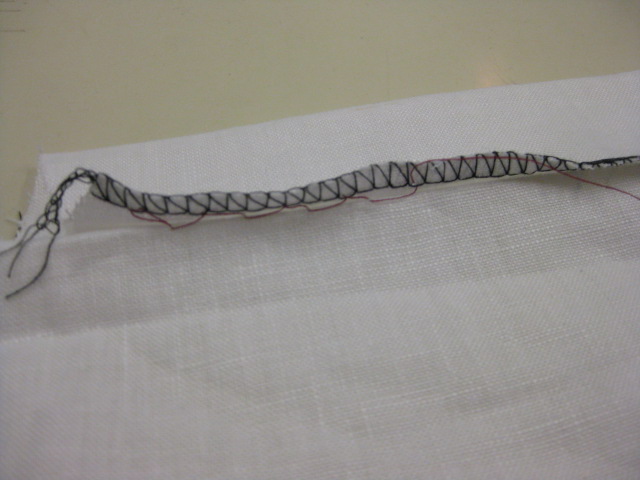
When hemming a curved edge, a narrower depth of hem is preferable.  Simplyover lock the raw edge and using a long straight stitch with loosened tension (SL 3.5, Tension 2-3) stitch a guideline 5/8” /15mm from the finished edge (Photo 3).  Press up the hem with this guideline just inside the fold.  Stitch permanently from the right side of the garment at about 12mm from the folded edge.  Press the finished hem and remove the guideline stitching.

Narrow curved hem which has been machine stitched

Narrow curved hem which has been machine stitched

Hand Stitching Options:

To achieve a quality hem finish:

  • Hem edge finishes - Hong Kong finish, over locking, stitched and pinked - to neaten the cut edge and prevent fraying

    Hem edge finishes – Hong Kong finish, over locking, stitched and pinked – to neaten the cut edge and prevent fraying

    use an appropriate method to finish the raw edge (for example – stitch and pink, Hong Kong finish, overlock)

  • use a good quality thread with a single strand u and pull the thread out)
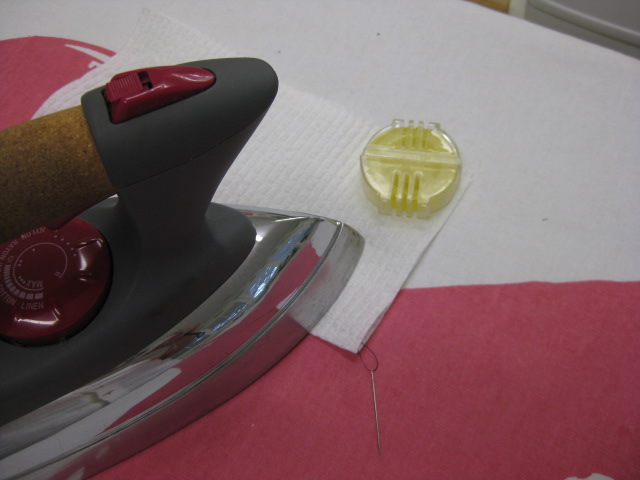
  • Run thread through wax and place between two sheets of paper towel; apply heat with iron and pull the thread through

    Run thread through wax and place between two sheets of paper towel; apply heat with iron and pull the thread through

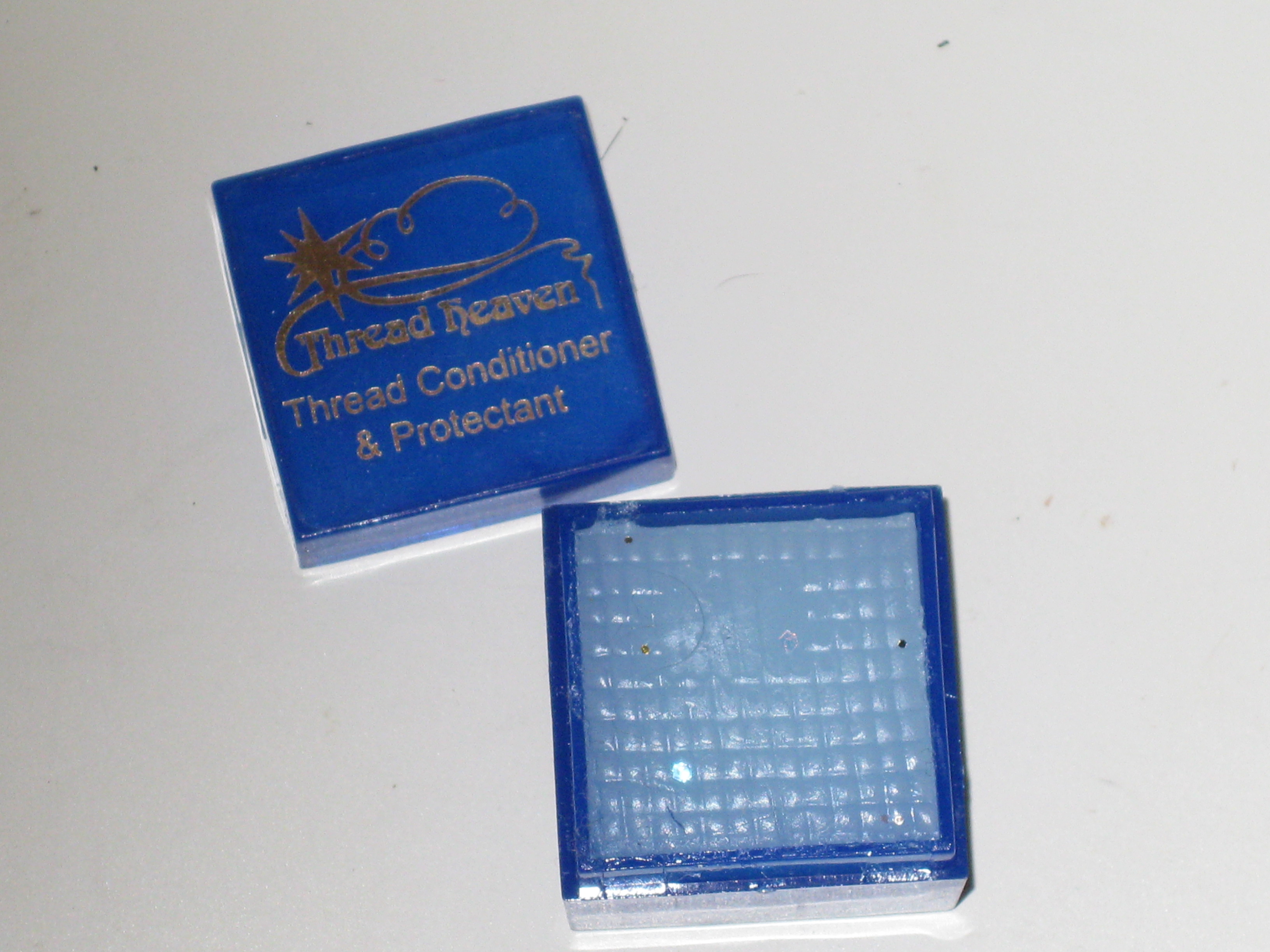
    another option to help prevent the thread fraying and tangling is Thread Heaven – Thread Conditioner and Protectant.

IMG_3000

  • use the finest needle that will do the job and take just one thread from the fabric which can be seen when the garment is worn
  • keep some play in the stitches (do not pull them tight)
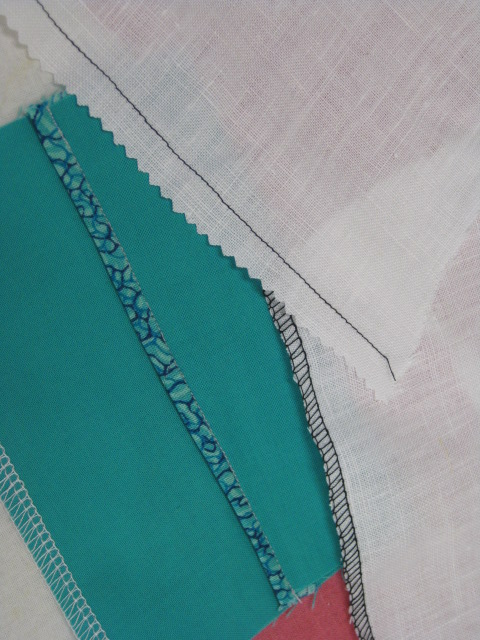
    Hem edge finishes - Hong Kong finish, over locking, stitched and pinked - to neaten the cut edge and prevent fraying

    Hem edge finishes – Hong Kong finish, over locking, stitched and pinked – to neaten the cut edge and prevent fraying

    Hem stitches between hem and garment and positioned just at the lower edge of overlocking.

    Hem stitches between hem and garment and positioned just at the lower edge of overlocking.

  • using whichever hand stitch you prefer (catch stitch/herringbone, slip stitch), place stitches on the underside of the hem, between the hem and the garment
  • if your fabric has definite blocks of solid colour, for example black and white, consider stitching the individual sections in their own matching colour.  

Narrow Hem Techniques:

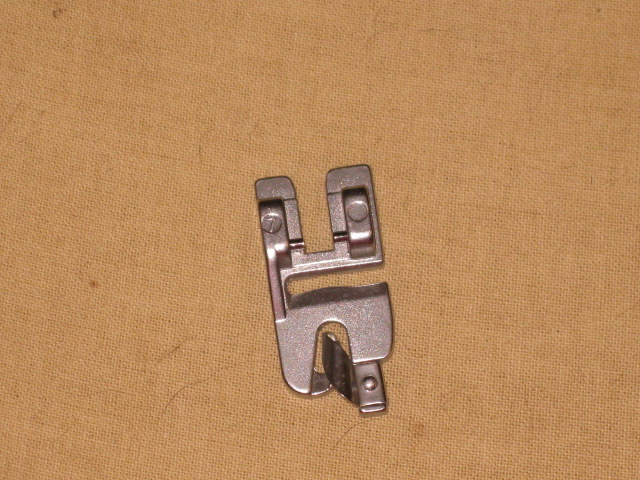
When hemming fine fabrics, especially with a full skirt or sleeve, the narrow hemmer foot

Rolled hem foot

Rolled hem foot

which comes with most sewing machines these days can give a lovely finish.  It does take a little practice to learn to use it effectively but well worth the effort. If your fabric is difficult to handle, either too soft or slippery, lightly spray the fabric with Crisp™ spray starch and, using a press cloth, iron it dry.  If it needs The keys to success when using this foot are:

  • use only on a hem that is not too sharply curved and test on a sample first to perfect the technique
Underside of the rolled hem foot - the width of the hem needs to match the width of the indentation on the underside of the foot.

Underside of the rolled hem foot – the width of the hem needs to match the width of the indentation on the underside of the foot.

  • be sure the finished hem width matches the indent on the underside of the foot. These feet come in various sizes and the most common one provided with machines is 3mm
  • Pin the first couple of inches/centremetres in place and press the start of the hem.

    Pin the first couple of inches/centremetres in place and press the start of the hem.

    start at an open seam edge and double fold the hem edge to the width which matches the foot; pin in place

  • place the folded hem under the foot and stitch in place before leaving the needle in the fabric
  • Stitch the first section of the hem in place; leaving the needle in the hem, carefully roll the fabric into the curl of the foot - keeping the fabric pulled slightly to the right in the same direction as the marking on the foot.

    Stitch the first section of the hem in place; leaving the needle in the hem, carefully roll the fabric into the curl of the foot – keeping the fabric pulled slightly to the right in the same direction as the marking on the foot.

    fold the unfinished hem edge into the roll of the foot and hold the fabric off to the left, taking the angle of the groove at the front of the foot

  • place the point of a small bamboo skewer where the fold of the fabric will sit and stitch slowly allowing the foot to curl the fabric under to form the rolled hem.

If you do not have a hemmer foot or the hem is very curved the following technique which I learned from an article written by Kenneth D King in the 1994 publication Vogue & Butterick’s Designer Sewing Techniques (I believe this is no longer published but may be available second hand on line or at a Lifeline Bookfest or similar event).

It is most useful on lightweight and sheer fabrics.

Using a small straight stitch (length 2.0-2.5) with slightly lowered tension, stitch alonghem line (usually 5/8” /15mm from cut edge).

Stitch along the hem at 5/8"/15mm from the cut edge.

Stitch along the hem at 5/8″/15mm from the cut edge.

Fold fabric with hem allowance towards wrong side of garment and with stitched line just inside the fold.  Press carefully and stitch second row just inside the fold, on top of the first row.

Press up the hem while favouring the stitched line just to the underside.

Press up the hem while favouring the stitched line just to the underside.

Using small, sharp scissors (preferably with a rounded tip) or duckbill scissors, trim remaining hem allowance fabric back to stitching.ip: Allow the weight of the garment to rest on a flat surface (not your lap) and keep one hand under the fabric while cutting with the other.

Resting fabric across your hand, carefully cut fabric right next to the stitching.

Resting fabric across your hand, carefully cut fabric right next to the stitching.

Working on a small section at a time, roll the stitched edge towards the wrong side of the garment.  A very narrow hem will form.  Stitch this in place from the right side of the garment.

Roll the hem to the underside; pin in place

Roll the hem to the underside; pin in place

The latter technique can result in a very fine finished hem (on right); finer than the smallest hem (on left) which can be achieved using the hemmer foot .

Hem using manual method on the left; hem using rolled hem foot on the right.

Hem using manual method on the left; hem using rolled hem foot on the right.

Hand Rolled Hem:

For occasions when a very lightweight hem is needed, a hand rolled hem gives a beautifully light and fine finish.

Thread the finest needle that works with your fabric and use fine cotton (60/3 weight) or silk thread (#100 weight).  Wax the thread to minimise tangles and do not have your thread too long.p: If you have a long hem distance,

If you have allowed a 3/8” /9mm hem, fold over1/8” /3mm of fabric and take a tiny stitch in the fold.  Take the needle forward 1/8” /3mm from that stitch and take a tiny stitch in your fabric 1/8” / 3mm below the cut edge.  Take another stitch in the fold, directly above the previous stitch.  Slide the needle forward 1/8” /3mm inside the fold.  Continue for approximately 3” /10cm keeping the thread loose.  Gently pull the thread until the hem rolls to the wrong side.  Continue in this way to the end of the hem.

Roll under one third of hem width. Hand stitch in the fold and another third below the cut edge.

Roll under one third of hem width. Hand stitch in the fold and another third below the cut edge.

Carefully pull thread which will cause the hem to roll.

Carefully pull thread which will cause the hem to roll.

Do not press this hem or the roll will be lost.  Simply cover with a press cloth and use an ironing motion to finish.

 Hem Bands:

 This technique is useful in a number of different circumstances:

  • where design detail or contrast at the hem is desired
  • to add weight to the bottom of a hem
  • when a garment needs to be lengthened
  • when using crisp, sheer fabrics (eg silk organza) – often seen on vintage 1950’s garments

Measure the circumference of the finished hem and cut a piece of fabric twice the desired finished width plus 2 seam allowances by the circumference of the hem plus 2 seam allowances.

Fold the cut band in half lengthwise with wrong sides together.  Open out the band and, with right sides together, join to make a circle.  Stitch a line along the seam allowance on one edge of the band and use this stitching line as a guide to press the seam allowance towards the wrong side of the band.

Pin the right side of the band to the right side of the garment and stitch in place.  Bring the folded inside edge to just cover this stitching line and invisibly stitch the folded edge in place.

It is always important to make a sample of various techniques so you can assess the results and decide on what suits best.

I hope you will enjoy trying some of these methods to build a repertoire of sewing techniques which will serve you well in future projects.

The Dream Wedding Gown

Yesterday I attended the wedding ceremony of one of my lovely students, Tina Patrick, and her fiancé, Steve Donovan.  The wedding was a “Gloryville” at Cudgera Creek in northern New South Wales – a little piece of green paradise which was the perfect setting for a wonderful family occasion.  It was such a privilege to be part of it all.  Congratulations, Mr and Mrs Donovan!

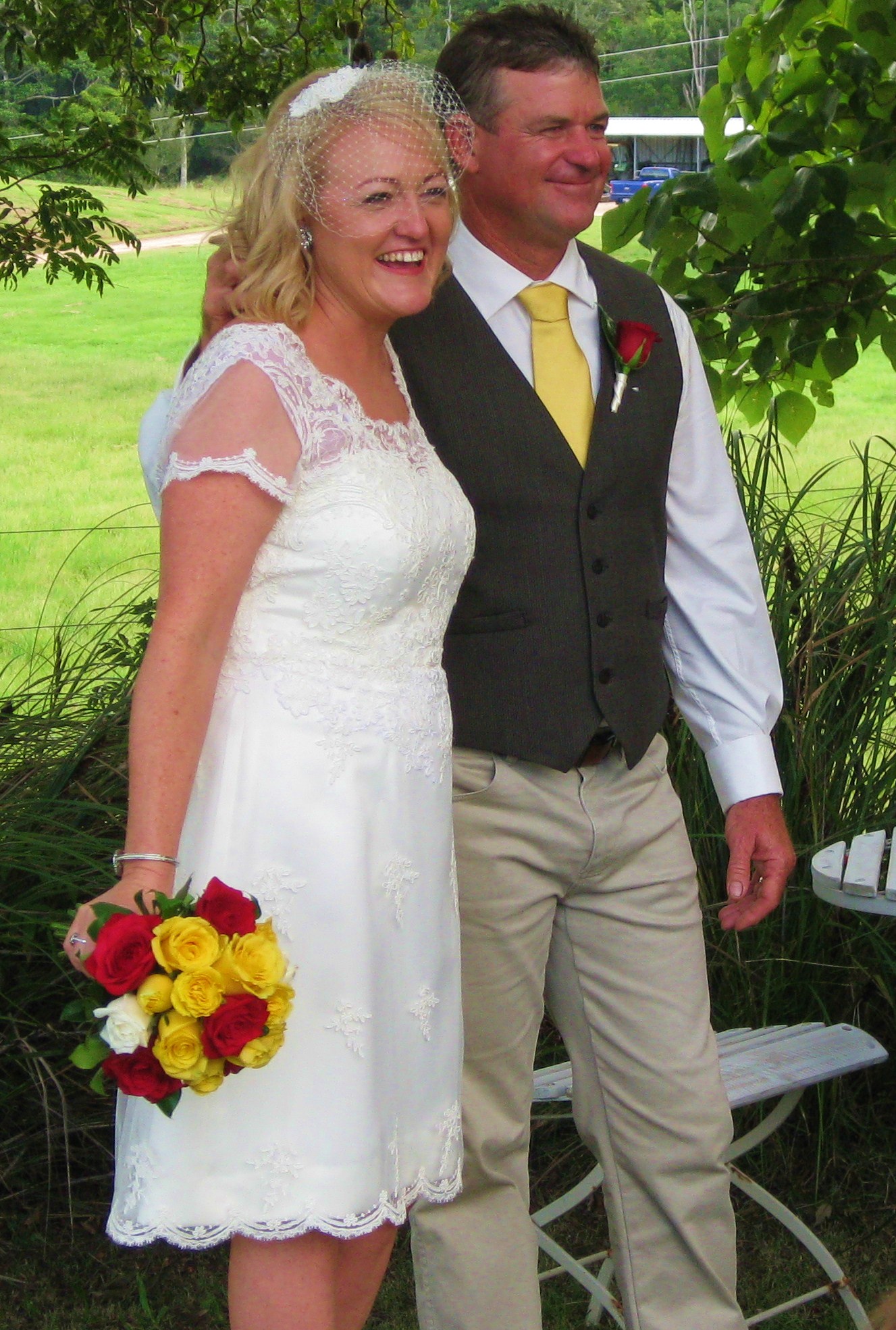
The happy couple - Tina and Steve Donovan

The happy couple – Tina and Steve Donovan

What sets a wedding gown apart as a sewing project, is not just working with unfamiliar (and often expensive) fabrics but the techniques used.  To achieve a gown which is not only beautiful but will allow the bride to be comfortable so that she can really enjoy her special day, the process starts with a good fit and an inbuilt foundation and stays to support the gown during the whole event.  The inclusion of lots of hand work gives a softer and unpuckered finish to the outer edges.  It also makes controlling the task much easier.

Tina started coming to classes around 8-9 months ago with a view to learning enough to make her own wedding gown.

As the weeks progressed, she completed a toile of her chosen style – excitedly embracing all the new techniques involved, especially boning!  Once the fit was perfected, she made the dress another couple of times and has received lots of well deserved compliments.

And so to THE DRESS!

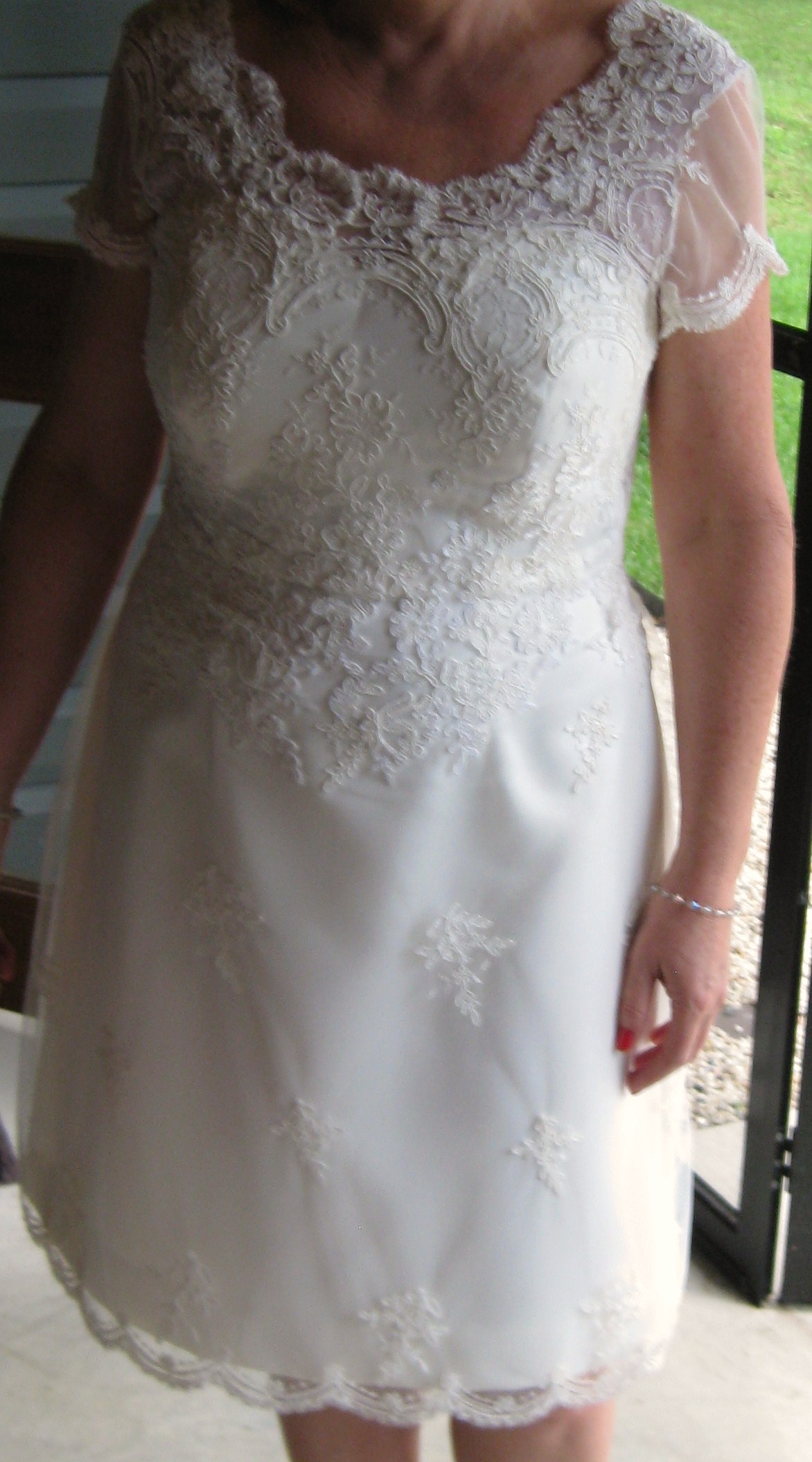
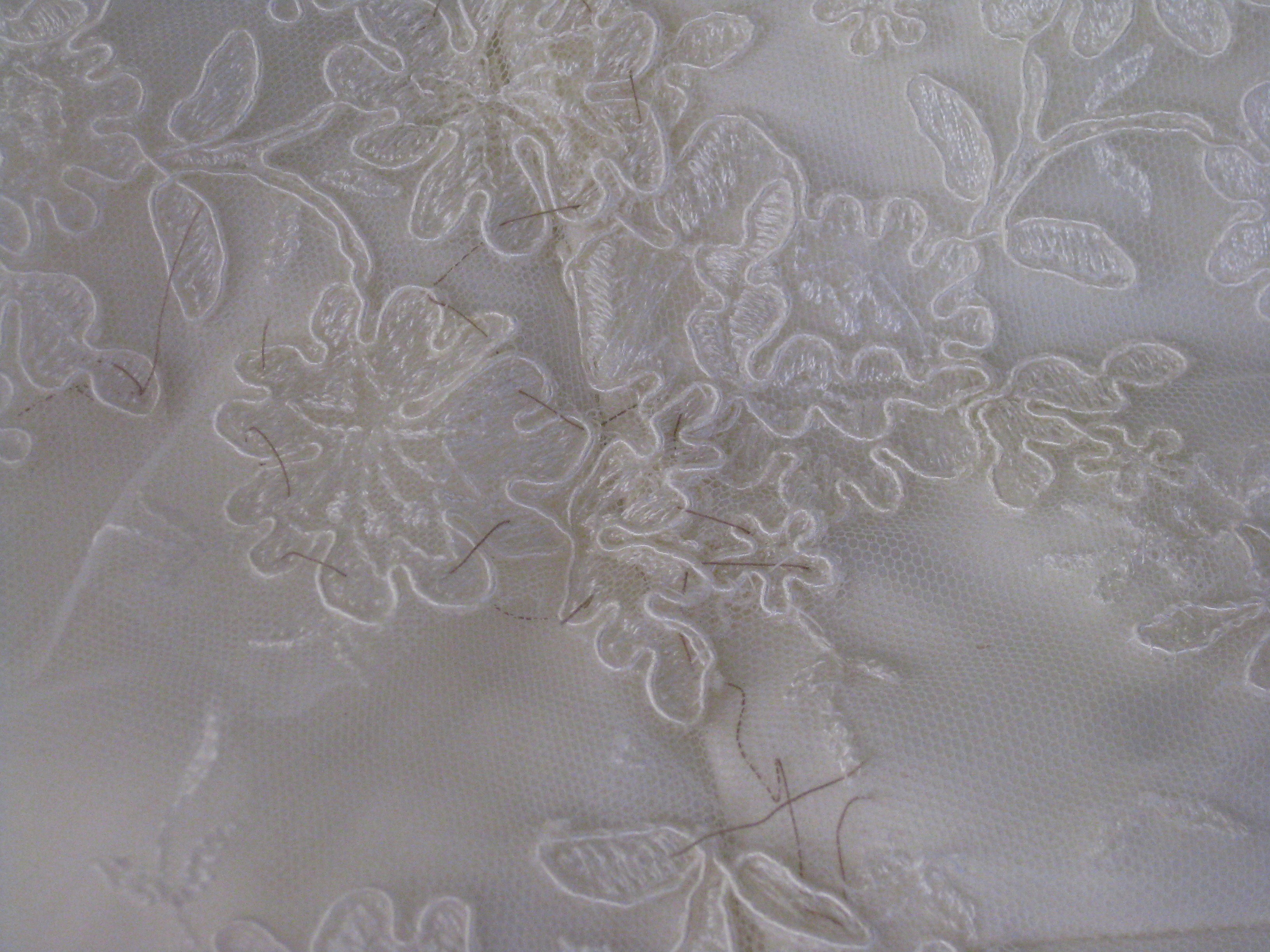
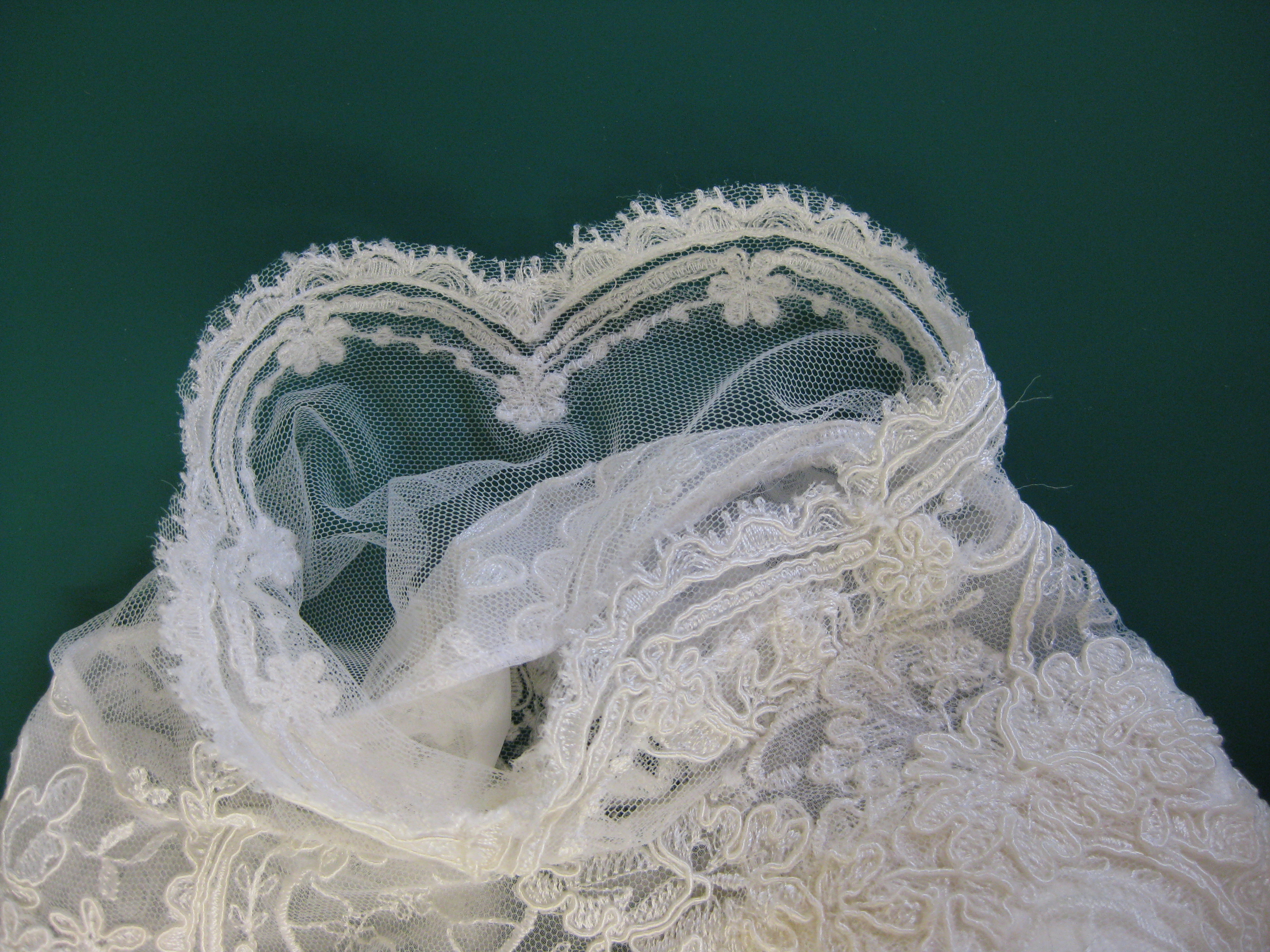
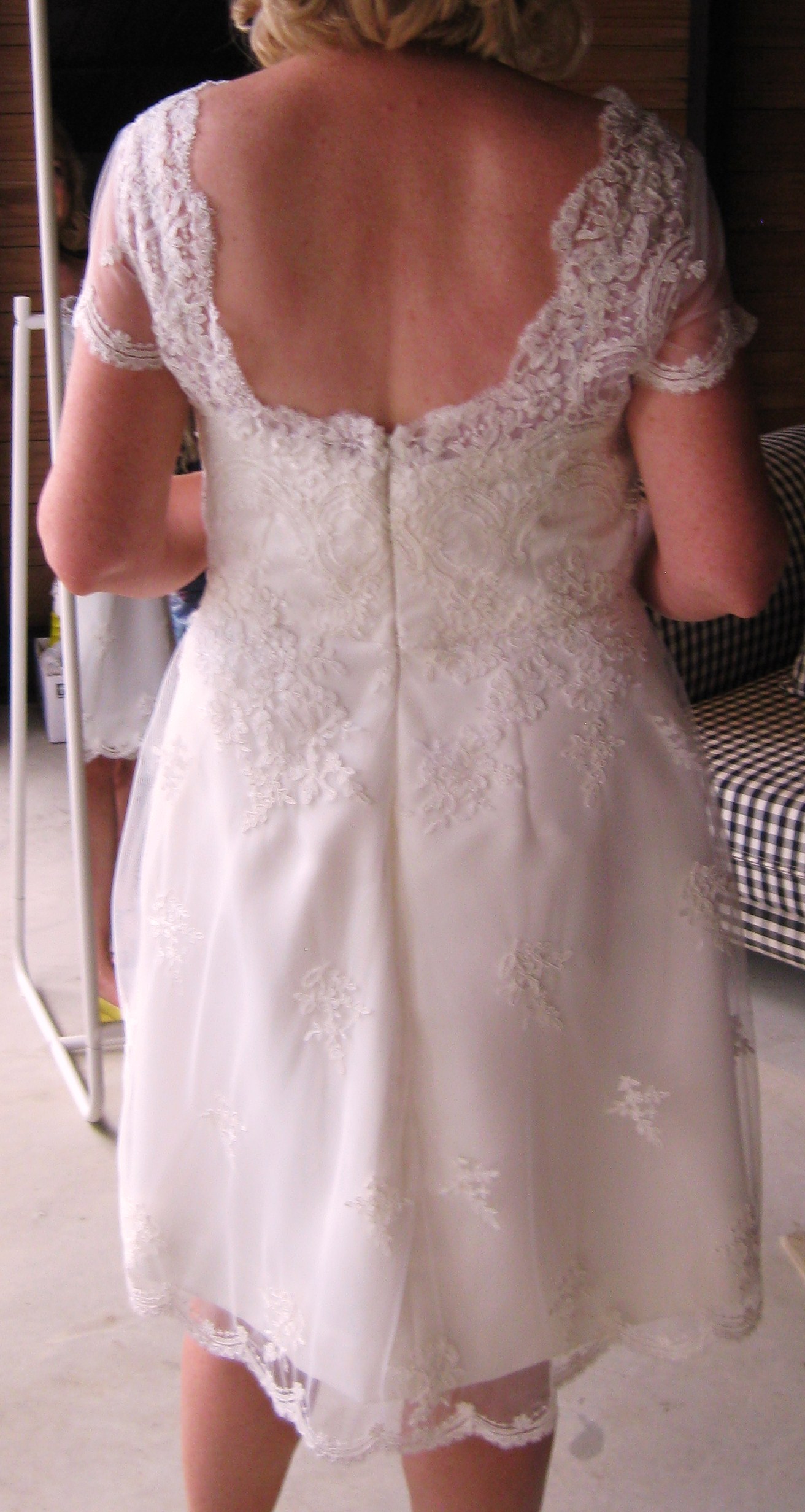
Tina found her special fabric at Selective Fine Fabrics (Shop 10, Cnr Compton and North Road, Underwood, Q  4119 – 07 3208 9373).  It is a natural white corded lace on tulle with a wide, heavy border on one side flowing into a delicately embroidered tulle with a beautiful lace scallop on the other side.  The under dress is Duchesse satin and the dress is lined with silk crepe de chine.

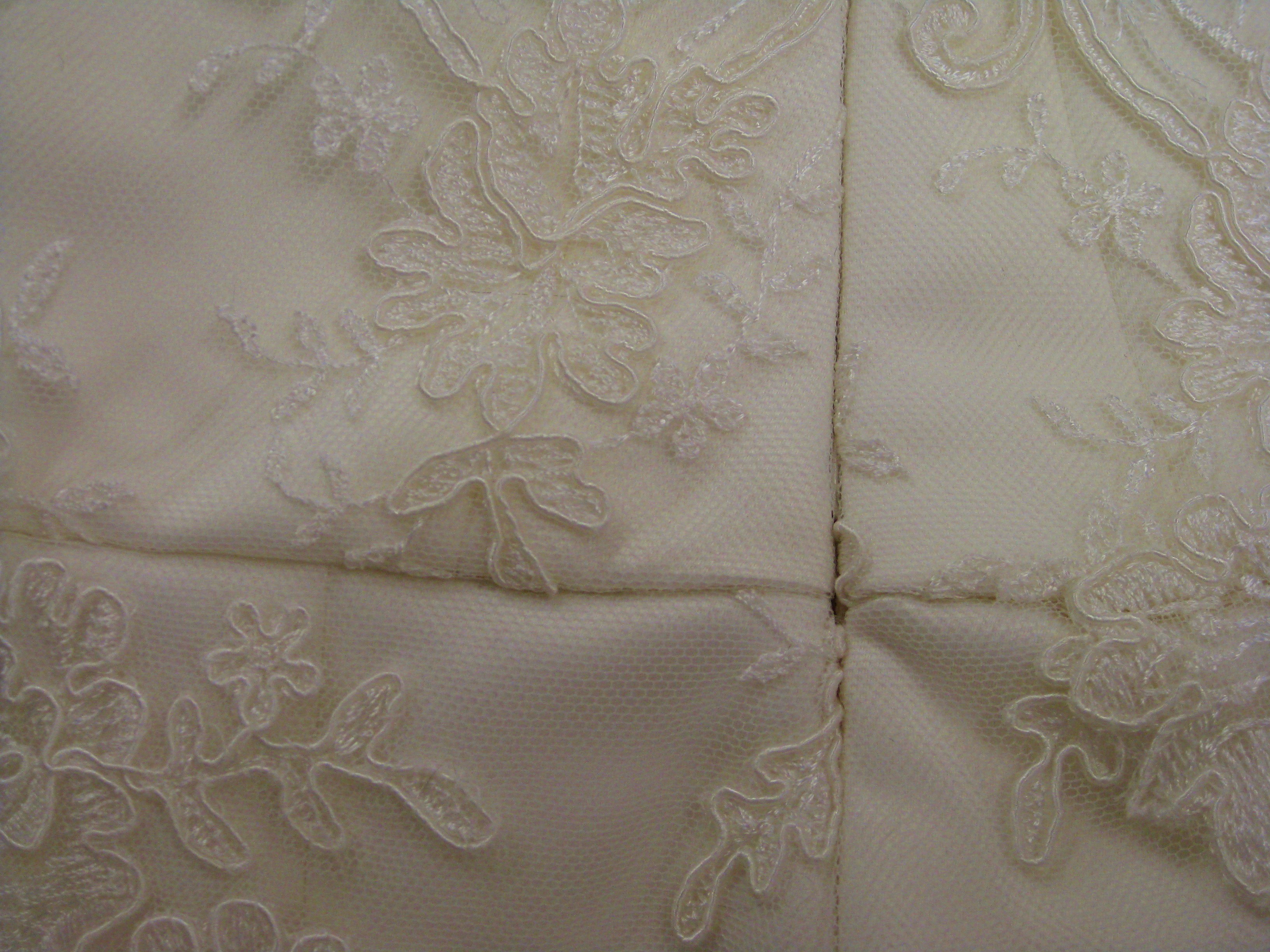
Beautiful cream corded lace on tulle over Duchesse satin underskirt

Beautiful cream corded lace on tulle over Duchesse satin underskirt


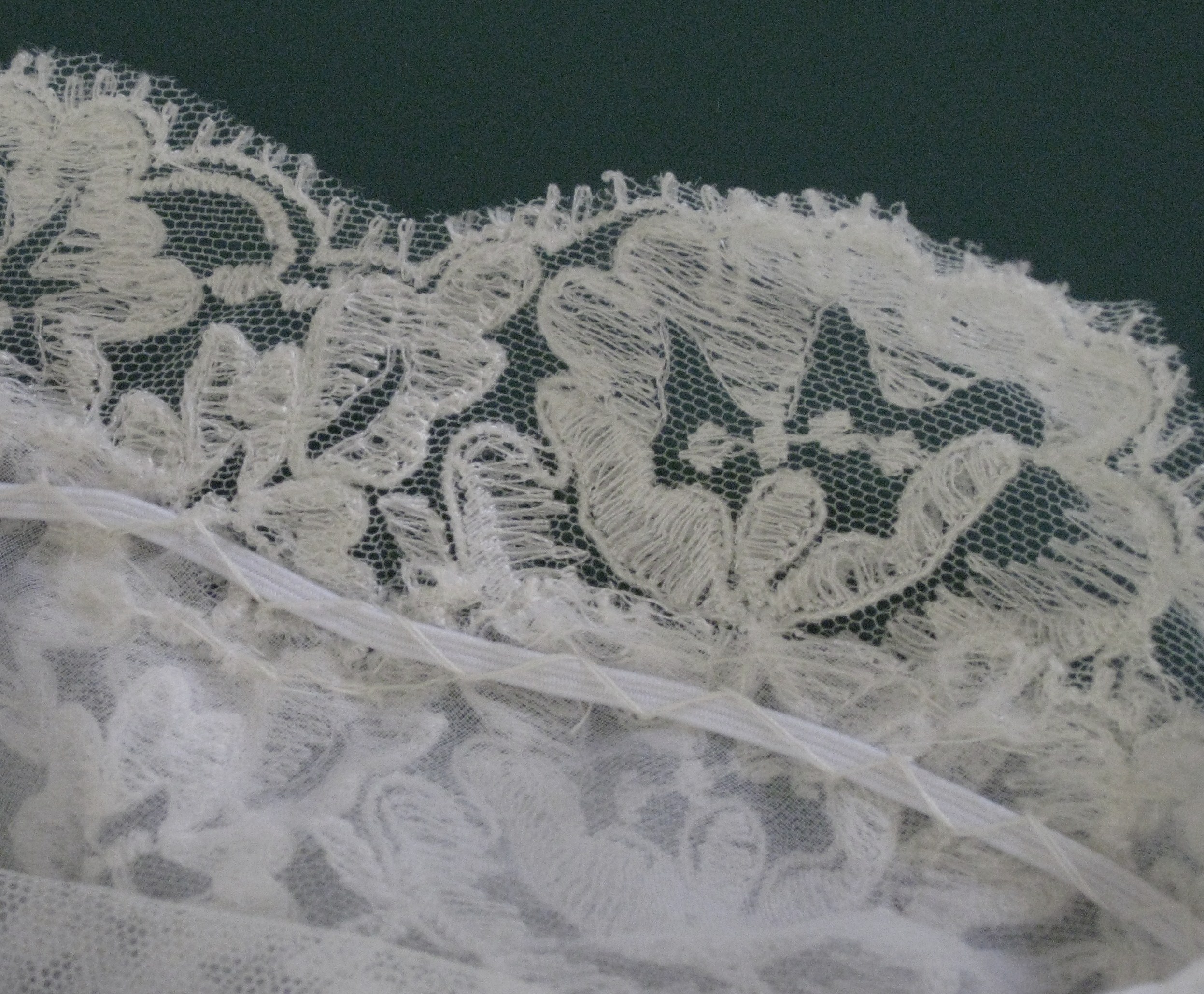
She started with making the boned foundation using beautiful cotton which is sturdy, yet soft and cool.  The satin bodice was pieced and attached to the foundation.  To finish the top edge, the fabric was folded over the catch-stitched to the foundation.  This technique gives a lovely rolled edge to the satin bodice. We then positioned the lace while Tina was wearing the bodice.   The lace was tacked to the satin bodice and the excess pinched out  to achieve a smooth shape.

The beauty of working with this type of lace is that it can be cut and motifs rearranged to avoid sewing seams and darts which can distort the flow of the pattern.  When corded lace is pieced in a dart or seam, it creates an uneven seam which often looks bulky and unattractive.

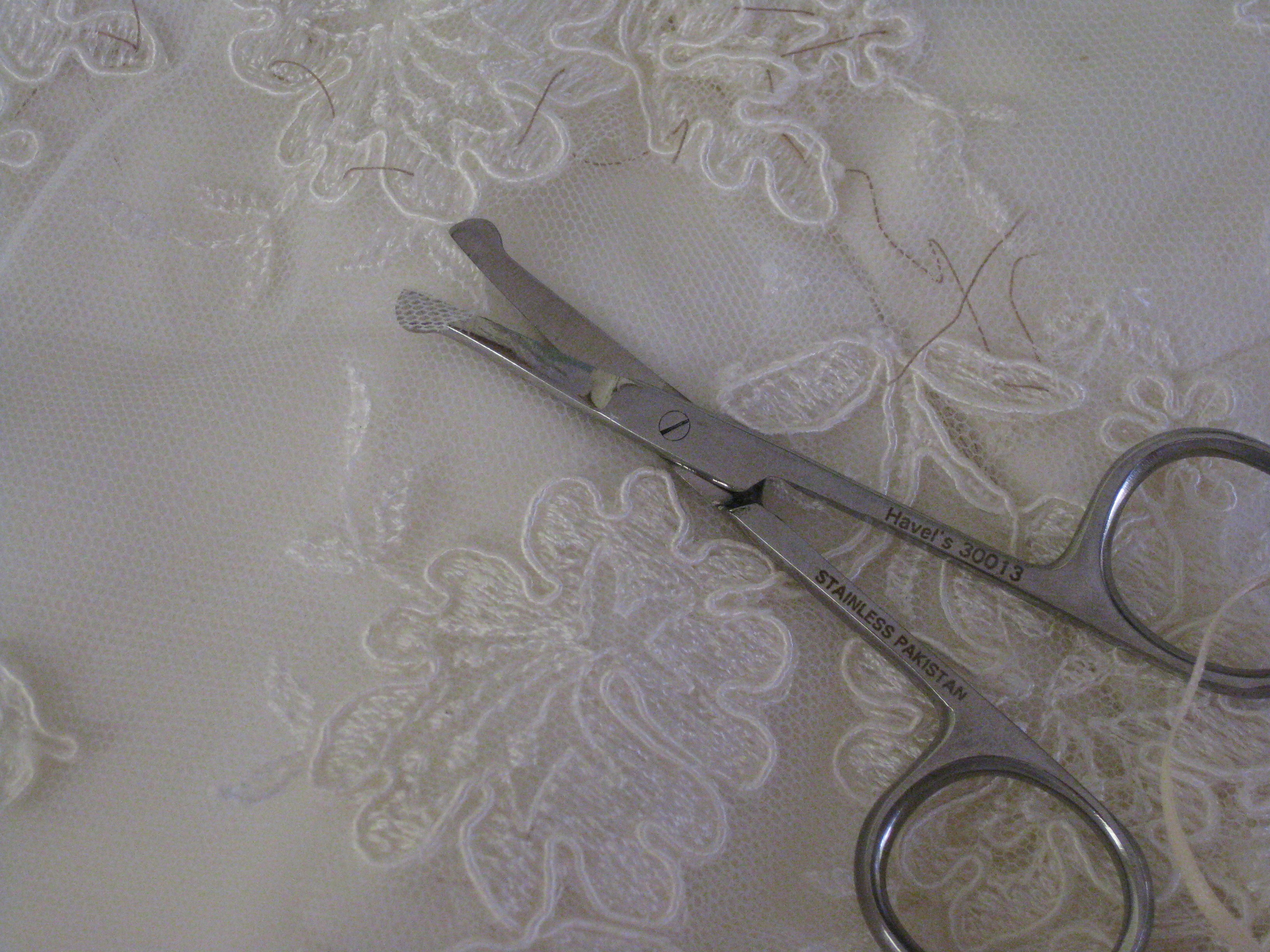
The fabric was carefully cut using lace work scissors and leaving a small margin of tulle around motifs.  It was then tacked in place and stitched by hand using #100 silk thread and a fine, short needle.

All seams and darts eliminated from the lace.

All seams and darts eliminated from the lace.

Lace trimming scissors help to avoid nicking the tulle

Lace trimming scissors help to avoid nicking the tulle

To create the beautiful neckline, back and front shoulder sections were cut from silk organza which was stitched by hand (using a catch stitch) to the underside of the satin bodice.  Shoulder and under arm seams have been joined with a small French seam.  Again with Tina wearing the bodice, the lace was carefully placed in an attractive scoop shape and tacked in place.  Chosen motifs were trimmed and stitched, again by hand as above.

As the scallops are unsupported, a small hand running stitch was applied inside each curved and pulled slightly to force the edges to “cup” and stay in place all day.

To ensure the scalloped edges stayed in place, a small running stitch was sewn by hand around the curve and pulled up slightly.

To ensure the scalloped edges stayed in place, a small running stitch was sewn by hand around the curve and pulled up slightly.

Sleeves were made from plain tulle and the small scalloped border hand stitched along the edge.  The sleeves were then set into the armholes and machine stitched.  The seam allowance was trimmed; rolled over the seam and stitched in place to achieve a hairline seam.

Sleeves were cut unadorned sections of tulle with scalloped border appliqued to the hem. Inserted using hairline seam by machine.

Sleeves were cut unadorned sections of tulle with scalloped border appliqued to the hem. Inserted using hairline seam by machine.

Tina constructed the skirt, inluding hand stitched hems, and then layered the tulle, satin and lining silk and stitched it in place to the bodice.  Small tucks were added at the side back to give a little more fullness in the back of the skirt.  The hemline of the lace at the centre back has been lowered slightly and, together with the slight fullness, gives interest at the back of the gown.

Slight fullness and lower hem to add interest to the back of the gown.

Slight fullness and lower hem to add interest to the back of the gown.

A heavy duty invisible zip has been used as a regular invisible would not be strong enough to hold the thickness of the corded lace.

A heavy duty invisible zip.

A heavy duty invisible zip.

To help keep the garment beautifully in place all day, an elastic stay was applied across the back bodice and narrow braided lace has been hand couched across the shoulders.

Neckline/shoulder stays hold the shoulder and sleeves in place with a wide deep neckline in the front and back. They are made from narrow braided elastic couched in place with catch stitch and fastened at each end.

Neckline/shoulder stays hold the shoulder and sleeves in place with a wide deep neckline in the front and back. They are made from narrow braided elastic couched in place with catch stitch and fastened at each end.

Once the additional lace was hand appliquéd across the waist and down the top of the skirt, the silk lining was inserted by hand and the elastic back stay fed through slits in the lining side seams.
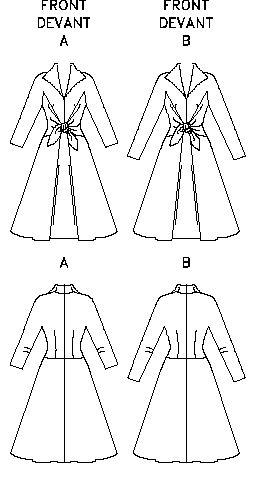
The addition of an elastic suport across the back holds the dress securely in place.

The addition of an elastic suport across the back holds the dress securely in place.

A waist stay was applied using Petersham ribbon with hidden hooks and thread eyes.  This is fastened before the zip and holds the back together to minimise strain on the zipper at the waist as well as holding the skirt in place.
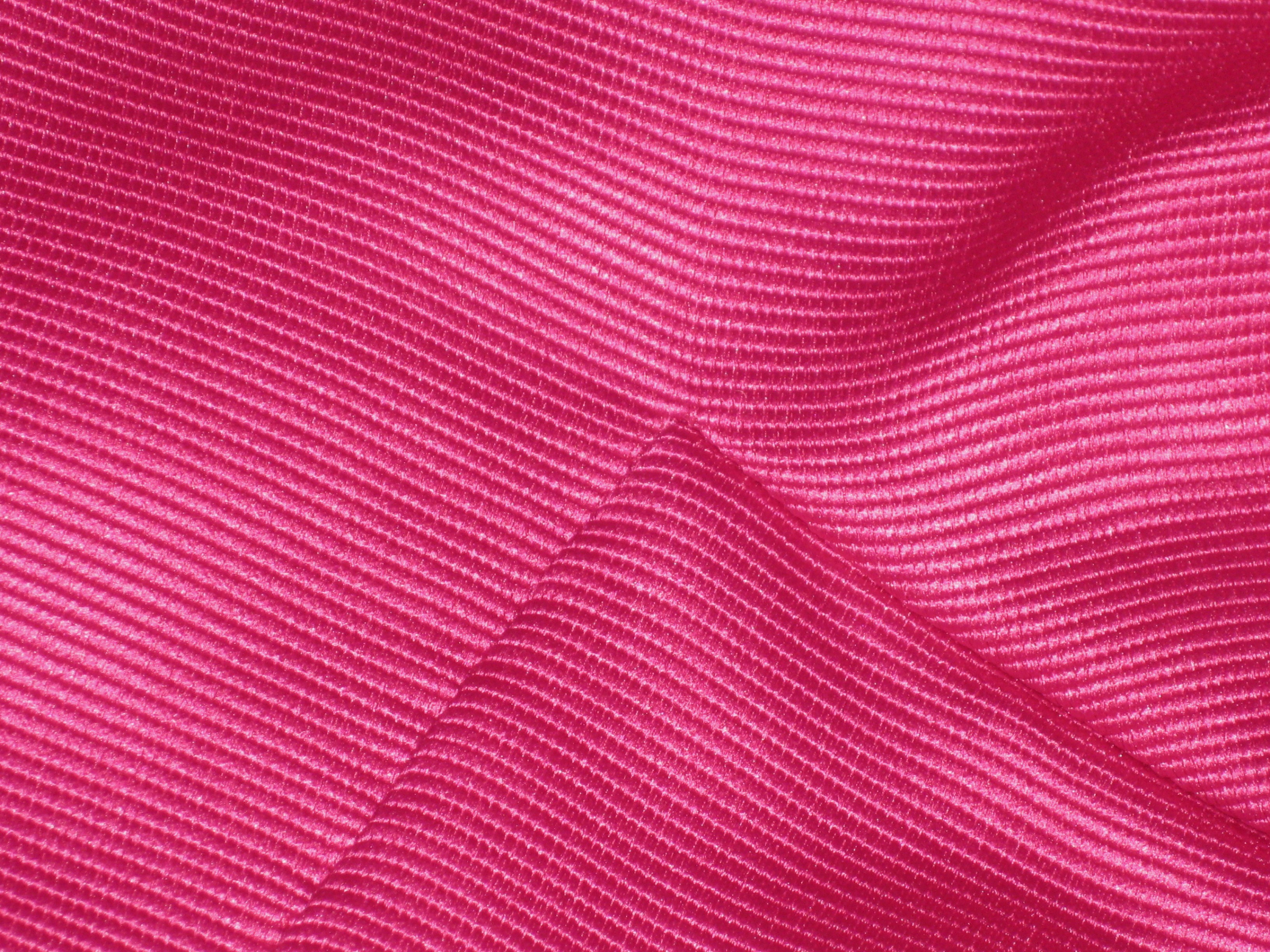
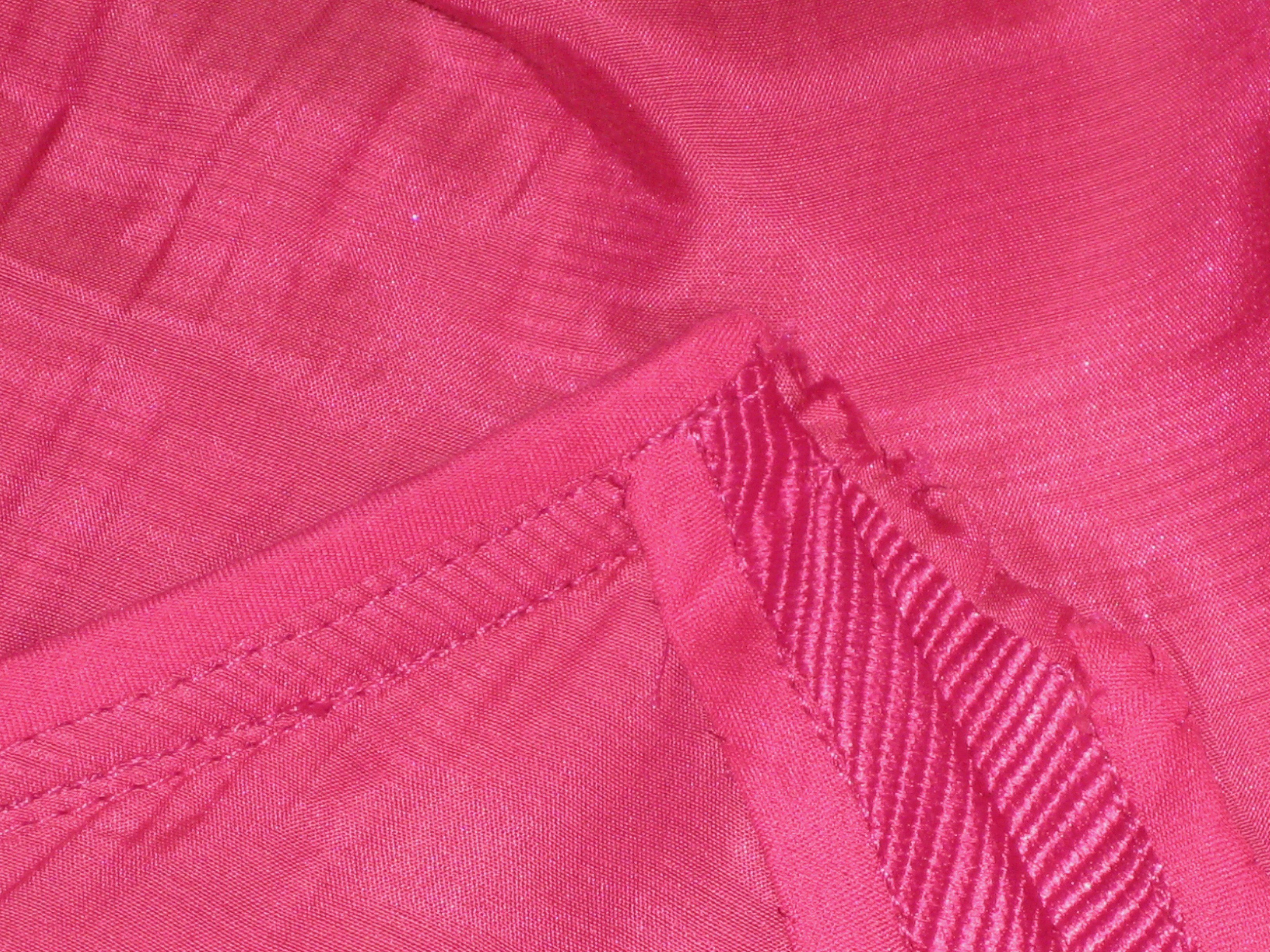
Rayon Petersham waist stay fastens around the waist to keep the skirt in place and take the strain of the zipper when it is being opened and closed.

Rayon Petersham waist stay fastens around the waist to keep the skirt in place and take the strain of the zipper when it is being opened and closed.

Elastic stay and Petersham waist stay are lie inside the gown - over the silk lining (inserted by hand).

Elastic stay and Petersham waist stay are lie inside the gown – over the silk lining (inserted by hand).

Because the shoulder and sleeve sections are quite delicate, ribbon hanging loops have been added to support the weight of the dress on a hanger.

Ribbon hanging loops.
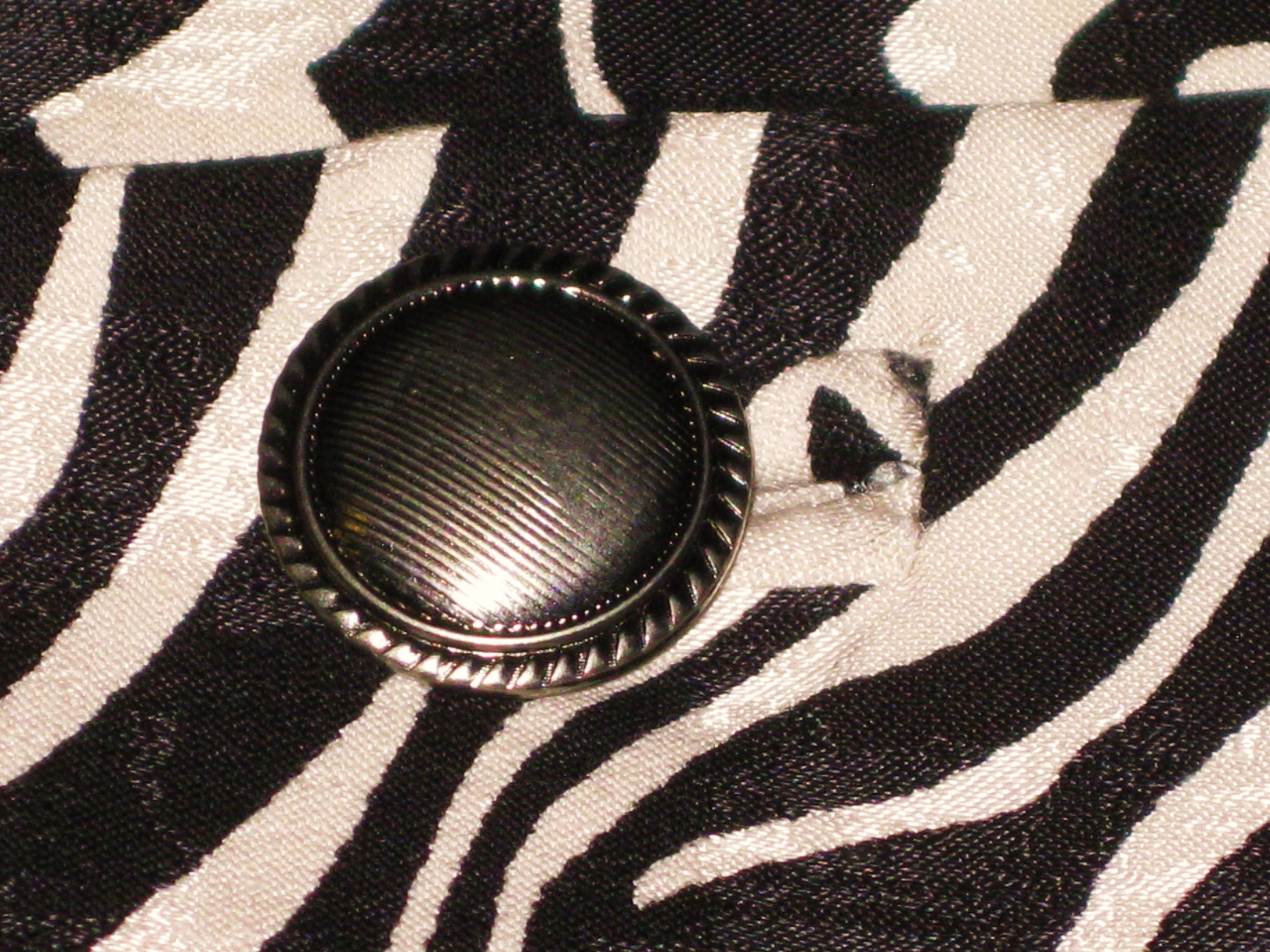
Ribbon hanging loops.
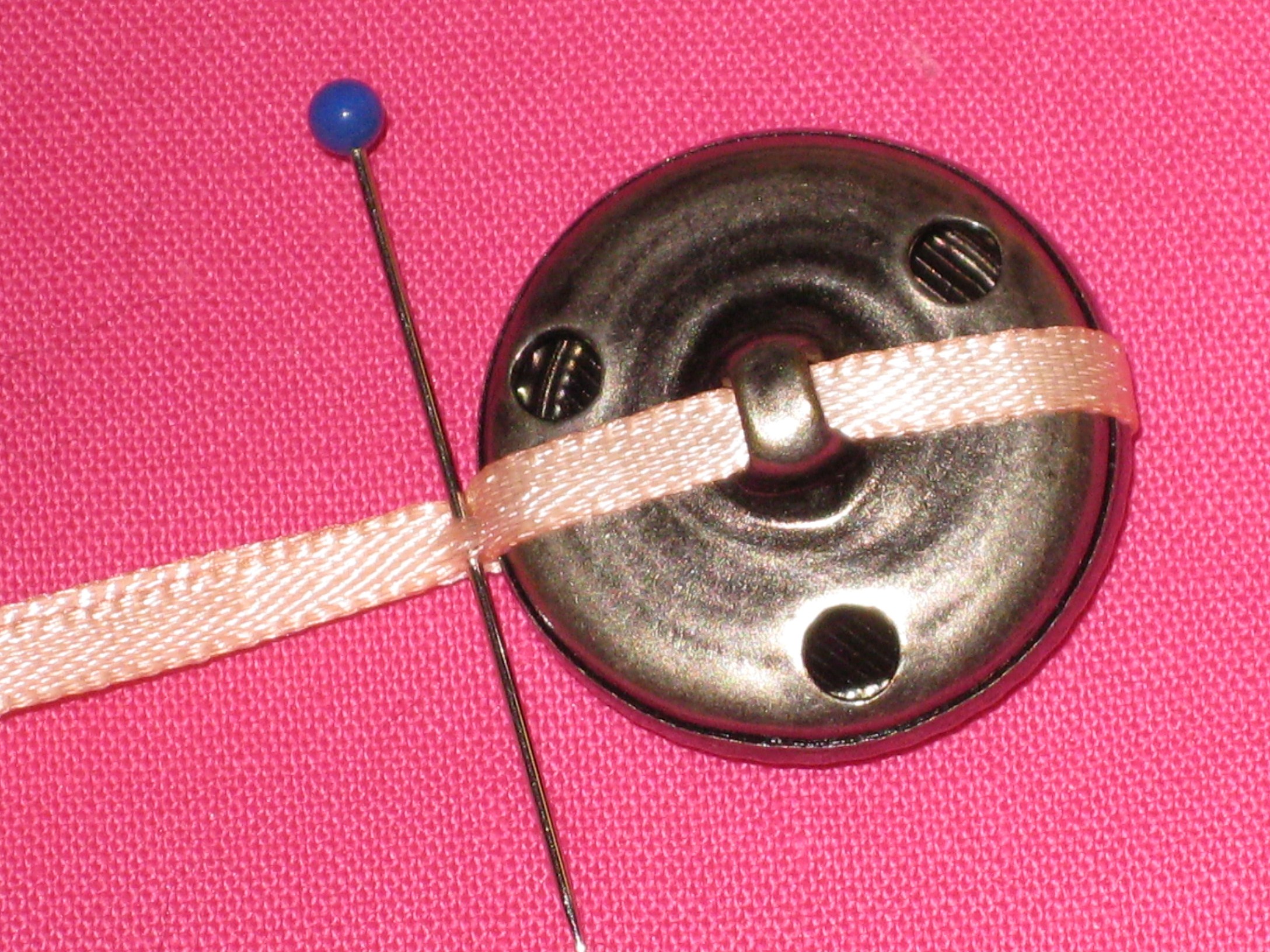
A touch of blue for luck was added as a beaded flower inside the top of the bodice on the lining.

The final touch - a hand beaded blue flower for luck.

The final touch – a hand beaded blue flower for luck.

With all of this inner structure keeping her beautiful gown in place and comfortable, Tina was able to kick off her shoes and dance the night away with her handsome groom.  By the way, Tina also made Steve’s vest – she is justifiably proud and Steve is as pleased as punch and very proud of his wife’s wonderful achievements.

Tina was a gorgeous bride and it was such a joy to help her achieve her dream wedding gown and to share her and Steve’s happiness as they start their new life as man and wife.  Good luck and good health to you both and may you enjoy many years sharing your lives together.

Pressing Matters

Portions of this article were first seen in Australian Stitches magazine – Volume 22 No 4.
Permission has been sought and granted for electronic use and the photos and text remain the property of Alison Wheeler – Sewing Lady.

One of the key construction elements affecting the finish of a garment is Pressing Techniques.

Many sewers who learned from their mothers and grandmothers were repeatedly told to never sew a garment together without pressing each seam as you go.  While many other techniques have come and gone, the importance of pressing in garment construction remains.

When buying fabric, take particular note of the composition of the fabric and the care instructions attached to the fabric bolt.  They should be your guide when choosing iron temperature.

Tip:  If you have a smart phone, take a photo of the swing tag.  Otherwise, write the details on the reverse of your sales docket and store it with your fabric for later reference.

So what do we equipment do we need; what are these techniques and how do they affect the final finish of the garment?

Pressing equipment:

1: Seam stick and organza press cloth 2: Tailor's ham 3: Seam roll 4: Clapper 5: Point presser 6: Sleeve board 7: Spray bottle

1: Seam stick and organza press cloth
2: Tailor’s ham
3: Seam roll
4: Clapper
5: Point presser
6: Sleeve board
7: Spray bottle

A heavy based iron with good steam delivery is the key. If you do not have a good steam iron, you can mist your press cloth with a plastic spray bottle.  If your iron is lightweight, lower the ironing board so that you can press down easier to achieve the necessary pressure.

  • A well padded ironing surface. This can be an ironing board or a pressing surface made by covering a piece of plywood with an old blanket and a calico cover.   In my studio, I have an ironing surface made from a cork notice board that I have covered with an old wool blanket .  A heavy cotton  duck fabric cover was made with elasticised sides (like a fitted sheet) so that it can be washed.
  • This large flat surface is perfect for fusing interfacing and pressing garment sections flat during construction.
  • A press cloth is essential to avoid damaging your fabric. It should be used every time your iron comes into contact with your fabric. My choice of press cloth is a piece of silk organza.  It is really tough and handles high heat and pressure well and has the added benefit of allowing me to see what I am doing.  Make sure you use silk and not polyester organza which would burn on to the base of the iron.  Tip:  Half a metre of silk organza can be trimmed with pinking shears and cut into two or three cloths for reasonable cost.  Use a separate cloth for fusing interfacing so that you do not inadvertently damage your iron or fabric.
  • A seam stick is very useful to place under the seam so that, when it is pressed open, the seam allowances do not make an imprint which can often show through to the right side of your garment. It can be made easily from a piece of 3cm dowel cut in half and sanded smooth.  If your fabric is delicate or needs more steam, you can make a pocket of fabric from wool flannel to cover the stick so that the timber does not touch your fabric.
  • A tailor’s ham is a reasonably priced and very useful piece of pressing equipment and are used to press any sections of the garment that fit over curved areas of the body. Hams take their name from their shape and are usually covered on one side with a sturdy cotton fabric and on the other with a woollen fabric.  The cotton absorbs the steam and the wool increases the effect of steam on your fabric where extra is needed.  Tip: Store your ham in a clip lock bag so that the wool side will not be eaten by insects and to keep the ham clean when it is not being used.)
  • Similar to a ham, a seam roll is made in a sausage shape and used for pressing seams open in trouser legs, sleeves, etc.  They allow the fabric of the garment and seam allowance to fall away from the surface of the iron so that the chance of an impression of the seam allowance on the right side of the fabric is greatly minimised.
  • A clapper is used to pound a pressed seam so that it smooth and flat once cool. They are also available with a point presser attached.  The point presser is used to press open seams when facings are applied as well as lapel and collar seams which would be difficult to access with just the iron.  These tools work by drawing the moisture from the fabric and allowing it to cool smooth and flat.
  • A sleeve board makes pressing sleeves, pants and difficult to access areas a breeze. They are particularly good for children’s clothes and smaller sized garments.
  • A plastic misting bottle for where extra moisture/steam is required.
  • A natural sponge which has been wet and wrung out well can also be used to place moisture exactly where it is needed to achieve the desired result.

I also use an ironing press for large fusing jobs, for example when fusing a whole garment to support open weave fabrics or lighter fabrics which I am using for more structured projects. My ironing press is at least 30 years old and does not have a steaming feature – this is where the misting bottle comes into its own.  If you have a press with steam, be very careful to completely empty the tank when the press has cooled and then heat it to make sure there is no moisture left.  Any moisture left in the tank can cause it to rust, causing marks on your future projects.

Pressing versus Ironing:

Pressing involves a lift and lower motion over sections of the garment and is useful for flattening seams and moulding the fabric into the desired shape during construction of the garment.

Ironing  uses a gliding motion over the right side of the garment and is mainly used to remove creases  after laundering and on-going care of the garment.

Melding the stitches:

Most dressmaking these days is done using polyester sewing thread.  While this thread is strong and durable, it does not meld with the fabric unless it is pressed when the seams are sewn.  Just stitch a seam and run your finger over the stitches.  You will feel the thread lying on top of the fabric.

Take your sample to the ironing board and press the seam flat as it was sewn.  Now run your fingers over the stitches and you will find that they have melded into the fabric and no longer feel like a ridge against the fabric.

With the thread melded into the fabric, your seams will sit smoother and flatter when pressed open or to one side.

Pressing seams:

Once you have pressed the seams flat to meld the stitches, seams should be pressed open from the wrong side of the fabric.  Place seam over the seam stick or seam roll and use a press cloth.  If you do not have a seam stick or seam roll, place some brown paper or tally roll paper between the seam allowance and the garment fabric.  Do not use waxed paper as it will not absorb steam.

Be sure to press lightly using the tip of the iron.  If you are using a springy fabric, once the seam has been pressed open, pound it with the clapper.

For very springy fabric, use a sponge to moisten the line of the seam stitching, cover with a press cloth and press again.

Do not move your fabric until it has cooled down.

Seams can then be pressed to one side (again using the seam stick and press cloth) and pounded with the clapper.  This gives a really flat seam line to follow if you are topstitching.

Pressing Hems:

To aid in pressing an even hem width, cut a piece of manilla card stock to the width of the finished hem.  Hold it against the wrong side of the hem allowance and flip the fabric up so that it aligns with the top of the card and press in place.  This method results in a crisp hem crease and avoids marking the front surface of the garment.

Using a manilla strip cut to the hem depth makes pressing an even hem allowance very easy.

Using a manilla strip cut to the hem depth makes pressing an even hem allowance very easy.

This technique is also very useful for pressing under the edge of patch pockets .

Pressing pleats:

If your garment features pleats, you will find it much easier to stitch them if the crease has been pressed in place first.  Use tailor’s tacks to mark the crease lines; fold the along the marked lines and press using a cloth; pound with a clapper to set the crease.

Continuous tailor's tacks stitched through both sides of garment piece to mark fold line for tucks and pleats.  They can be clipped apart between each tack to separate fabric layers.

Continuous tailor’s tacks stitched through both sides of garment piece to mark fold line for tucks and pleats. They can be clipped apart between each tack to separate fabric layers.

Press tucks from right side using thread marks as a guide to the fold line

Press tucks from right side using thread marks as a guide to the fold line

Pressing gathered fabric:

Once your gathered section has been applied to the rest of the garment, use the tip of the iron to press at right angles to the seam.  Applying a gentle pull to the fabric will help to position the gathers with the iron.

Press gathers towards seam, spreading them with the point of the iron.

Press gathers towards seam, spreading them with the point of the iron.

Pressing sleeve caps:

Once a set in sleeve has been eased, place the sleeve cap over a tailor’s ham and pin it in place along the seam line.  Without touching the fabric, steam the sleeve cap.   Press the seam allowance gently with your fingers to smooth it and allow it to dry completely before setting the sleeve into the armhole of the garment.  This method results in a pucker free installation of the sleeve.

Place sleeve cap over small end of the ham and pin in place with glass head pins. Keep the pins on the seam line.

Place sleeve cap over small end of the ham and pin in place with glass head pins. Keep the pins on the seam line.

Steam the section being eased - do not allow the iron to touch the fabric.

Steam the section being eased – do not allow the iron to touch the fabric.

The result is a smooth seam line ready for insertion into armhole.

The result is a smooth seam line ready for insertion into armhole.

The sponge method can also be used on wool fabrics.  Be careful to test on a scrap to make sure your fabric will not water stain.

Pressing darts:

The dart stitching should be pressed flat first to meld the stitches into the fabric.  The darts are then pressed against the garment, usually towards the centre back or front for vertical darts and towards the waist for bust darts. Place the fabric right side down over a tailor’s ham and a small piece of manilla card stock under the dart.

Place dart over ham with manilla card under the fold and press.

Place dart over ham with manilla card under the fold and press.

Cover the fabric with press cloth and press over the ham to shape the fabric.  Always allow the fabric to cool before removing it from the ham.

If the garment is underlined or a lining is to be inserted, slash the darts open  for a smoother, flatter line.   Press using a press cloth and pound with clapper while fabric is over the ham.  Again, allow the fabric to cool before removing it from the ham.

Dart slashed and pressed open will give a flatter garment surface in lined garment.

Dart slashed and pressed open will give a flatter garment surface in lined garment.

Stretching and Shrinking:

Used in tailoring, these techniques can be used in dressmaking where you do not want to clip seam allowances; for example, if working on a white or pale colour garment with princess seams or if stitching a dart would make a plaid garment less visually appealing.  It is also a useful technique beacuse if the seams are not clipped, future alterations are made much easier.

Curved side seams will not press flat. Most patterns mention clipping them so they will lie flat.

Curved side seams will not press flat. Most patterns mention clipping them so they will lie flat.

Pressing with steam, stretch the outer edge of the seam allowance.

Pressing with steam, stretch the outer edge of the seam allowance.

Top seam allowance pressed flat after being stretched. Bottom seam allowance clipped.

Top seam allowance pressed flat after being stretched. Bottom seam allowance clipped.

Straight piece of fabric cut on the crossgrain.

Straight piece of fabric cut on the crossgrain.

Outer edge of seam allowance of concave curve is pressed and stretched.

Outer edge of seam allowance of concave curve is pressed and stretched.

Upper edge shrunk into a curve; lower edge stretched into a curve.

Upper edge shrunk into a curve; lower edge stretched into a curve.

I hope you will give these techniques a try.  You will see a marked improvement in the finish of your garments and understand that our mothers and grandmothers did indeed know a thing or two about quality construction and pressing techniques.